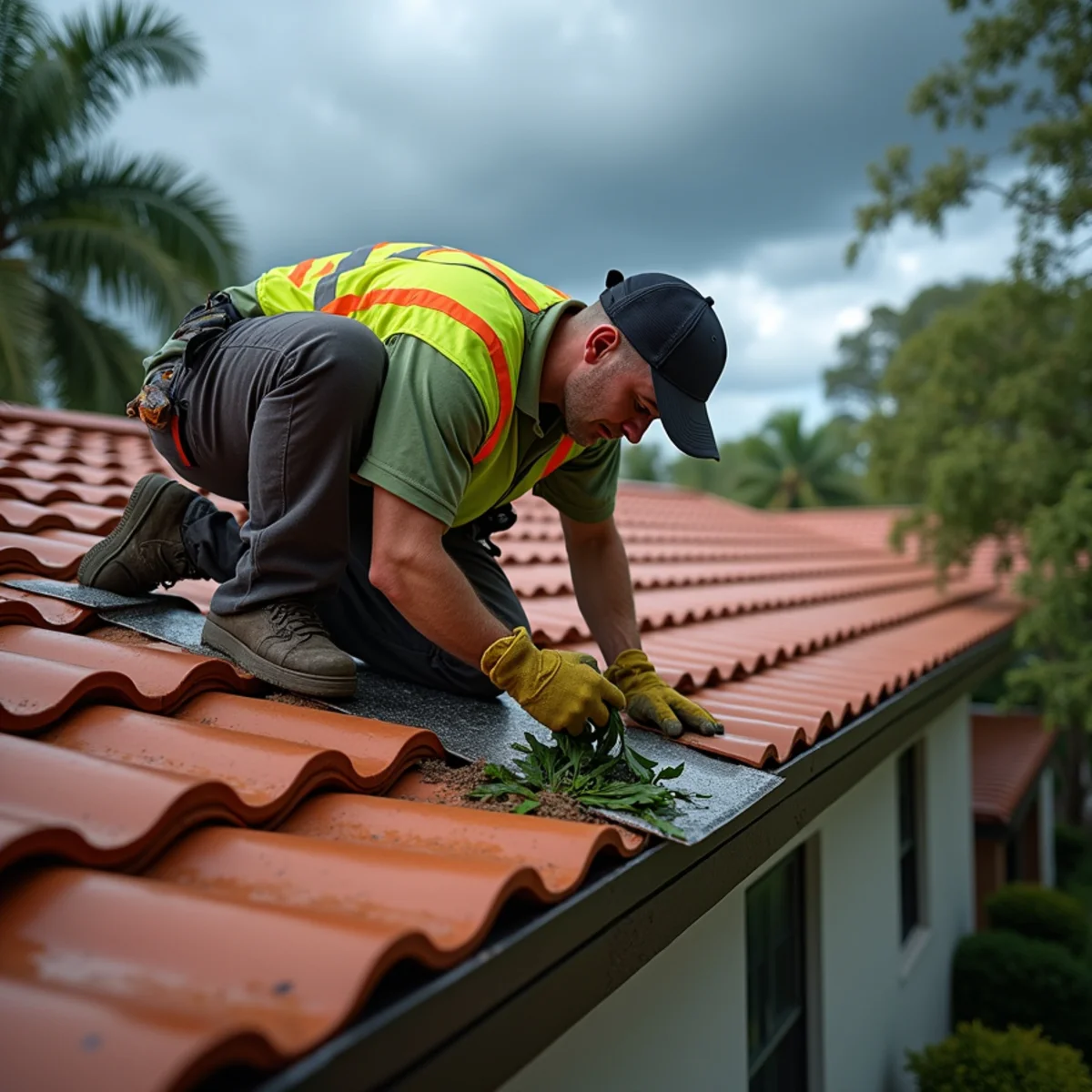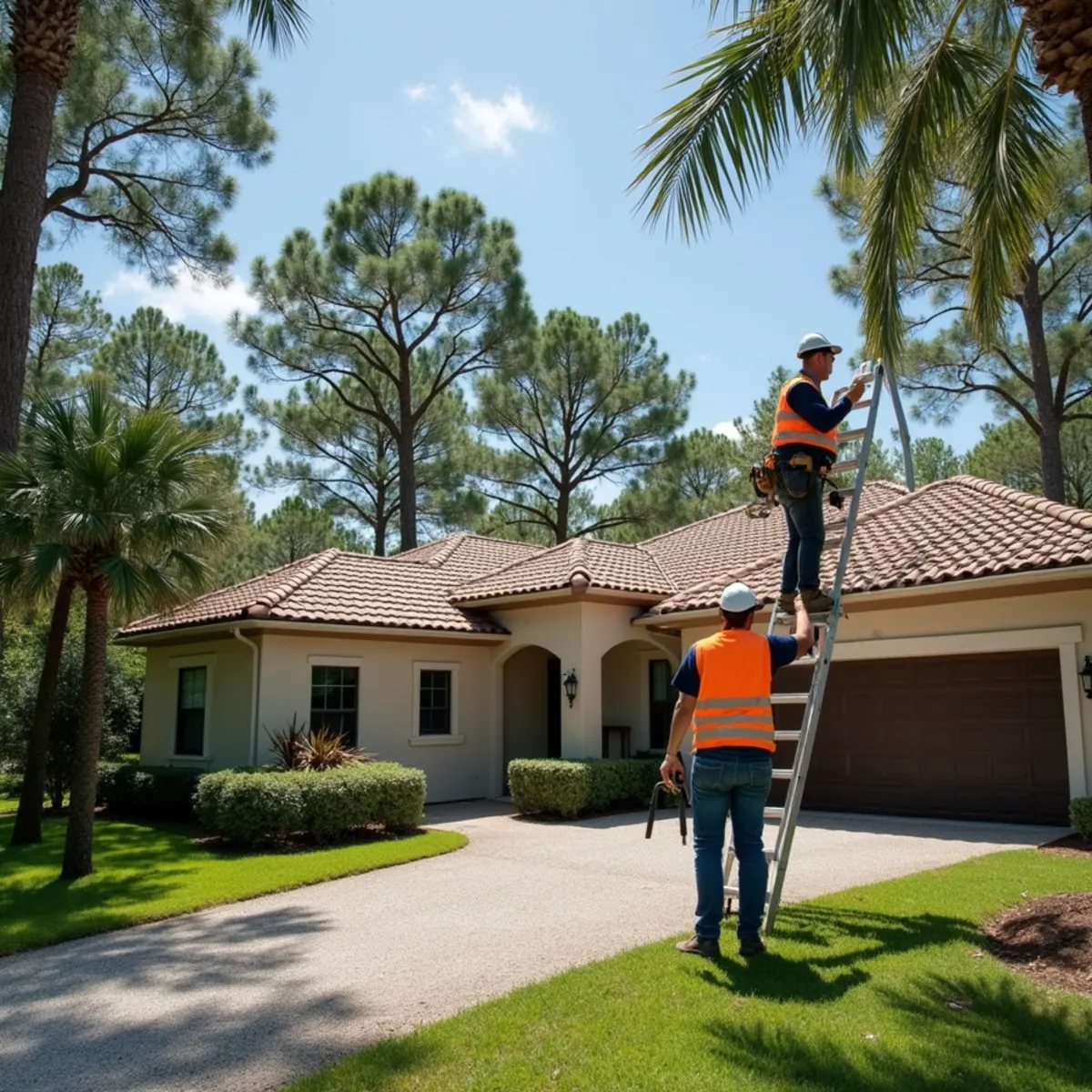
Tile roof repair cost in Boca Raton is set mainly by labor and by what sits under the tile, not by the tile itself. A few cracked field tiles on an accessible slope is a small job. Valley, hip, or underlayment work, discontinued profiles, clay tile, and rotted decking push the price up quickly.
The cost of a tile roof repair in Boca Raton depends far less on the number of broken tiles than on what is happening underneath them and how hard they are to match. Swapping three cracked tiles on an easy-to-reach slope is a small job. Opening a valley to fix rotted decking and worn underlayment under a discontinued barrel profile is a very different one, even if both looked similar from the driveway.
Commonly reported planning figures
Published South Florida figures give a rough sense of scale. These are commonly reported ranges for planning purposes, not our pricing, and they change with material costs and demand.
- Concrete roof tiles: roughly $1.50 to $3 per tile for material alone
- Galvanized valley metal: roughly $4 to $7 per linear foot for material
- Full tile roof replacement for comparison: roughly $12 to $25 per square foot installed, with many projects reported in the $18,000 to $45,000 range
Notice what is missing from the material figures: labor, access, underlayment work, disposal, and permits. On most repairs, those make up the bulk of the price.
Small, medium, or major: how tile repairs usually scale
Online price lists jump from tiny numbers to large ones because they mix very different jobs. It helps to know which tier your roof is likely in before the first quote arrives.
- Minor repair. A handful of cracked or slipped field tiles, the underlayment beneath still intact and dry. The work is lifting, replacing, and resetting tile, usually in a single visit.
- Moderate repair. A leak at a valley, a hip or ridge line that has come loose, or flashing against a wall or around a pipe. Tile comes off a larger area, and metal, mortar or foam, and a section of underlayment are part of the scope.
- Major section repair. Water has been getting in long enough to soften the deck. Tile, underlayment, and decking come out over a defined section and are rebuilt in layers, often with a permit and an inspection.
If a quote does not say which of these it is covering, ask. Two numbers that look far apart are often priced for different tiers of work.
Does clay tile cost more to repair than concrete?
Usually, yes. Clay tile is thinner and more brittle than concrete, so more pieces crack when neighboring tiles are lifted, and a roofer has to move more slowly across it. Replacement clay in an older profile can be hard to source, and its fired-in color is difficult to match with new stock.
Most Boca roofs are concrete, but clay barrel tile still shows up on older Mediterranean Revival homes, including some in the Old Floresta neighborhood near downtown. If your home sits in a designated historic district, check with the city before changing tile type or color, since those reviews can add a step to the repair.
The seven factors that move the number
1. Whether the tile can be matched
Concrete tile comes in many profiles, including high barrel, low S-tile, and flat, and in colors that fade over the years. If your profile is still manufactured, replacements are straightforward. If it has been discontinued, a roofer may need to find salvaged tile or borrow tiles from a less visible slope and put new tile there instead. HOA color rules can narrow the options further.
2. Foam-set or mortar-set
Many older Boca roofs used mortar-set tile, where each tile is bedded in cement. Newer installations often use foam adhesive applied in specific patterns under an approved installation method. Removing and resetting either type takes care, and the attachment method must match what is appropriate for the roof.
3. What the underlayment looks like
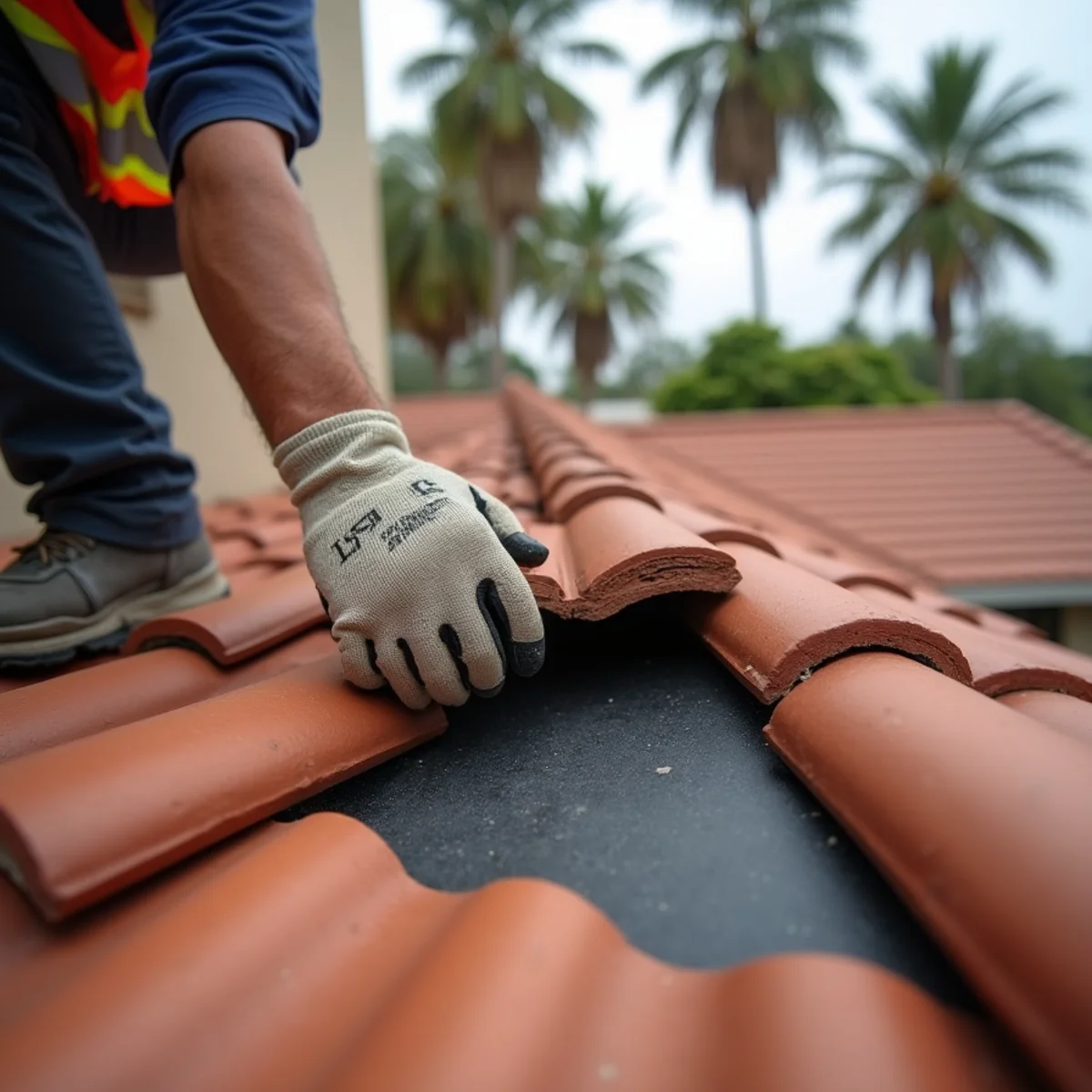
Tile sheds most of the water, but the underlayment beneath is the actual waterproof layer. When a broken tile has left the underlayment exposed to sun and debris, the repair may need to include patching or replacing underlayment in that area. That single finding often changes the scope more than anything else.
4. Where on the roof the damage sits
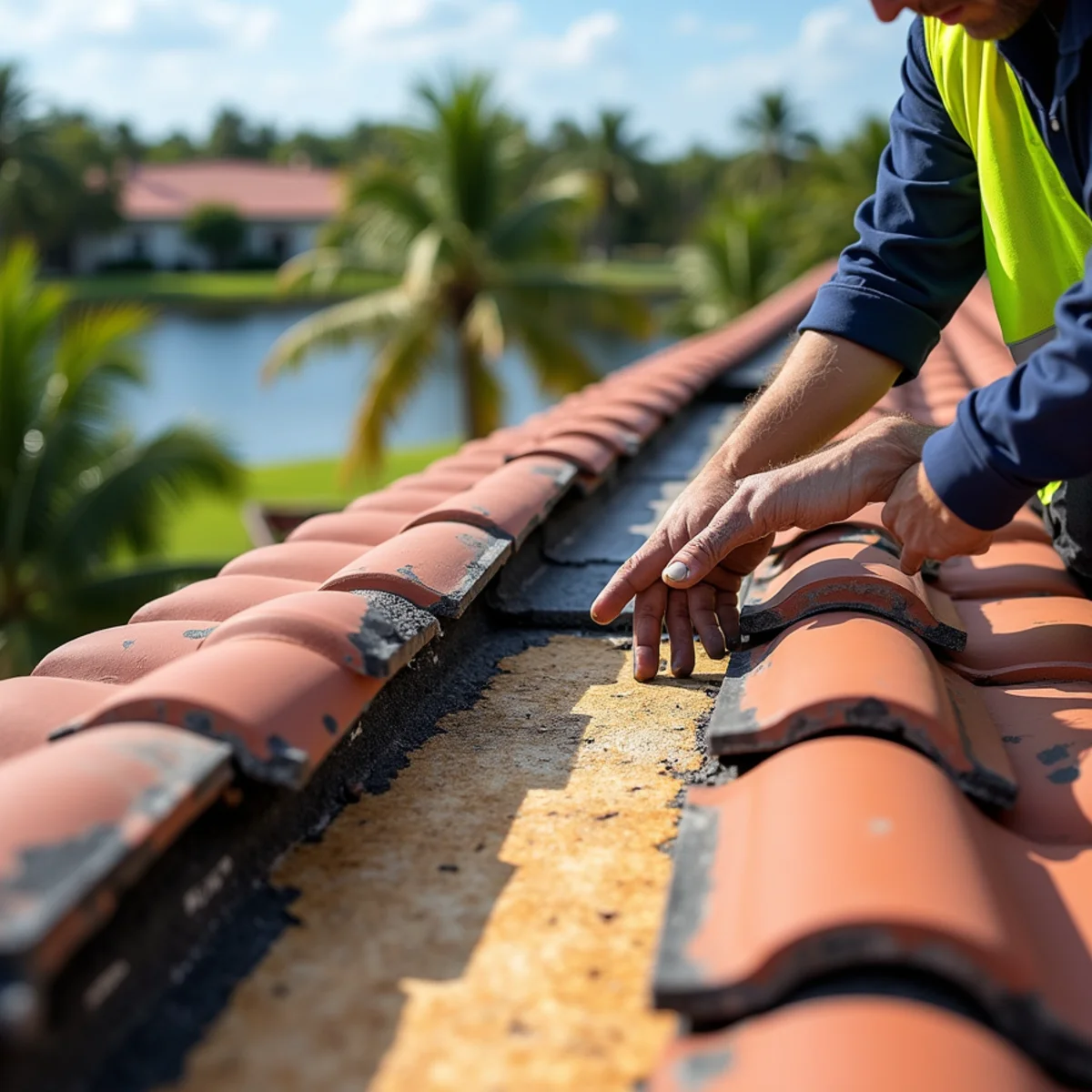
A cracked field tile in the middle of a slope is the simplest case. Valleys, hips and ridges, eaves with bird stop, and tiles against a stucco wall all involve extra components such as valley metal, ridge mortar or foam, or flashing that has to be worked around or replaced.
5. Access and roof height
Two-story homes, steep pitches, screen enclosures, pools, and dense landscaping all add time, protection, and equipment. Material has to be carried up without breaking more tile along the way.
6. Deck damage
If water has been getting in for a while, the plywood or older 1x6 tongue-and-groove decking may be soft. Rotted decking has to be cut out and replaced before any tile goes back down.
7. Permits and scope size
Small repairs often do not trigger a permit, but larger scopes can. In unincorporated West Boca, that means Palm Beach County; within city limits, the City of Boca Raton Building Department. Permit and inspection steps add time and cost.
Common repair scenarios
These are typical calls, described generally rather than as specific jobs.
- Foot-traffic cracks. After another trade has worked on the roof, a line of cracked tiles appears along the path they walked. Usually a straightforward tile replacement if the underlayment is intact.
- A leaking valley. Leaves and seed pods have dammed a valley for years. The fix may involve lifting tile along the valley, replacing corroded valley metal, and repairing underlayment beneath.
- Loose hip and ridge. Mortar under hip tiles has cracked and caps are shifting. Resetting the hip line is a focused job, but it covers the full length of the hip, not just one tile.
Why the cheapest repair can cost more
Smearing roof cement over a crack, setting mismatched tile without addressing the underlayment, or walking the roof carelessly and breaking more tile than you fixed all lead to repeat visits. A good tile roof repair addresses the reason the tile broke or the leak started, not just the visible piece.
Ask for photos of the underlayment beneath any tiles that are removed. It is the single best way to see what you are paying for.
When repair money is better spent elsewhere
In Mission Bay, near State Road 7, many homes date to the 1980s and 1990s, and their original tile underlayment is reaching the end of its useful life. If repairs keep adding up across several slopes, a professional roof inspection can tell you whether spot repairs still make sense or whether the underlayment itself is the problem. At that point, tile roof replacement, where tiles come off and new underlayment goes down, may be the more economical long-term path.
Questions to ask before you approve a repair
- How many tiles will be replaced, and where will matching tile come from?
- Will you inspect and photograph the underlayment under removed tiles?
- Is any decking, valley metal, or flashing included?
- Does this scope require a permit?
- How will you protect the rest of the roof, the pool, and the landscaping?
What we find when we lift broken tile
The broken tile is rarely the whole story, and the first few minutes after it comes off decide the scope. Underlayment that has been exposed to sun through a gap is often brittle and cracked in a strip below the opening, even if the surrounding roof is sound. That strip gets photographed and patched or replaced, because resetting new tile over it only hides the weak spot.
On mortar-set roofs, the tiles are bonded to each other through the mortar, so lifting one often cracks the next. We plan for that from the start and carry spare tile to the roof, which is why an honest quote may list a few more tiles than you can count from the ground. Foam-set tile comes off more cleanly, but the old adhesive has to be cut away and the tile re-set with foam placed the way the approved installation calls for, not simply pressed back into place.
Color matching is the trade-off homeowners notice most. New concrete tile of the same profile almost always looks brighter than tile that has been in the sun for 15 years. Painting the new pieces can blend them in for a while, but paint weathers at a different rate. Where possible, we pull matching weathered tile from a slope you rarely see, such as the back of the garage, and put the new tile there instead.
Sourcing takes time on specialty profiles. If a discontinued barrel or S-tile has to be located from salvage suppliers, we keep the area covered with underlayment or a tarp while the search runs, so the leak does not grow during the wait.
Get a clear, itemized scope
The fairest way to compare tile repair quotes is to compare scopes, not totals. Rising Roof Services explains exactly what we found and what the repair includes, with photos. Call (831) 666-1600 or request an inspection to get a written scope for your tile roof.
Frequently asked questions
Why is replacing a few roof tiles more expensive than the tiles themselves?
Most of the cost is labor and care, not material. Tiles around the damaged ones often have to be lifted without breaking, the underlayment checked, the new tiles set with the right attachment method, and the area protected. Access, roof height, and matching discontinued profiles add time. The tile itself is usually a small part of the total.
Can a roofer reuse my existing tiles during a repair?
Often, yes. Intact tiles lifted during a repair are commonly cleaned and reset. When a profile is discontinued, a roofer may also borrow matching tiles from a less visible area and install a close match there instead. Tiles that are cracked, badly worn, or broken during removal need to be replaced.
Do I need a permit for a tile roof repair in Boca Raton?
Small repairs often do not, but larger repair scopes and all re-roofs generally do. Addresses inside Boca Raton city limits go through the City of Boca Raton Building Department, while unincorporated West Boca goes through Palm Beach County. Your roofer should confirm permit requirements for your specific scope and address.
Will homeowners insurance pay for a tile roof repair?
Insurance generally responds to sudden damage, such as tiles broken by a storm or a falling limb, not to wear or aging underlayment. Even when damage is covered, a small repair may cost less than your deductible, so many tile repairs end up paid directly. Florida law also addresses matching on some insured repairs, but how it applies depends on your policy, so ask your agent.
How many days should I plan for a tile repair?
A minor repair with matching tile on hand is often finished in a single visit. Valley, hip, or flashing work can take a day or two, and a section rebuild with decking replacement takes longer, especially if a permit and inspection are required. Waiting on a discontinued tile profile is usually the biggest source of delay, so ask about sourcing up front.