Tile roof replacement in Boca Raton is mostly about what sits under the tile: the old underlayment comes off, the deck is repaired and re-nailed, a new self-adhered system goes down, and sound or new tile is set back to its product approval under a permit. Rising Roof Services plans each tile re-roof around your tile’s condition, your HOA’s rules and the permit office that covers your address.
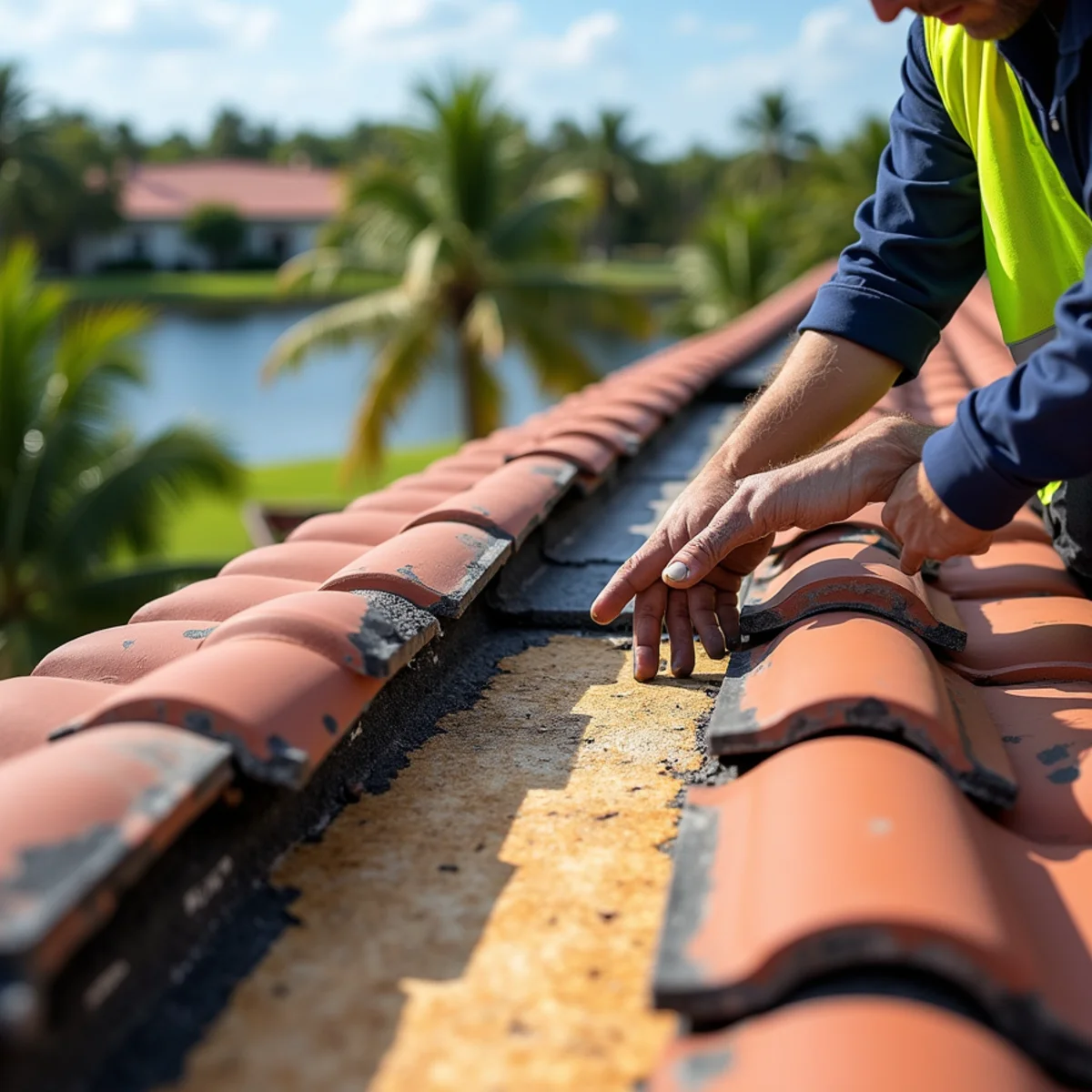
Concrete tile can outlast the layer beneath it by many years. On a lot of Boca Raton homes built in the 1980s and 1990s, the tile still looks sound while the original felt underlayment has dried out, split at the laps and started letting water reach the deck. At that point a new roof is less about the tile and more about everything under it.
Our tile re-roofs remove the tile, strip the old underlayment to the deck, repair and re-nail the sheathing, and install new self-adhered underlayment before new or approved reused tile goes back on. If only part of your roof is failing, tile roof repair may still be the smarter spend. Where wind resistance is a priority, we also build hurricane roof upgrades into the project.
Reviewed by the Rising Roof Services team · Boca Raton, FL

When a tile roof needs replacing
Tile roofs rarely give one obvious signal. These patterns point toward a full replacement.
Leaks on several slopes
Leaks in more than one room usually trace to underlayment breaking down everywhere, not a single broken tile.
Underlayment that tears like paper
When we lift tiles and the felt crumbles or the peel-and-stick has lost its bond, patching won’t last.
An original roof from the 1980s or 1990s
Many first-generation tile roofs in West Boca are at or past the typical service life of their underlayment.
Porous, brittle tile throughout
Older concrete tile that has lost its surface coating absorbs water and snaps under light foot traffic.
Deck damage seen from the attic
Dark stains, delaminating plywood or rusted nail tips point to long-term moisture above.
Repairs that don’t hold
When each fix stops one leak and another appears nearby, the system underneath is done.
What a tile re-roof from Rising Roof Services includes
A tile replacement has more moving parts than any other roof we build. These deliverables are written into every scope.
A tile assessment before anything is ordered
Sample tiles from several slopes are checked for brittleness, worn surface coating and cracks at the nail holes, so the new-or-reuse decision fits the roof you actually have.
Strip-off down to the deck, old mortar included
Tile, felt or peel-and-stick and the hardened mortar beds at hips and eaves all come off, so the new system isn’t laid over lumps and old adhesive.
Sheathing fixed and fastened to code
Soft boards are swapped at the per-sheet price in your scope and the deck is fastened down to meet the nailing requirements your permit calls for.
Self-adhered underlayment, named with approvals
The single-ply or base-and-cap system is listed by product, and a dry-in inspection is booked wherever the building department requires one.
Attachment set by the tile’s approval
Foam paddies, mortar or fasteners are placed exactly as the approval specifies for your roof’s design wind pressure, with new bird stop and eave closures.
New metal chosen for exposure
Valley metal, drip edge, pipe jacks and stucco stop are all new, in a metal suited to how close the house sits to salt air.
Records for your insurer and HOA
You keep photos of each stage, the permit final, the tile and underlayment approvals and a note of the attachment method used.
How a tile re-roof comes together
A tile replacement has more stages than a shingle job, and it’s heavy work, so staging and sequencing matter.
- 1
Inspection and tile assessment
We photograph the roof and attic, test tile condition and decide with you whether new or salvaged tile makes sense.
- 2
Scope, approvals and HOA
The written scope lists underlayment, tile, attachment method, flashings and product approvals; we help assemble your architectural review submittal.
- 3
Permit
Permitting goes through whichever office covers your address, and we book every inspection it requires, including a dry-in check where one applies.
- 4
Tear-off and dry-in
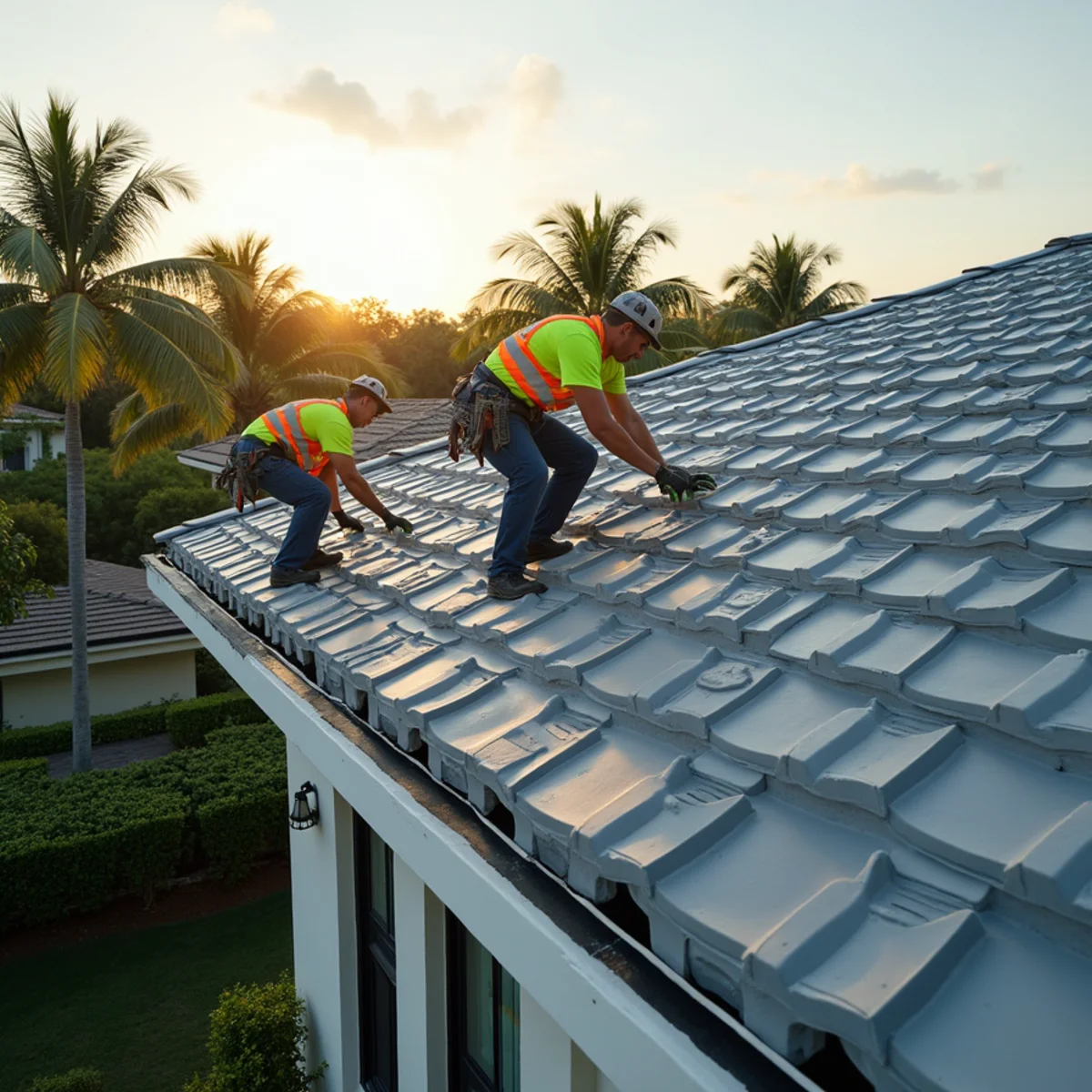
Tile and underlayment come off; rotted sheathing gets swapped out, every sheet is fastened again to current schedules, and new self-adhered underlayment goes down.
- 5
Tile installation
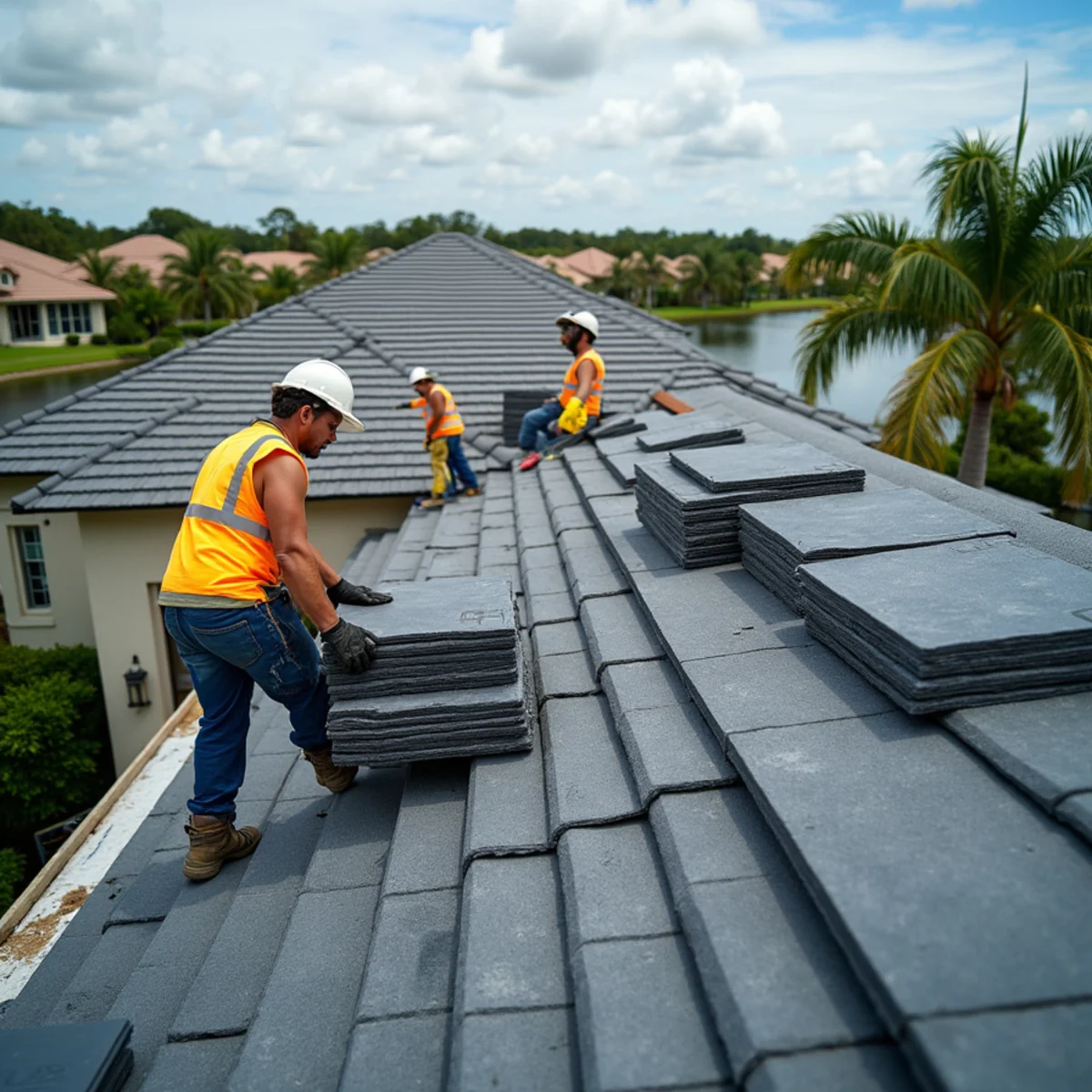
Tile is loaded and set with foam adhesive or mortar per the product approval, with new bird stop, valley metal, hip and ridge and flashing details.
- 6
Final inspection and cleanup
After the final inspection we clear broken tile, mortar and nails from the property, then walk you through a photo record of every phase.
Tile replacement cost factors
A tile re-roof is one of the larger investments a Boca homeowner makes, so it’s worth knowing where the money goes.
- New tile vs. reused tile
- Reusing sound tile saves material but takes careful removal and extra labor; new tile brings consistent color and a current product approval.
- Tile type and profile
- Flat concrete, barrel concrete and clay differ in cost, weight and installation time.
- Underlayment system
- Self-adhered products vary, as does whether a separate base sheet is used under the cap sheet.
- Deck repair and re-nailing
- How much rotted sheathing turns up at tear-off affects the final scope, which is why we explain up front how it’s priced.
- Roof geometry
- Hips, valleys, turrets and multiple levels mean more cutting, more trim tile and more flashing.
- Jurisdiction and HOA
- Broward HVHZ requirements, permit fees and community rules all shape the product list and process.
Your written, itemized scope spells out, in advance, how sheathing that turns up rotten at tear-off will be priced and approved.
Why choose Rising Roof Services for tile roof replacement
Straight answers on reusing tile
If your tile can go back on, we tell you. If it is too brittle to survive removal, the photos show why. Findings we can only verify after tear-off are flagged as suspected, never presented as fact.
HOA submittals assembled for you
Tile color and profile usually go through architectural review. We gather the spec sheets, approvals and samples your board asks for and hold the tile order until approval is in hand.
A scope that survives tear-off
Breakage allowance, sheathing unit price and hauling for heavy tile debris are itemized before you sign. Customers say their projects came in within the quoted amount.
Organized crews on long, heavy jobs
A tile re-roof puts pallets on the driveway and load on the roof for days. Our 5.0 rating across 31 Google reviews leans on crews described as organized, careful with property and unwilling to cut corners.
Three permit paths, one team
City of Boca Raton, Palm Beach County PZB and Broward’s HVHZ departments each want different paperwork. We confirm the tile and underlayment approvals match your jurisdiction before anything is delivered.
5.0 stars from 31 Google reviews · Open 24 hours, 7 days · (831) 666-1600
Foam-set vs. mortar-set tile
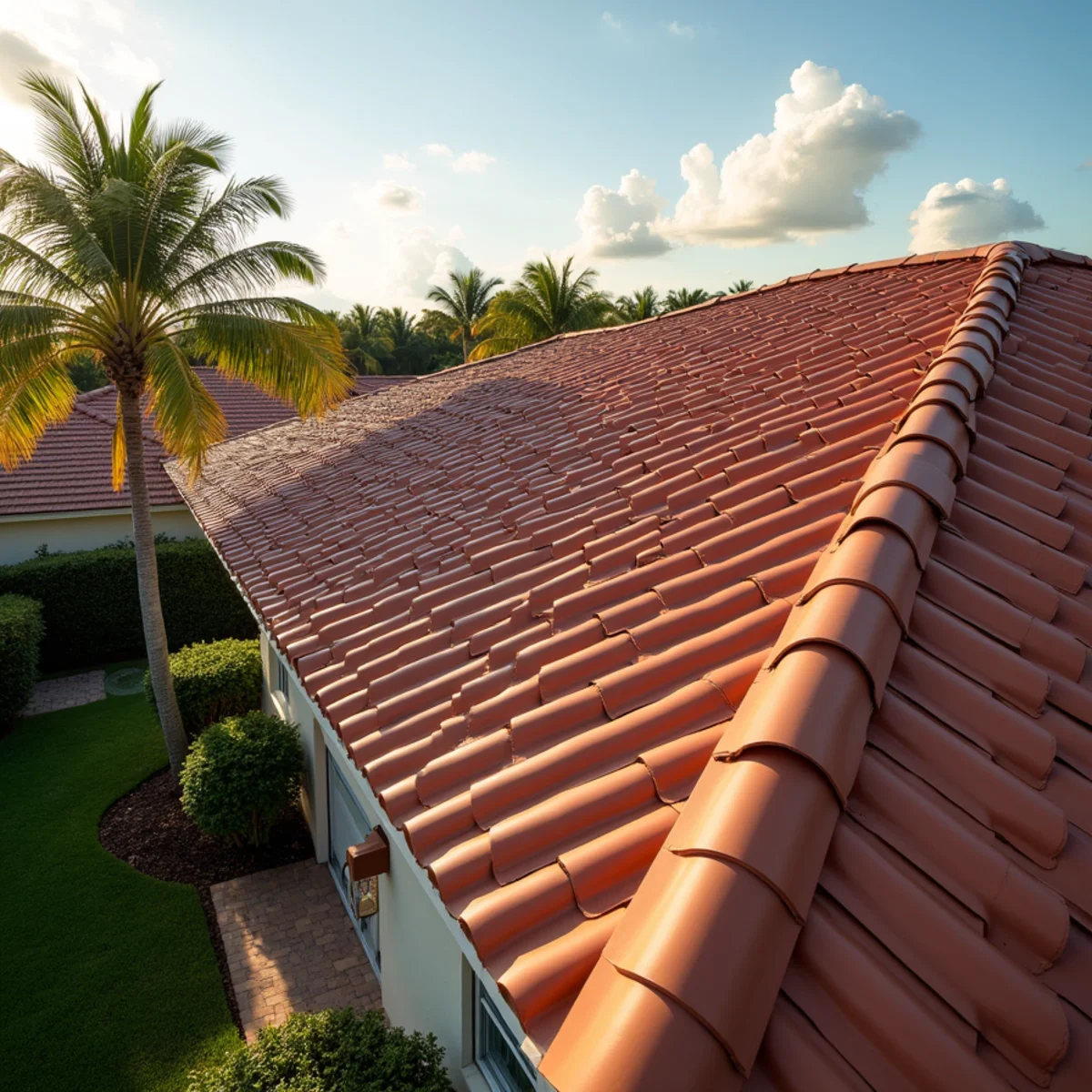
Older Boca tile roofs were usually set in mortar. Many newer installations use polyurethane foam adhesive, which is lighter and, when applied as the product approval specifies, holds up well in uplift testing. Mortar is still common at hips, ridges and eaves on some profiles. The right method depends on the tile, the approval and your roof, and the scope spells out which we’ll use.
Crossing into Broward’s HVHZ
Just south of the county line, Parkland and Deerfield Beach sit in Broward’s High-Velocity Hurricane Zone, where tile, underlayment and adhesives need Miami-Dade NOA or HVHZ approval. Palm Beach County isn’t HVHZ but still carries high design wind speeds. Our post on HVHZ roofing in Parkland covers what changes, and our article on tile roof underlayment leaks explains why the layer under the tile matters so much.
Code, wind uplift and the FRSA-TRI manual
In a hurricane, wind racing across the roof lowers the pressure above each tile while air pushes up from beneath, and that difference, called wind uplift, is what the attachment has to beat. Foam paddies, mortar or fasteners are sized from the tile’s product approval for your roof’s design wind pressure.
In Palm Beach County, a tile re-roof is permitted under the 8th Edition (2023) of the Florida Building Code, whose design wind loads are based on ASCE 7-22. Florida’s tile industry publishes the FRSA-TRI installation manual for high-wind areas, and the manufacturer’s approval spells out which of its methods apply to your tile. Keep copies with your closeout records.
Tile-specific lines to compare on a re-roof bid
Tile bids leave more room for surprises than shingle bids, mostly because of breakage and weight. When you compare three or more written estimates, check that each one addresses the lines below. Our tile roof cost breakdown for Boca Raton gives background on what drives tile pricing.
- Tile source: new concrete tile by manufacturer and profile, or reused tile with a stated breakage allowance.
- Underlayment: base sheet and cap sheet, or a single self-adhered layer, named with approval numbers.
- Sheathing: a replacement allowance and unit price per sheet, with photos of rotted boards before they’re swapped.
- Metal work: valley metal, drip edge, pipe jacks and stucco stop, and which metal suits salt-air exposure east of I-95.
- Tear-off weight: old tile and mortar fill dumpsters fast, so hauling should be priced rather than assumed.
- Warranties and milestones: tile, underlayment and workmanship coverage listed separately, with payments tied to dry-in, tile loading and final inspection.
Lift-and-relay or all-new tile: how we decide
A lift-and-relay, sometimes called a re-lay, keeps your existing tile and replaces everything under it. The tile is lifted and stacked, the old underlayment is stripped, the deck is repaired and re-nailed, and the same tile is set back on new underlayment with fresh attachment. New tile is bought only to cover breakage. It is a real re-roof, permitted like one, not a shortcut.
Whether it fits your house comes down to a few checks we photograph and share:
- Tile strength: pieces that snap when lifted or crumble at the nail hole won’t survive a second installation.
- Surface wear: concrete tile that has lost its coating soaks up water and grows algae faster, even if it isn’t cracked.
- Profile availability: breakage has to be replaced with a matching profile, or borrowed from a slope nobody sees.
- Approval for reinstallation: the tile’s product approval must still cover the attachment method we plan to use.
- HOA and appearance: some boards prefer a uniform new color, and reused tile keeps its weathered look.
Living under a tile re-roof
Tile replacements run longer than shingle jobs and stage differently. After the tear-off and dry-in, pallets of tile are lifted to the roof and spread along the slopes so the weight is shared across the framing. For a stretch of days the house is protected by underlayment alone, which is why we watch the forecast closely and sequence work around afternoon storms.
Cutting tile with a wet or dry saw throws off fine dust, so keep windows shut on the work side and cover the pool if you can; we rinse and sweep walkways as each phase wraps up. The driveway is usually needed for tile pallets and the dumpster for most of the project, so plan parking with neighbors or your community. Your scope lists the sequence, and we update you whenever an inspection or the weather moves it.
Tile Roof Replacement near you
Based at Woodfield Plaza in Boca Raton, we provide tile roof replacement across West Boca and nearby communities, including:
Tile Roof Replacement FAQs
Can you reuse my existing tile?
Sometimes. If the tile is structurally sound, the profile is still available for matching and the product approval allows reinstallation, reuse can make sense. Expect some breakage during removal, so we plan for replacements. On older concrete tile that has turned porous or brittle, new tile is usually the better long-term choice, and we’ll show you what we found.
How long does a tile re-roof take?
Longer than a shingle roof, because of the extra steps: tile removal, underlayment, inspections and reinstallation. Weather, permit timing, HOA approval and tile delivery all play a role. We lay out a realistic schedule in the written scope and keep you informed if rain or inspection timing shifts it.
Will my HOA need to approve the new roof?
Most Boca Raton communities with tile roofs require it. Associations often control tile color, profile and sometimes manufacturer to keep streets consistent. We help gather spec sheets, approvals and samples for your application and wait for approval before ordering tile. Rules differ from one community to the next, so check your governing documents early.
Can I switch from shingles to tile?
Possibly, but it needs checking first. Concrete and clay tile are far heavier than asphalt shingles, and a home framed for shingles may need an engineering review of the trusses before tile goes on. If your home already has tile, the structure was designed for that load. We won’t recommend a change in roof type without confirming the framing can carry it.
When is the best time to schedule a tile re-roof in Boca Raton?
If the roof isn’t actively leaking, aim for the drier stretch from about November through April. A tile re-roof leaves the house protected by underlayment alone while tile is loaded and set, and fewer afternoon storms make that stage easier. An active leak shouldn’t wait for the calendar, though; a temporary repair can hold until the full job starts.
Can I switch from tile to shingles when I replace the roof?
Structurally it is usually straightforward, because framing built for tile can carry a lighter covering. The limits are elsewhere: many Boca Raton HOAs require tile to keep streets consistent, and the look of the house changes a lot. Check your governing documents first, then compare the options side by side in writing before deciding.
What is a dry-in inspection on a tile re-roof?
Where the building department requires it, an inspector checks the new underlayment before any tile is loaded, looking at laps, fastening, flashings and the edges. Passing it confirms the waterproofing layer is right while it can still be seen. We schedule it as part of the permit, and the tile goes on only after it passes.