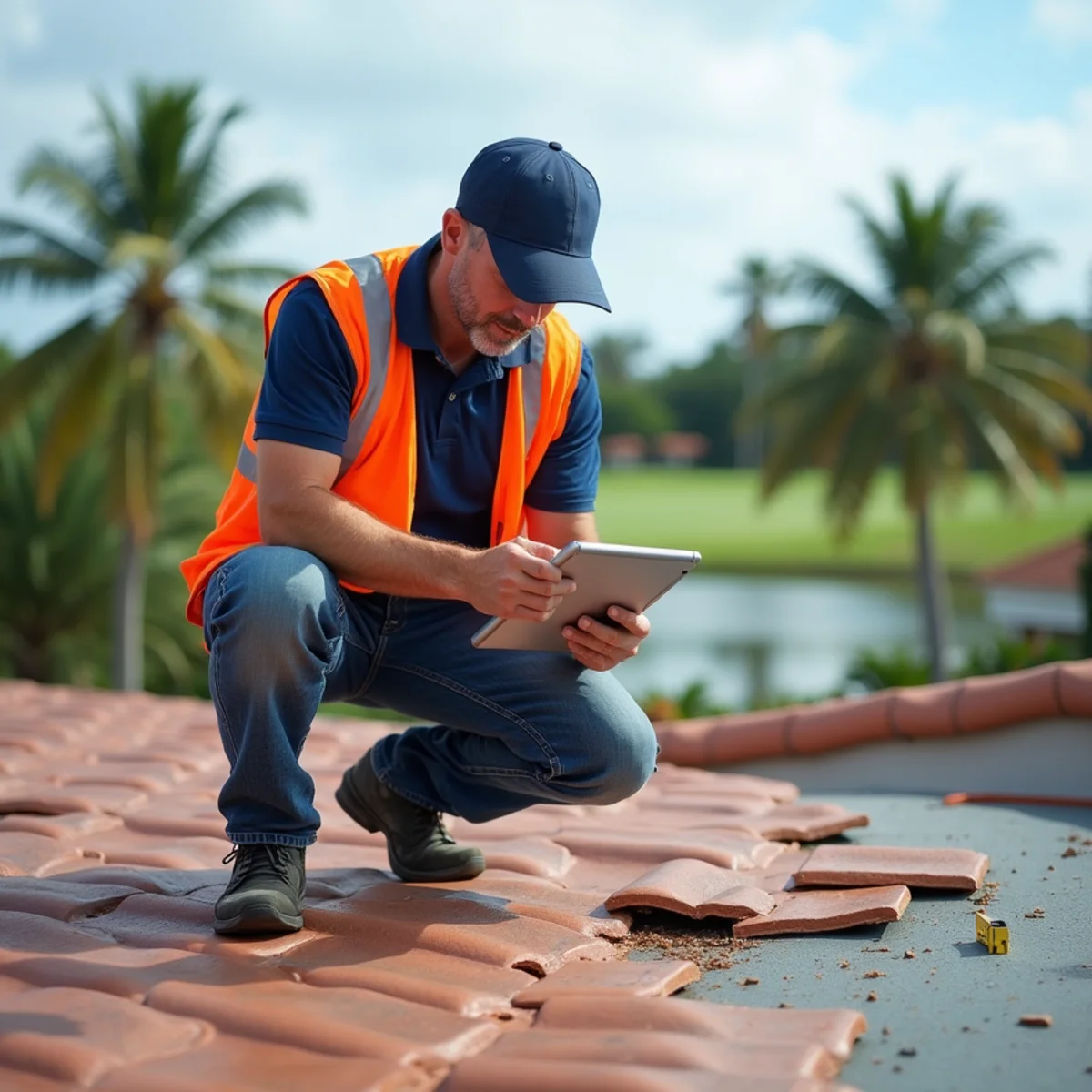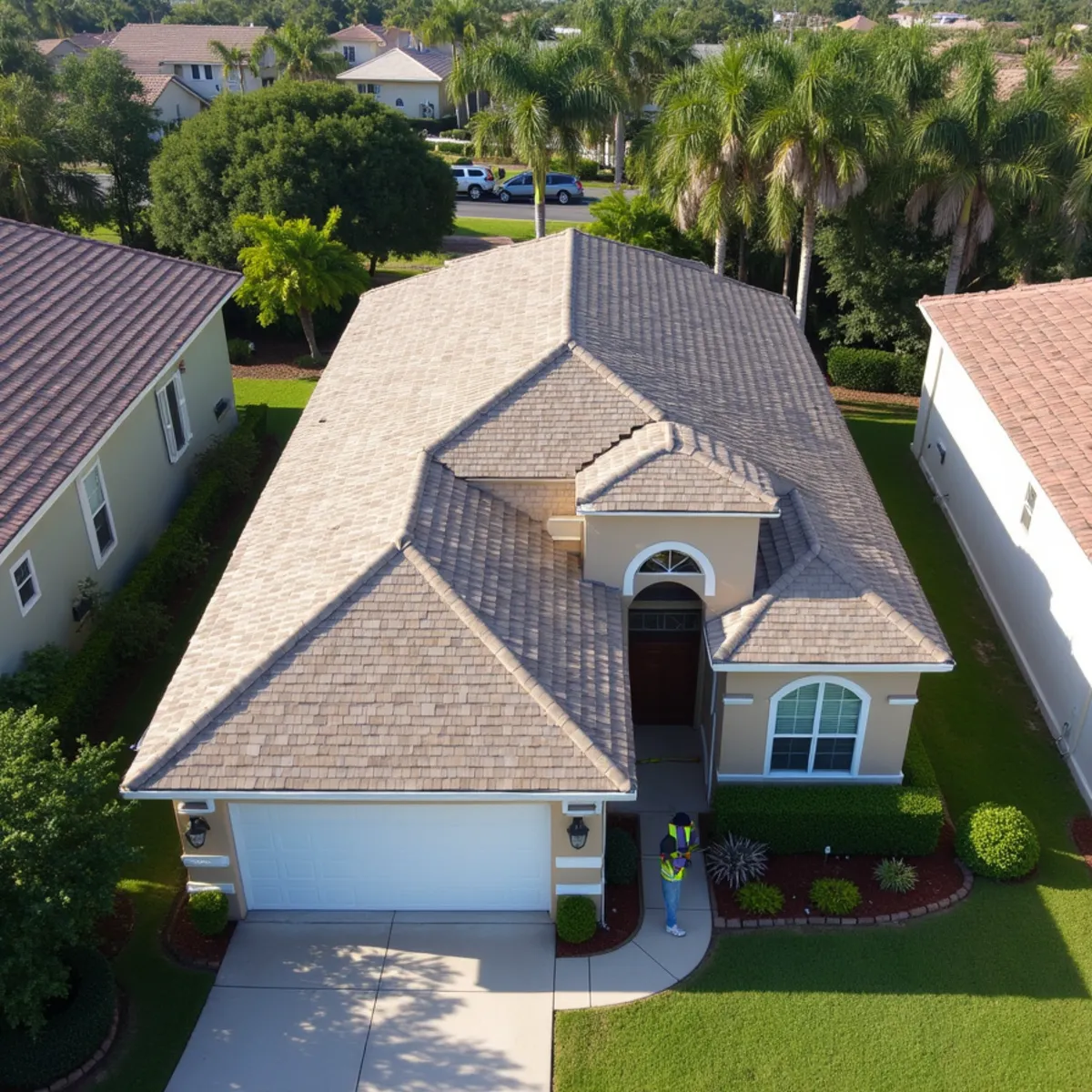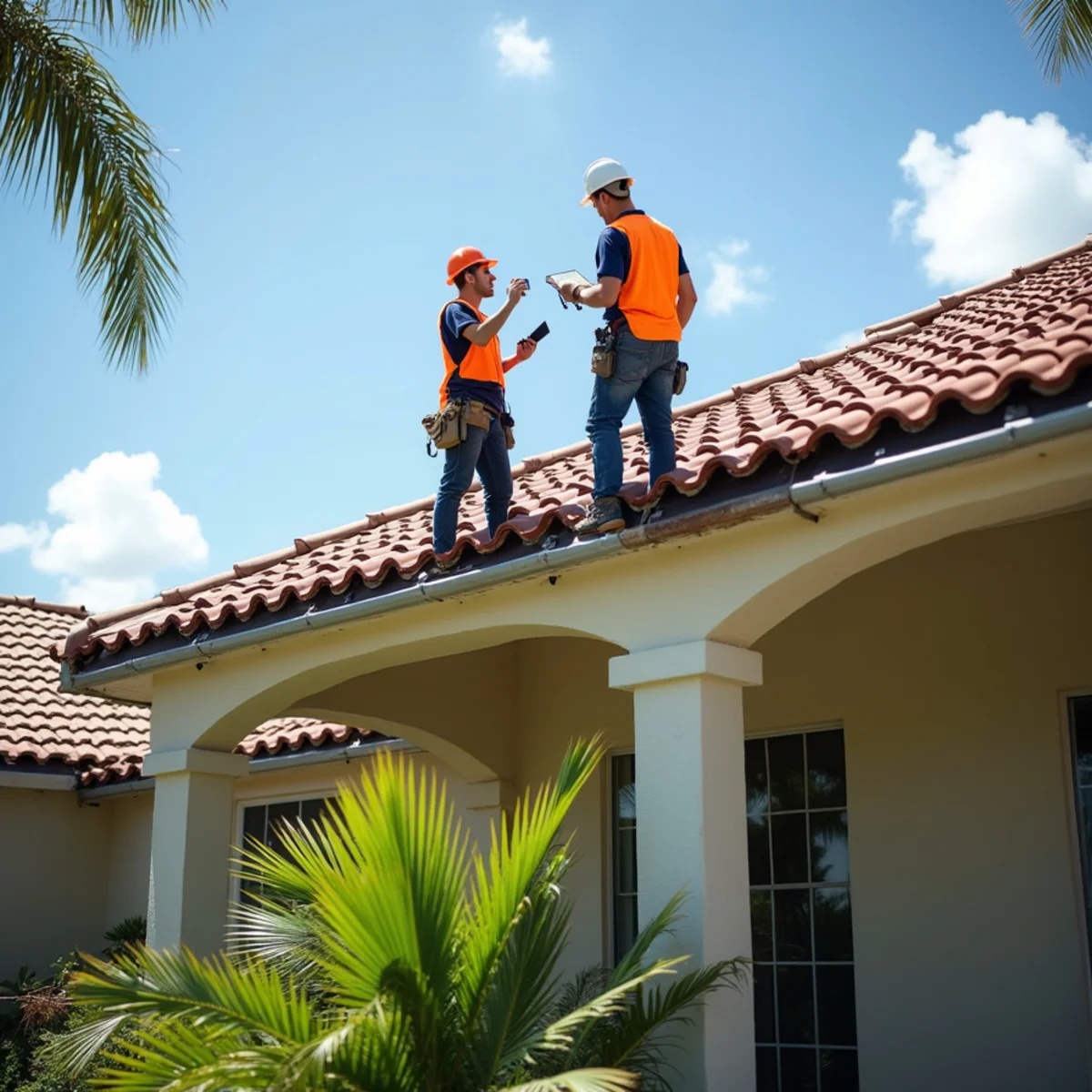
Hurricane roof repair in Boca Raton starts with drying the house in, then rebuilding what failed to the current Florida Building Code: displaced tile courses, torn underlayment, loose deck sheathing and peeled edge metal. Rising Roof Services assesses the whole roof system after a named storm, documents every slope for your claim file, and repairs the damage so it holds up better in the next one.
A hurricane loads a roof very differently from a summer storm. Hours of sustained wind, gusts that swing direction as the eye passes, and rain driven almost sideways all hunt for weak points: tile set with too little adhesive, decking nailed to an old schedule, a ridge held by brittle mortar. The result is usually damage spread across the whole structure rather than one torn corner.
Once the storm clears, the first job is stopping more water from getting in. Next comes a careful look at what failed and why, so the repair fixes the cause instead of just replacing what blew away. Where openings can’t be sealed right away, we start with emergency roof tarping.
Because almost every hurricane repair ends up in front of an adjuster, we document as we go: wide shots, close-ups, measurements and notes on roof age and construction. If a large section has to be rebuilt anyway, it can be the right moment to talk about hurricane roof upgrades such as a sealed deck and ring-shank re-nailing.
Reviewed by the Rising Roof Services team · Boca Raton, FL
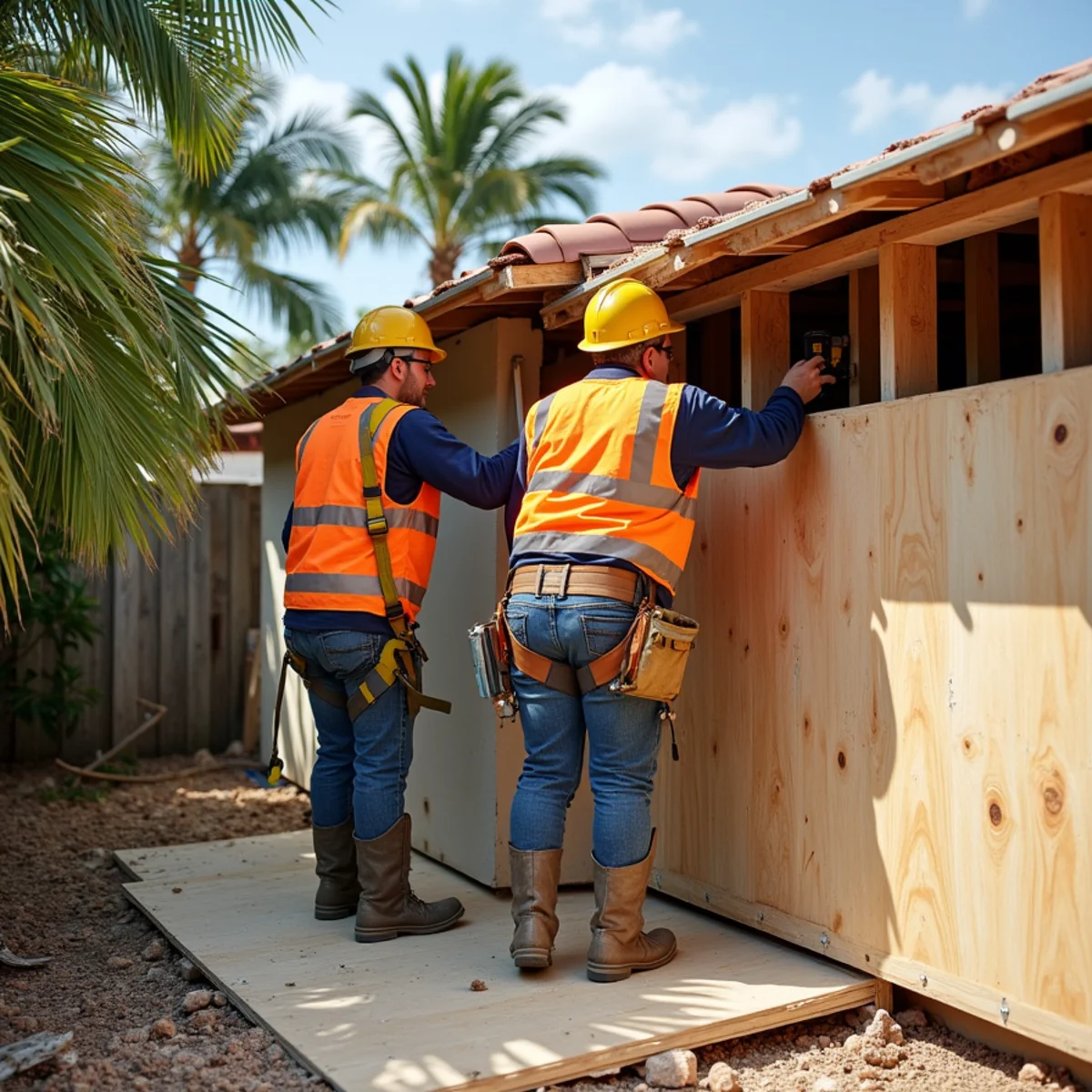
What Hurricane Damage Usually Looks Like
After a direct hit or a close pass, these are the problems we find most often on Boca-area roofs:
Displaced tile along eaves and rakes
Uplift peaks at edges and corners. Entire courses of tile can shift, taking bird stop and eave closure with them.
Torn or exposed underlayment
With the covering gone, underlayment is the last barrier. Peel-and-stick often holds; older 30# felt rips and lets water straight onto the deck.
Lifted deck sheathing
On older homes with light nailing, whole plywood panels or runs of 1x6 board can pull free, opening the attic to rain.
Debris impact
Limbs, patio furniture and a neighbor’s roofing become projectiles that puncture shingles and shatter tile.
Water in the attic and walls
Wet insulation, stained trusses and damp drywall should be dried within 24 to 48 hours to limit mold growth, per EPA guidance.
Peeled flat sections
Low-slope roofs over patios and additions often fail at the edge metal where they tie into the main roof.
What a hurricane roof repair from us covers
After a named storm, the job runs from the first tarp to the final inspection. These are the pieces you can expect to see.
A structural look before anyone walks
Sagging ridge lines, cracked trusses visible from the attic and loose sheets of decking are checked first, so the assessment itself doesn’t cause a collapse or an injury.
Dry-in of every open area
Exposed deck and torn underlayment are covered with secured tarps or temporary membrane, and the areas are logged so the permanent crew knows exactly what sits underneath.
Deck attachment checked from the attic
Where the attic is reachable, we look at nail spacing and missed fasteners along the rafters. That tells us whether a lifted panel was a one-off or a sign the whole deck is under-nailed.
Measured, slope-by-slope documentation
Each face of the roof gets wide and close photos plus measurements of damaged areas, with notes on roof age, covering type and construction your adjuster will ask about.
Permit filing with the right office
When the repair needs a permit, the application goes to whichever office governs your address (the city’s building department inside Boca limits, the county’s PZB for unincorporated West Boca), and we book the inspections.
Code-level rebuild of repaired areas
New sections go down with the underlayment, ring-shank deck fastening and edge metal the 8th Edition code calls for, using products with Florida approval for the application.
Debris haul-off and a closing photo set
Broken tile, torn felt and storm debris from the roof are hauled away, and you get a final set of photos showing the finished repair for your insurer and your own records.
Our Post-Hurricane Repair Process
- 1
Safety check
Before anyone climbs, we look for downed lines, compromised trusses and loose material overhead. Some roofs have to be assessed from a ladder before they can be walked.
- 2
Dry-in
Openings are covered with edge-secured tarps or temporary underlayment so the interior stops taking on water while the full scope is worked out.
- 3
Assessment and documentation
We photograph each slope, measure damaged areas, note deck condition and roof age, and record how each failure happened.
- 4
Written scope and permits
You get an itemized scope. When the work requires a permit, we file with the City of Boca Raton or Palm Beach County, depending on your address.
- 5
Repair to current code
Repaired areas are built to the Florida Building Code, 8th Edition, including deck fastening and underlayment rules that may be stricter than what your roof had before.
- 6
Final walk
We finish with a full-roof walk and a closing photo set for your records and your insurer.
Cost Factors for Hurricane Roof Repairs
A hurricane repair can mean a few dozen tiles or most of a roof. What moves the scope:
- How much deck is exposed
- Missing roofing over intact underlayment is far smaller work than open deck, where sheathing and underlayment both need replacing.
- Code-driven upgrades
- Depending on how much is replaced and when the roof was last permitted, the building department may require re-nailing, new underlayment or other upgrades to the repaired area.
- Post-storm material supply
- Tile, underlayment and flashing stock tighten after a regional hurricane, which can affect lead times and product substitutions.
- Damage found through the attic
- Wet attic areas can reveal rotted decking or damaged framing that becomes part of the roofing scope.
- Temporary protection
- Tarping or dry-in completed before the permanent repair is listed as its own line item.
We provide a written, itemized scope before work starts, with each item tied to a photo so you and your adjuster can follow the reasoning.
Why choose Rising Roof Services for hurricane roof repair
Water stopped before paperwork starts
Calls about open roofs and active leaks after a hurricane get a same-day callback, and dry-in comes ahead of the full assessment. Our Google profile shows the office as open 24 hours, though after a regional storm we give you an honest arrival window rather than a promise.
A scope your adjuster can follow
Each line of the itemized scope ties back to a labeled photo, and findings are marked confirmed or suspected. We can walk the adjuster through it on site, while the coverage decision stays with your insurer.
Familiar with older West Boca decks
Our Woodfield Plaza base is minutes from the 1970s and 1980s subdivisions where light deck nailing shows up after a hurricane. Reviewers note that we inspected their roofs extensively before starting work.
Thorough work without shortcuts
Customers behind our 5.0 rating on 31 Google reviews describe a whole roof installed promptly without cutting corners, crews that arrived on time and a finished job within the quoted amount.
5.0 stars from 31 Google reviews · Open 24 hours, 7 days · (831) 666-1600
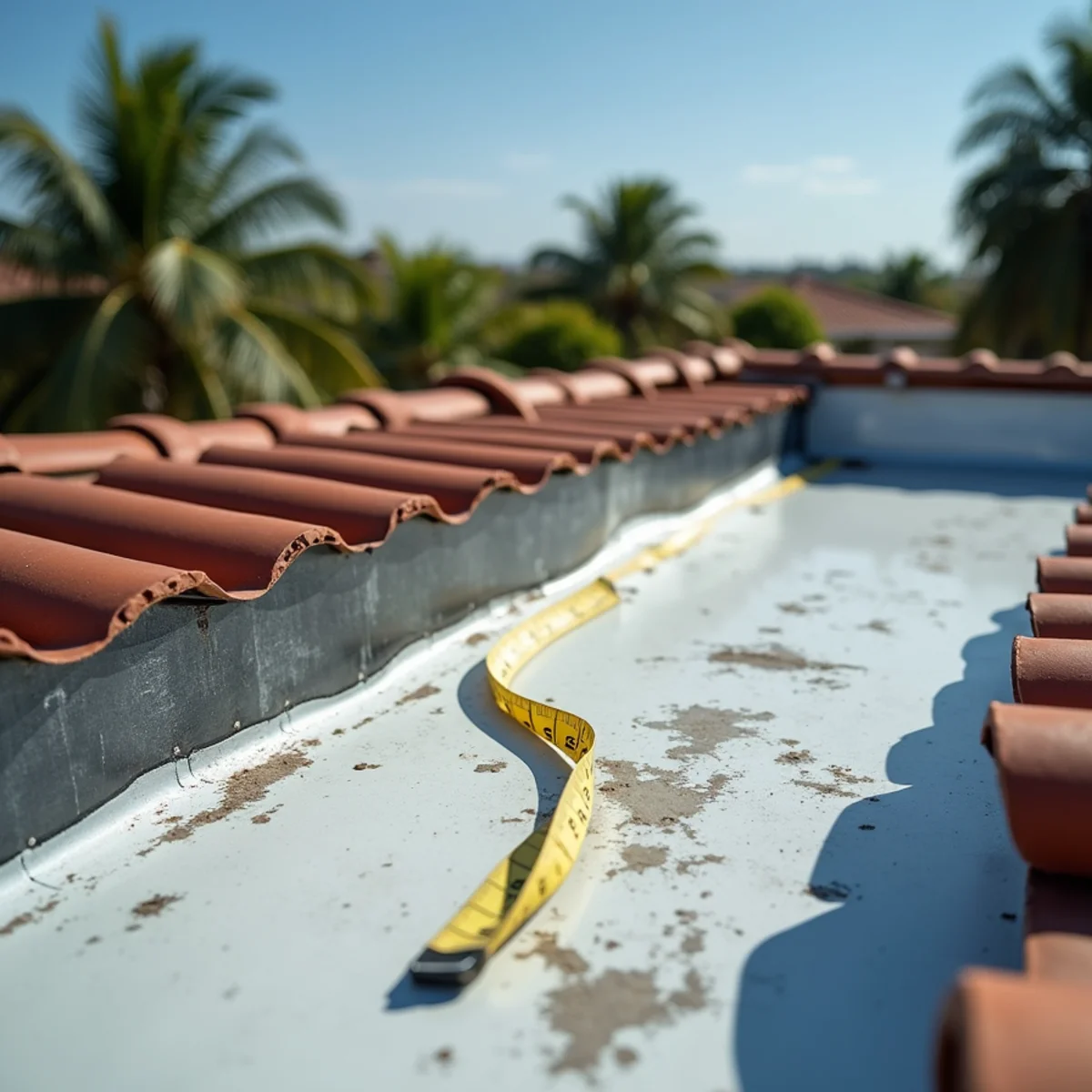
Why Some West Boca Roofs Fare Worse
Many homes in Boca Del Mar and around the Hamptons at Boca Raton were built in the 1970s and 1980s, long before Hurricane Andrew led to the statewide Florida Building Code. Their decks were often fastened with smooth-shank nails at wide spacing, and some carry a second or third roof over that original sheathing. When a hurricane peels the covering back, weak deck attachment is a common discovery.
That’s why a repair on these homes can grow beyond what’s visible from the ground, and we show you the photos to explain why. Coastal homes in Highland Beach fail differently: salt air off the Atlantic and the Intracoastal corrodes fasteners and edge metal, so flashing can let go before the tile does.
What to Record Before We Arrive
If it’s safe, take date-stamped photos of every side of the house, any roofing on the ground and interior stains or drips. Keep damaged pieces instead of tossing them. Our post on what to document first after a hurricane in West Boca has a fuller checklist.
The Order of Work After a Hurricane Passes
The Atlantic hurricane season stretches from June 1 to November 30. After a regional storm, every roofer, adjuster and building department gets busy at the same time. Doing things in the right order keeps a wet house from getting wetter and keeps the claim file clean.
- Day one: stop the water. Tarp or dry in open areas, and start drying wet insulation and drywall inside the 24-to-48-hour window EPA guidance recommends.
- First few days: notify your insurer under the policy’s reporting terms, and hold on to every photo, receipt and damaged piece.
- Before the adjuster’s visit: get a written assessment that separates hurricane damage from wear that was already there. Temporary covers stay on, but nothing is permanently repaired yet.
- After the insurer inspects: review what was approved before authorizing permanent work. Our roof insurance claim help page covers what to check.
- Permit and product approvals: the scope names who files the permit, who covers the fee and who books each inspection. The permanent repair then follows the 2023 Florida Building Code (8th Edition), using approved products fastened for the wind loads the code takes from ASCE 7-22.
Repair or Replace After a Hurricane?
A hurricane forces a decision a summer storm rarely does: is it still worth patching this roof, or is the damage the start of a replacement? We lay out the evidence on both sides in the written scope. These are the questions that usually decide it.
- How much of the deck was exposed. Scattered missing tile over intact underlayment points toward repair. Open sheathing on several slopes points the other way.
- What the underlayment is. Peel-and-stick that held through the storm can support a repair for years. Original felt that tore wherever tile moved is often failing across the whole roof.
- How the deck is fastened. Widely spaced smooth-shank nails found in one lifted area are almost certainly the same everywhere else.
- Whether matching material exists. If your tile profile or shingle line is discontinued, a large patch may never blend in.
- Code and insurability. The 25% rule, the year the roof was permitted and your insurer’s view of roof age all feed into the answer. Our guide to Florida’s 25% roof rule explains the 2022 change, and when replacement wins we scope a tile roof replacement or shingle re-roof instead.
Soffits, Fascia and Gutters Take a Hit Too
Hurricane rain doesn’t only come through the roof covering. Wind drives water up through vented soffit panels, behind a fascia board that pulled loose, and over gutters that sagged or tore away from the edge. The result looks like a roof leak inside, even when the tile above is fine.
We check the whole roof edge as part of the assessment and note soffit, fascia and gutter damage in the report with photos, even when part of that work belongs to another trade. Drip edge and eave metal that tie into the roof are part of our repair scope.
Why Repair Schedules Stretch After a Regional Storm
After a hurricane crosses South Florida, demand spikes everywhere at once. Crews get pulled toward the hardest-hit areas, tile and underlayment suppliers run short, and building departments see a wave of permit applications. A storm that makes landfall elsewhere in the state can still slow Boca projects when crews and material head there.
That’s why we separate the work into stages. Dry-in and documentation happen first, because they protect the house and the claim. The permanent repair is then scheduled once materials and permits line up, with any tile substitutions discussed with you before they are ordered.
Hurricane Roof Damage Repair near you
Based at Woodfield Plaza in Boca Raton, we provide hurricane roof damage repair across West Boca and nearby communities, including:
Hurricane Roof Damage Repair FAQs
How soon after a hurricane can you inspect my roof?
That depends on how widespread the damage is and how many calls come in at once. We prioritize active leaks and open roof decks, then work through full assessments. We won’t promise an arrival time we can’t keep. Call (831) 666-1600, describe what you see, and we’ll give you an honest sense of when we can be there.
Will the repaired section have to meet the current building code?
Yes. Any repaired or replaced area must meet the Florida Building Code in force when the permit is issued, currently the 8th Edition. Whether the rest of the roof must also be upgraded depends partly on when it was installed. Roofs built under the 2007 code or later generally need only the repaired portion brought up to code, but the building department makes the final call.
My tile roof looks intact. Could it still be damaged?
It could. Hurricane winds can crack tile along the fastener line or break the adhesive bond without visibly moving the tile. Water can also get beneath tile through a displaced hip or a failed valley with no sign from the ground. A close inspection that includes lifting a sample of tiles is the only reliable way to know.
Can you work directly with my insurance adjuster?
We can meet the adjuster on site, point out the damage we documented and walk through our scope and photos. We don’t negotiate your claim or act as a public adjuster, and the coverage decision rests entirely with your insurer. You remain the policyholder and the decision-maker throughout the process.
Does homeowners insurance cover hurricane roof damage in Florida?
It depends on your policy. Many Florida policies carry a separate hurricane deductible, often figured as a percentage of dwelling coverage rather than a flat amount, and it usually applies only when the storm meets the policy’s hurricane definition. Exclusions for wear, prior damage or wind written under a separate policy can also change the answer. Your insurer makes the decision after its review. We document the damage, and your agent can explain your specific coverage.
Will my roof need to be replaced after a hurricane?
Not necessarily. Many roofs come through a hurricane needing a few hundred tiles, a rebuilt hip or a section of new underlayment, and a targeted repair is the right answer. Replacement becomes the better option when open deck shows up on several slopes, the old underlayment tore everywhere tile moved, or the deck nailing is weak throughout. We show you the photos behind the recommendation either way.
What should I do while I wait for a permanent hurricane repair?
Keep the temporary cover in place and check it after every rain, especially at the edges where wind can work it loose. Keep drying the interior and hold on to receipts for fans, dehumidifiers and tarps. Avoid hiring a second crew to patch over the damage before your insurer has inspected, because that can make it harder to show what the storm did.