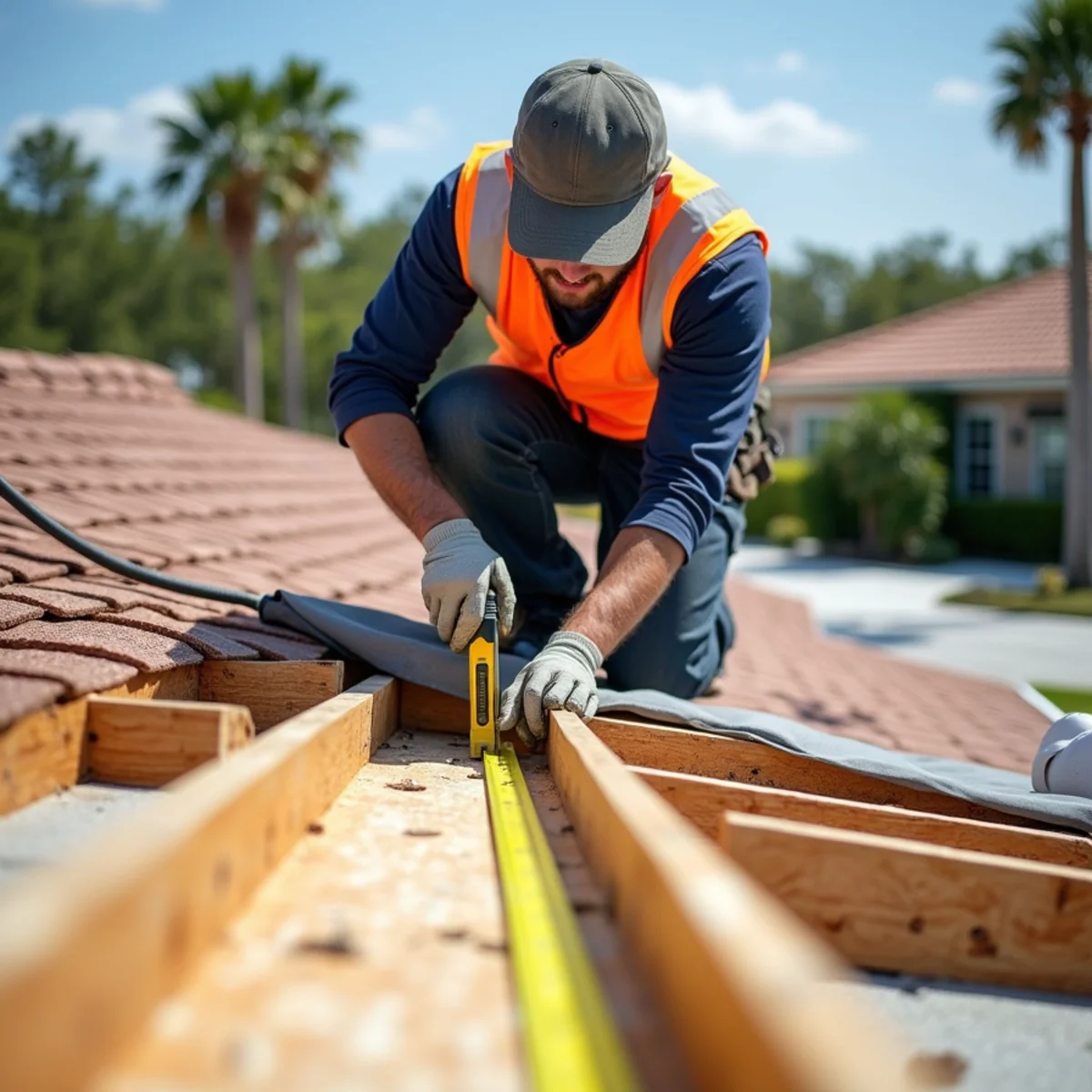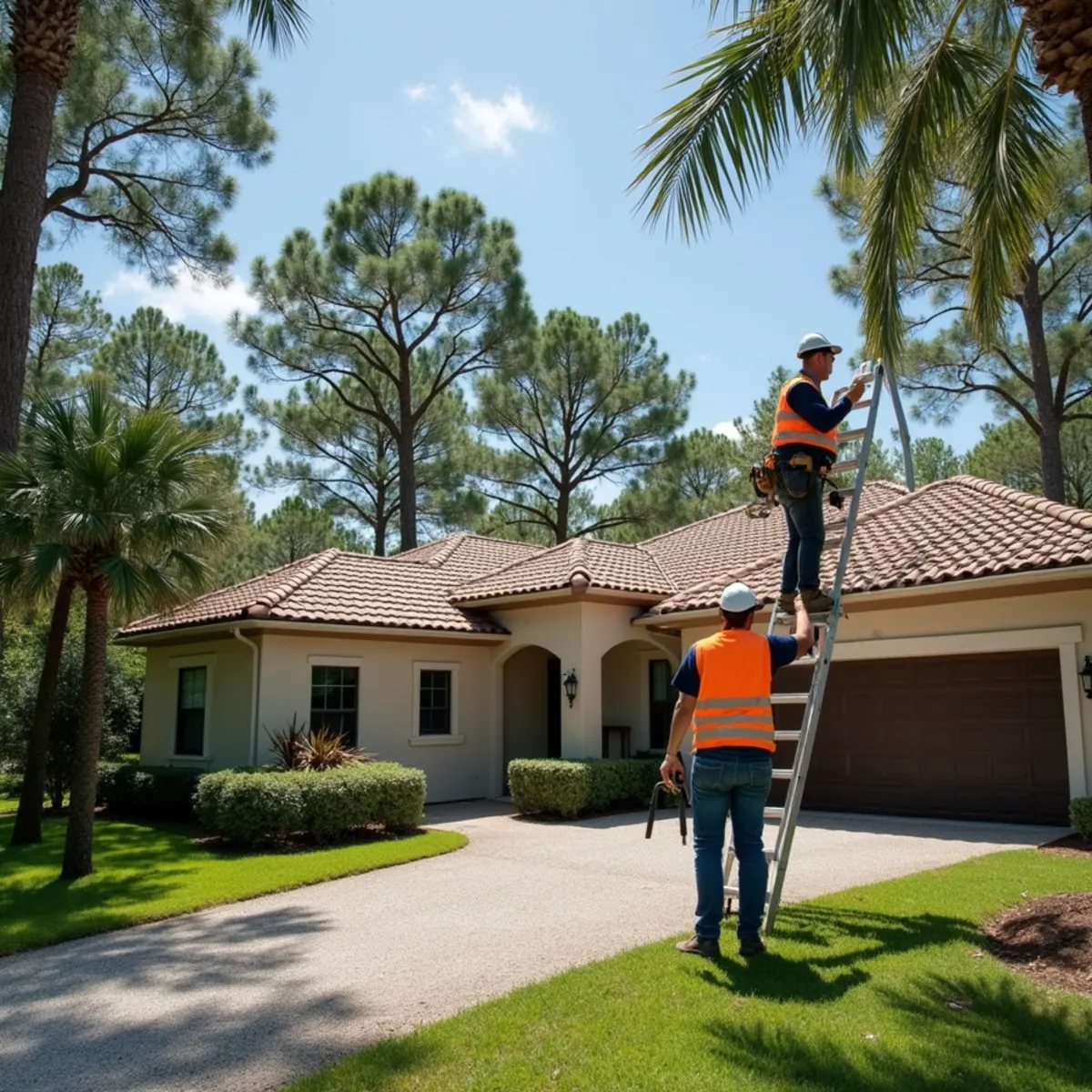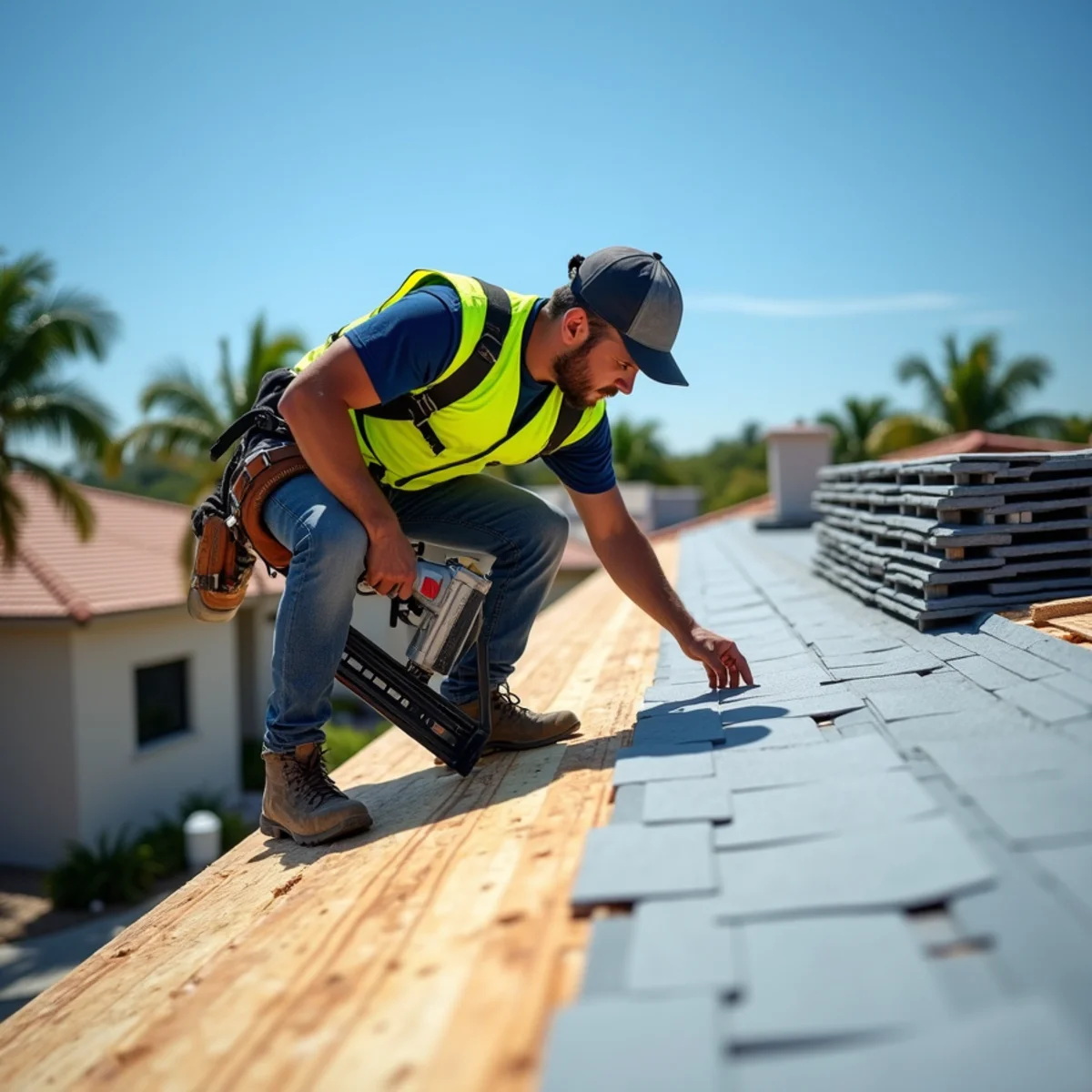
Hurricane roof upgrades in Boca Raton are the strengthening steps added while the deck is bare during a re-roof: ring-shank re-nailing, a sealed deck for secondary water resistance, better-anchored edges, hips and ridges, and roof-to-wall connections where they apply. Rising Roof Services lists which items the Florida Building Code requires and which are optional, then photographs each one before it disappears under new tile or shingles.
The best time to strengthen a roof against hurricanes is when the old roofing is already off. With the deck exposed, adding fasteners, sealing seams and improving how edges and ridges are held down takes relatively little extra effort. Once new tile or shingles go on, those opportunities stay buried for decades.
Some of these upgrades aren’t optional. The Existing Building volume of the Florida Building Code requires certain mitigation during a re-roof on site-built single-family homes, including secondary water resistance and re-nailing the deck to current schedules, plus roof-to-wall connections on some higher-valued homes. Exact requirements depend on the house, and we build them into every tile roof replacement and shingle roof replacement we scope, then explain which items go beyond the minimum.
Past the code minimum, well-documented upgrades can show up on a wind mitigation inspection (form OIR-B1-1802), which insurers use when applying wind premium credits. We can’t promise a particular discount, but we can make sure the work is done and photographed in a way an inspector can verify.
Reviewed by the Rising Roof Services team · Boca Raton, FL

Homes That Benefit Most From Upgrades
Any re-roof is a chance to harden the roof, but these situations make it especially worthwhile:
Pre-2002 homes with original decks
Houses built before the statewide Florida Building Code often have sheathing held with smooth-shank nails at wide spacing.
Felt under tile
Older tile roofs typically used 30# felt, which breaks down in attic heat long before the tile wears out.
Mortar-set hips and ridges
Mortar cracks with age, and loose hip and ridge tiles are among the first pieces to leave in high wind.
No secondary water resistance
Without sealed deck seams, losing the covering in a storm lets water pour straight into the attic.
A thin wind mitigation report
If your last OIR-B1-1802 showed weak roof-deck attachment or no SWR, a re-roof is when those answers can change.
Wide overhangs and gable ends
Exposed edges catch uplift. Better edge metal and fastening help keep the covering attached where it’s most vulnerable.
What’s included in a hurricane upgrade re-roof
Each upgrade is named in the scope with the method and product behind it, so nothing is left to a verbal promise.
Every sheet and board checked on the bare deck
With the old roof off, rotted plywood or split 1x6 boards are replaced before anything else happens, because new fasteners can’t hold in soft wood.
A written re-nailing schedule
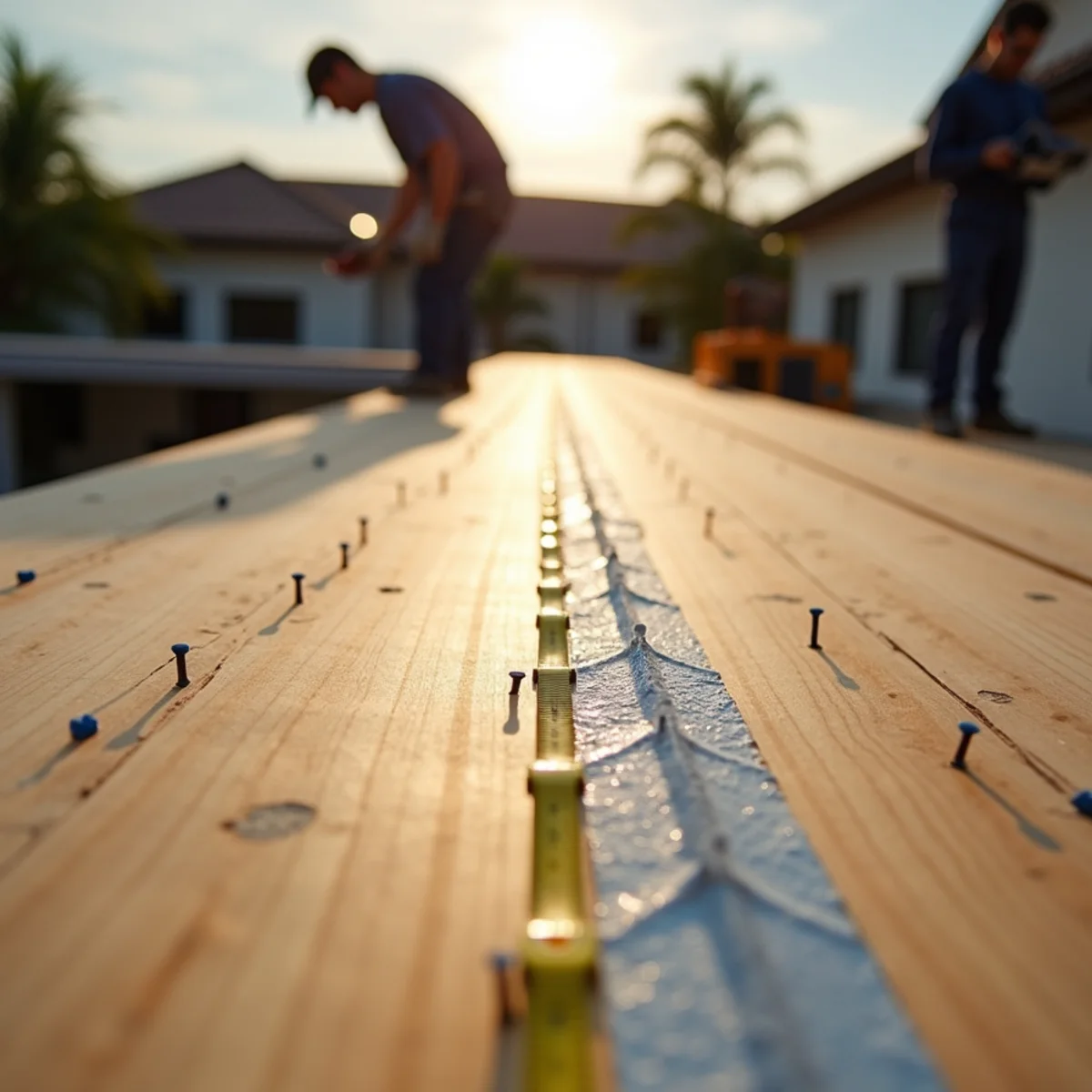
The scope states the fastener type and spacing for the deck, with ring-shank nails driven into the framing to the schedule the current code calls for.
Secondary water resistance, method named
Full-coverage self-adhered underlayment or taped deck seams, spelled out in writing along with the approved underlayment product.
Edge metal fastened for uplift
Drip edge and rake metal go on at the required fastener spacing, in corrosion-resistant material where salt air is a factor.
Hip and ridge attachment to the product approval
Tile hips and ridges are set with an approved attachment system rather than mortar alone; shingle ridges use wind-rated cap shingles fastened per the manufacturer.
Vents and penetrations sealed for wind-driven rain
Pipe boots, vent flashing and ridge or off-ridge vents are replaced with approved components and flashed so rain pushed sideways doesn’t find a path in.
A photo file for your mitigation inspector
Nailing, underlayment, edge and ridge details are photographed before they’re covered, and kept with the permit and product approval numbers.
How We Build Upgrades Into a Re-Roof
- 1
Review the roof and your mitigation form
We look at the existing roof and, if you have one, your latest wind mitigation report to see which items have room to improve.
- 2
Tear off to the deck
Old roofing and underlayment come off completely so every sheet or board can be inspected and damaged sections replaced.
- 3
Re-nail the deck
Sheathing is re-fastened with ring-shank nails at the spacing current code calls for, one of the biggest factors in uplift resistance.
- 4
Seal the deck
Secondary water resistance goes down next, typically self-adhered underlayment over the full deck or tape over the seams, depending on the system and code path.
- 5
Strengthen edges, hips and ridges
Drip edge and edge metal are fastened to current requirements, and hip and ridge tiles are set with approved attachment systems rather than mortar alone.
- 6
Photograph before covering
Nailing, underlayment and attachment details are photographed before they’re hidden, giving a wind mitigation inspector evidence to rely on. Keep those photos with the permit, product approvals and warranty paperwork in one file for future inspections and insurance renewals.
What Affects the Cost of Hurricane Upgrades
Most upgrade costs ride along with the re-roof itself. What makes the biggest difference:
- Deck type and condition
- Plywood is simpler to re-nail than 1x6 tongue-and-groove boards, and replacing rotted sections adds material and labor.
- Underlayment approach
- Fully adhered peel-and-stick across the deck costs more than sealing seams alone, but it offers stronger protection if the covering is lost.
- Roof-to-wall connections
- Where required or requested, adding straps or clips at the wall top means working from the attic or eaves and can add significant labor.
- Roof geometry
- Hip roofs, multiple valleys and complex lines mean more linear feet of edge, hip and ridge to upgrade.
- Tile or shingle system
- Foam-set tile with upgraded ridge assemblies carries different material costs than Class F or Class H wind-rated shingles.
We provide a written, itemized scope before work starts, separating code-required items from optional upgrades so you can decide what to add.
Why choose Rising Roof Services for hurricane roof upgrades
Required versus optional, in writing
Our scope marks which upgrades the code requires on your house and which are extras, so you can decide where extra money goes instead of being sold a package.
Evidence an inspector can verify
Upgrades only count on a wind mitigation form if they can be shown. We photograph each layer during the job and label what the photos confirm.
Palm Beach and Broward code paths
From our Woodfield Plaza office we permit through the City of Boca Raton, Palm Beach County and Broward building departments, including HVHZ product approval rules in Parkland and the rest of Broward.
Done without shortcuts
Upgrade work is buried within days, so it depends on a crew that doesn’t skip steps nobody will see. One Google review credits us with a full roof put on quickly and with no corners cut; across 31 reviews our average stands at 5.0.
5.0 stars from 31 Google reviews · Open 24 hours, 7 days · (831) 666-1600
Upgrades and Your Wind Mitigation Report
The OIR-B1-1802 form asks about roof covering, roof-deck attachment, roof-to-wall attachment, roof geometry, secondary water resistance and opening protection. A re-roof can change several of those answers at once. The form is completed by a licensed inspector, engineer or other qualified professional, not by the roofer, so our focus is doing the work correctly and leaving clear evidence behind.
Our post on roof upgrades that help on a wind mitigation report covers each form item in more depth.
Coastal and Broward Considerations
Oceanfront homes in Highland Beach face salt air that corrodes fasteners and edge metal faster, so corrosion-resistant fasteners and heavier-gauge edge metal are worth discussing. In Parkland and the rest of Broward County, the High-Velocity Hurricane Zone applies, and roofing products need Miami-Dade NOA or Florida HVHZ approval.
Wind Uplift, Codes and Product Approvals
Wind uplift is the force a storm puts on a roof as it tries to peel the covering and deck away from the framing. It peaks at corners, eaves and ridges, and it tests every link in a chain: tile or shingle to underlayment, underlayment to deck, deck to trusses, trusses to walls. An upgrade only helps if it strengthens the weakest of those links, which is why we look at deck attachment and roof-to-wall attachment together.
The Florida Building Code, 8th Edition (2023), sets design wind loads using ASCE 7-22, and the Florida Building Commission oversees product approvals that spell out how each roofing product must be fastened. Tile is typically installed following its product approval and the FRSA-TRI tile installation manual. Ask for the approvals to be listed in your scope, so you and any future inspector can confirm what went on the roof.
When to Schedule Upgrade Work
Hurricane season runs June 1 through November 30, and the rainy season starts around May. A planned re-roof with upgrades is easiest to fit between November and April, when afternoon storms interrupt fewer workdays. Booking a roof inspection in late summer or early fall leaves time to scope the work, pull the permit and order tile before that drier window opens.
Vents, Gable Ends and Other Weak Links
Sealed decks and re-nailed sheathing get the attention, but post-storm surveys keep finding failures in smaller parts of the roof system. A strong deck doesn’t help much if water pours through a vent that blew out.
- Ridge and off-ridge vents: older vents can lift or let wind-driven rain through. Replacing them with approved units rated for high wind and sideways rain is a modest add-on during a re-roof.
- Gable ends: a gable wall catches wind broadside and can fail if it isn’t braced back to the framing. Bracing is carpentry done from the attic; we point out unbraced gables in the scope so you can have them addressed.
- Flashing at walls and chimneys: counterflashing and stucco stop that peel back let water behind the covering. These are replaced, not reused, when the roof comes off.
- Soffits and fascia: loose soffit panels let wind into the attic and add pressure beneath the deck. We note their condition during the upgrade walk.
Choosing Which Upgrades to Pay For
Budgets are real, and not every upgrade gives the same return. We suggest thinking about them in this order, then talking with your agent and your wind mitigation inspector about which items affect your premium.
- First, whatever the code requires on your house. These go in regardless, and the permit won’t final without them.
- Next, the water barrier. If code allows taped seams, upgrading to full-coverage self-adhered underlayment is often the most valuable optional step, because it limits interior damage if the covering fails.
- Then the attachment details: hip and ridge systems, edge metal gauge and vent replacements, which are relatively small line items on most re-roofs.
- Finally, roof-to-wall work where it isn’t already required. It can make a real difference on the mitigation form but usually costs the most because it is done from the attic or eaves.
Hurricane Roof Upgrades near you
Based at Woodfield Plaza in Boca Raton, we provide hurricane roof upgrades across West Boca and nearby communities, including:
Hurricane Roof Upgrades FAQs
What is secondary water resistance?
It is a layer that keeps water out of the attic if the roof covering is damaged or blown off. On most re-roofs today, that means self-adhered underlayment applied directly to the deck, or tape sealing the deck seams beneath the underlayment. It won’t stop a hurricane from damaging your roof, but it can greatly reduce how much water gets inside.
Can I add these upgrades without replacing my roof?
Mostly not. Deck re-nailing and secondary water resistance require the roof covering to come off. Some roof-to-wall strapping can be added from the attic on certain homes, and hip and ridge attachment can sometimes be improved during a larger repair. For most homes, the practical time to upgrade is the next re-roof.
Will hurricane upgrades lower my insurance premium?
They may. Florida insurers are generally required to offer wind mitigation credits, and items like roof-deck attachment and secondary water resistance appear on the inspection form. How much any credit is worth depends on your insurer, your policy and the rest of the home. Ask your agent how an updated wind mitigation report would affect your premium.
Are upgrades required by code on every re-roof?
Certain upgrades are required when re-roofing site-built single-family homes under the Florida Building Code’s existing building provisions, including secondary water resistance and deck fastening to current standards. Roof-to-wall requirements apply to some homes depending on value and construction. Details vary, so we confirm them with the City of Boca Raton or Palm Beach County when we pull the permit.
Can My Safe Florida Home help pay for roof upgrades?
It may, if the program is funded and you qualify. My Safe Florida Home is a state program that has offered free wind-mitigation inspections and matching grants for certain improvements, such as roof-to-wall connections and secondary water resistance. Funding rounds open and close, and eligibility rules change, so check the program’s current availability before building your budget around it. We can scope the roofing work either way.
Does a hip roof need the same upgrades as a gable roof?
Mostly, yes. A hip roof’s shape handles wind better and appears as a separate item on the wind mitigation form, but its deck, underlayment, edges and ridge still need the same attention. Gable roofs have an added weak point at the gable end walls, so bracing and edge fastening along the rakes matter more on those homes.
Will hurricane upgrades change how my roof looks?
Almost never. Re-nailing, sealed underlayment and stronger ridge attachment all sit beneath the finished tile or shingles. The visible differences are small, such as newer edge metal or a different vent style, and those can usually be chosen to fit your HOA’s approved colors and profiles.