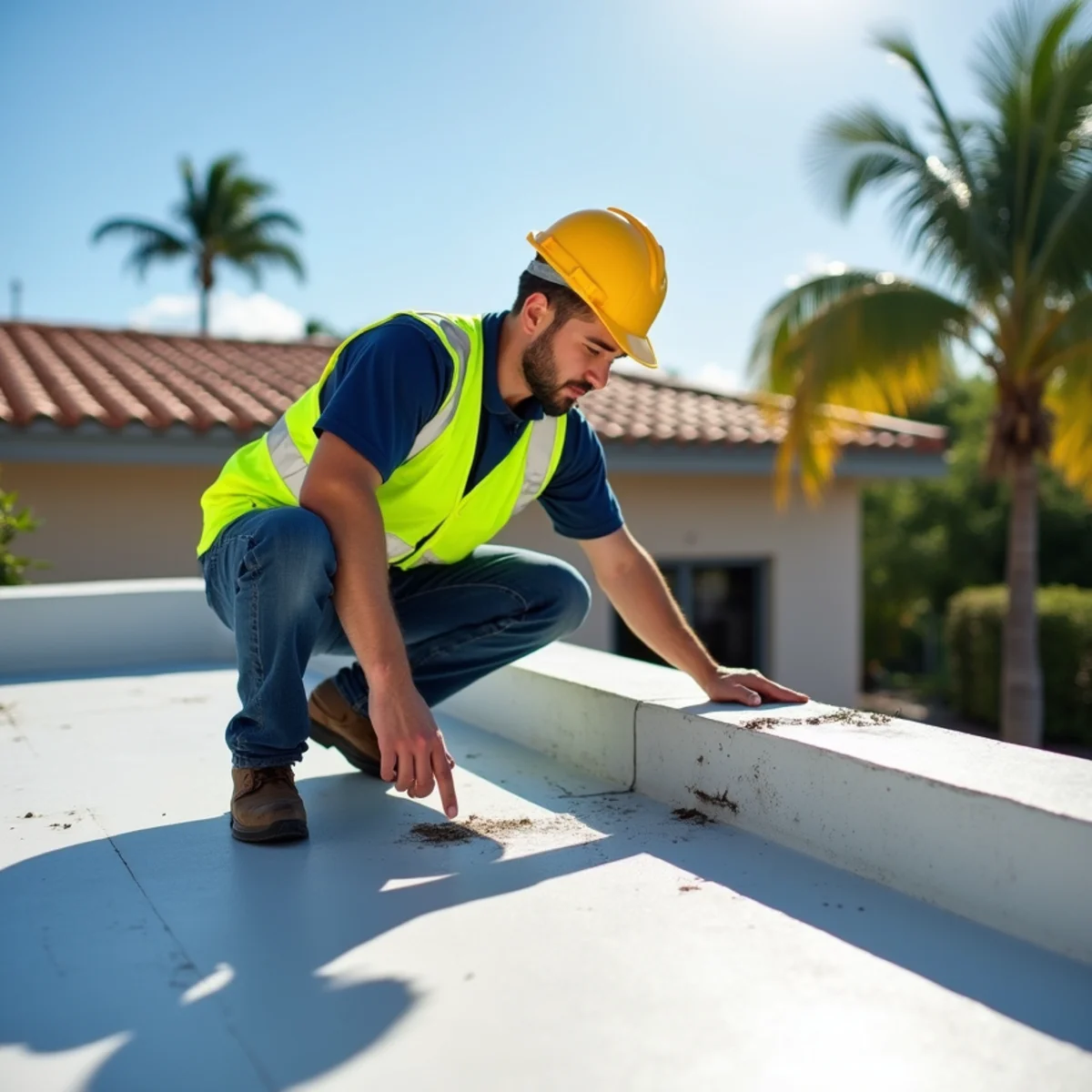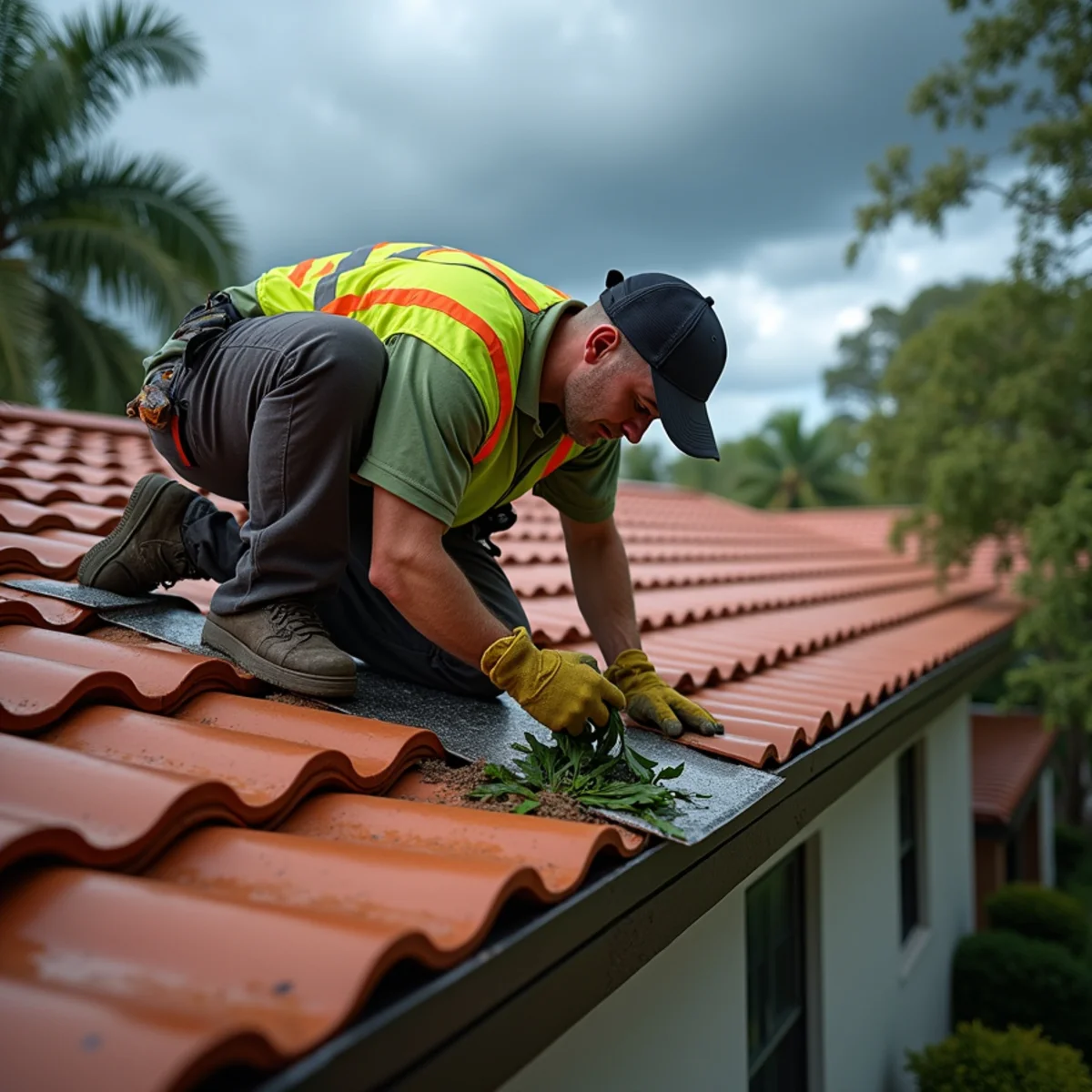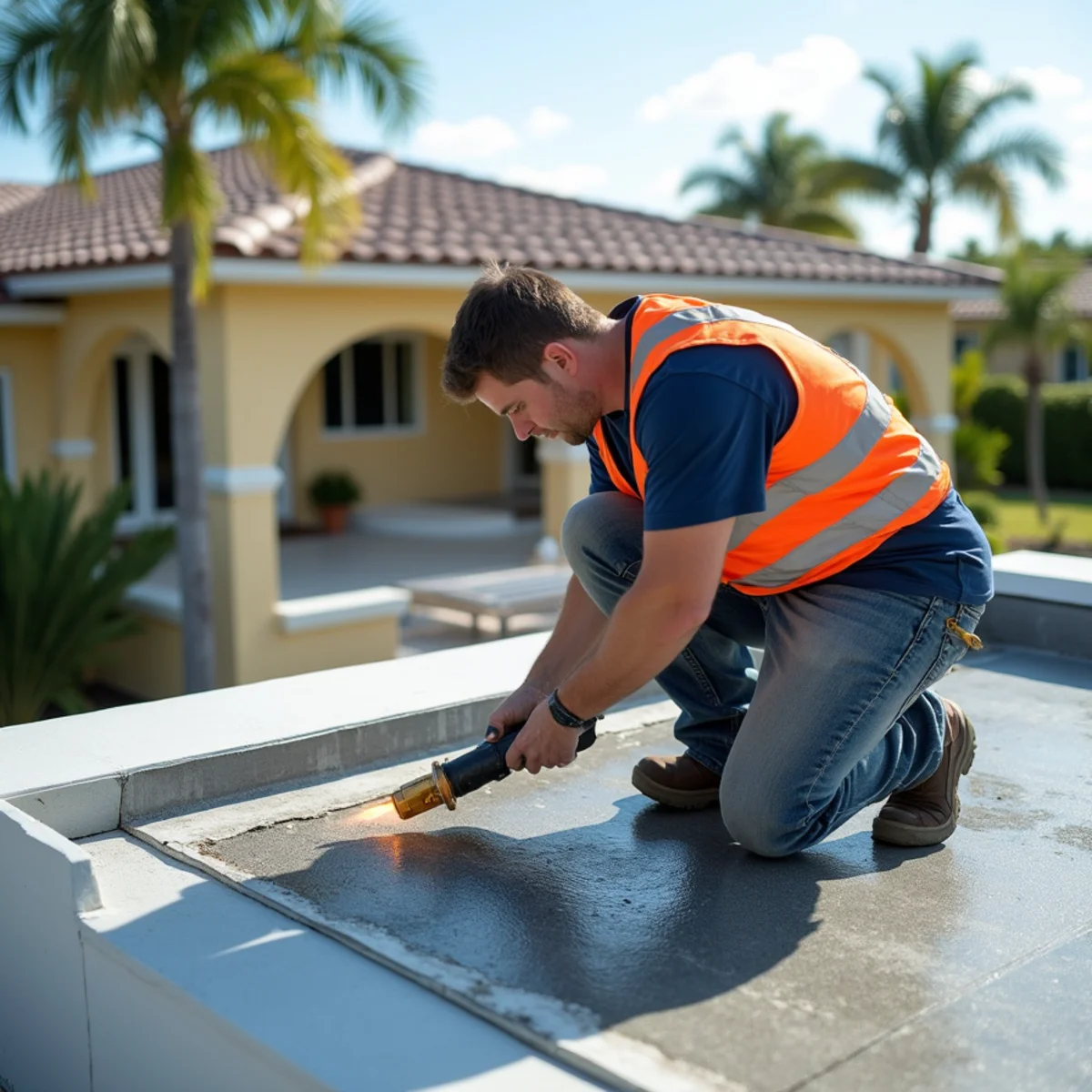
Flat roof repair in Boca Raton fixes the low-slope sections that pitched roofing can’t cover, such as patio roofs, Florida rooms, carports and villa porches, where ponding, split seams and tired wall flashing let water in. Rising Roof Services repairs modified bitumen, TPO and older built-up membranes with compatible materials and photographs every seam, scupper and tie-in we work on.
Flat roofs don’t shed water the way pitched roofs do. They rely on a continuous membrane, a slight slope and clear drainage, and when any of those slips, water stands and finds the weakest seam. In Boca Raton that is often the Florida room or patio roof added onto a 1970s or 1980s house, tied into the main roof with flashing that has seen decades of sun.
We repair modified bitumen (SBS and APP), TPO and older built-up roofs on homes, villas and small additions. That includes seams, blisters, flashing at walls and parapets, scuppers and drains, and the tie-in where the flat section meets tile or shingles. Leaks that start at a tie-in often look like a main roof problem, which is where our roof leak repair work overlaps. Villa owners should also see HOA and villa roof repair.
Reviewed by the Rising Roof Services team · Boca Raton, FL
Common flat roof problems
Flat roof failures tend to stay quiet until the next downpour. Look for these.
Water standing after rain
Ponding that lingers more than a day or two stresses seams and speeds membrane breakdown.
Blisters and bubbles
Trapped moisture or poor adhesion forms blisters that eventually crack open under summer heat.
Split or open seams
Laps on modified bitumen and welded seams on TPO can separate with daily thermal movement.
Cracked coating or exposed felt
Once the granule surface or reflective coating wears away, UV attacks the membrane directly.
Leaks at the wall or tie-in
The joint between a flat patio roof and the house is the entry point we find most often.
Clogged scuppers and drains
Leaves and debris at a scupper back water up against parapets and their flashings.
What’s included in a flat roof repair
Low-slope repairs succeed or fail on details, so each visit covers the whole surface and its drainage, not just the wet spot.
An edge-to-edge membrane survey
We photograph the entire low-slope surface, marking blisters, cracks, soft areas and every lap seam, before deciding what to cut out.
Probing for trapped water
Suspect areas are probed for wet insulation or soft deck, since a patch laid over saturated material seals the water in.
Materials that bond to what’s there
Patches match the existing system, whether SBS or APP modified bitumen, TPO or built-up, so the new material adheres instead of peeling at its edges.
Wall, parapet and tie-in flashing
Where the flat roof meets stucco, a parapet or the main roof, flashing and counterflashing are rebuilt rather than buried under more caulk.
Drainage cleared and corrected
Scuppers, drains and downspouts are cleared, and the scope says plainly if a cricket or a larger outlet is needed to end chronic ponding.
A water test where practical
When it can be done safely, the repaired area is hosed or flooded before we leave, so you watch it hold instead of waiting for the next storm.
Photos and care notes
You keep before-and-after images plus a short note on what to watch, such as how long water sits in the same spot after the next downpour.
How we repair a flat roof
- 1
Tell us about the roof
We ask what the flat section covers, how old it is and where water shows up inside.
- 2
Inspection and moisture check
We photograph the membrane, seams, flashings and drainage, and probe for wet insulation or soft decking.
- 3
Written scope
The scope explains whether a patch, a section replacement or a coating system fits, and why.
- 4
Repair
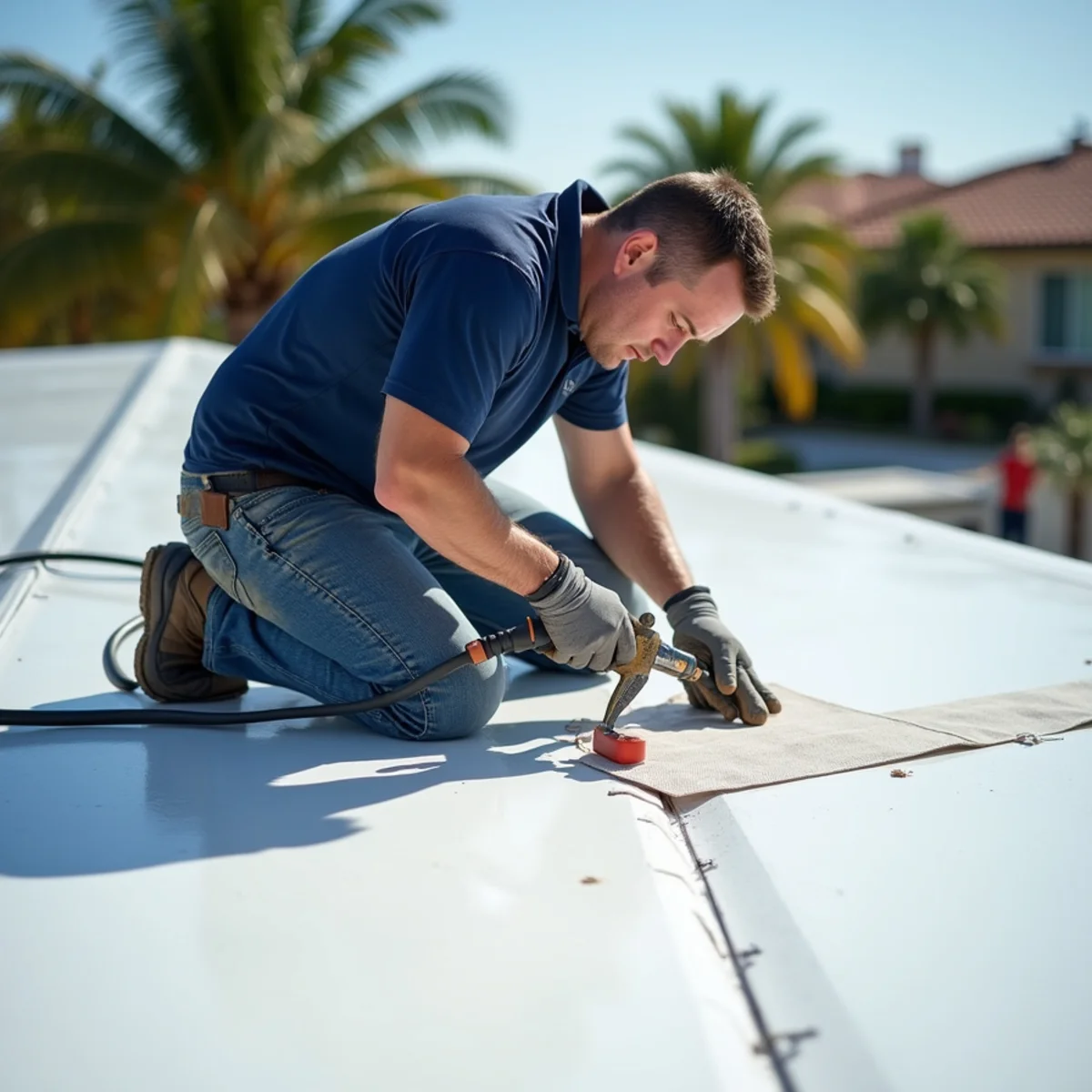
Damaged membrane is cut out and replaced with compatible material, seams are re-sealed or re-welded, and flashings are rebuilt where needed.
- 5
Water test and walkthrough
Where practical, we water-test the repaired area before leaving and review the photos with you.
What affects flat roof repair cost
Flat roof repairs are often smaller in area than pitched repairs but heavier on detail.
- Membrane type
- Modified bitumen, TPO and built-up roofs use different materials and techniques, and not all are compatible with each other.
- Wet insulation or decking
- Water that has spread beneath the membrane has to be removed and replaced, not covered over.
- Drainage correction
- Curing chronic ponding may mean tapered insulation, a small cricket or a larger scupper.
- Tie-in and flashing work
- Where a flat roof meets tile or stucco, repairs often involve lifting adjacent tile and resetting stucco stop.
- Access
- Flat sections over lanais or behind screen enclosures can be harder to reach and stage.
We provide a written, itemized scope before work starts, and we’ll tell you plainly if a repair is only a short-term fix.
Why choose Rising Roof Services for flat roof repair
We fix the drainage, not only the leak
Ponding sits behind most flat roof failures. Our scope states whether water will still collect after the repair and what it would take to move it off the roof.
Honest about how long a patch will last
If a repair only buys a season, you read that in writing. Photo reports keep confirmed damage apart from what we suspect lies under the membrane until it is opened.
Both sides of the tie-in
Most patio roof leaks in Boca start where the flat section meets tile or shingles. We work the membrane and the main roof together, so no one blames a missing trade.
Careful over lanais and pools
Flat sections often sit above screened patios and pool decks. Reviewers describe crews who protect the property and clean up afterward, which matters when debris could land in the water.
Close to West Boca’s villa neighborhoods
Kings Point, Villages of Oriole and Boca Del Mar are a short drive from our Woodfield Plaza office. Customers rate us 5.0 across 31 Google reviews and mention plain-language explanations and jobs finished within the quote.
5.0 stars from 31 Google reviews · Open 24 hours, 7 days · (831) 666-1600
Patch, recover or replace?
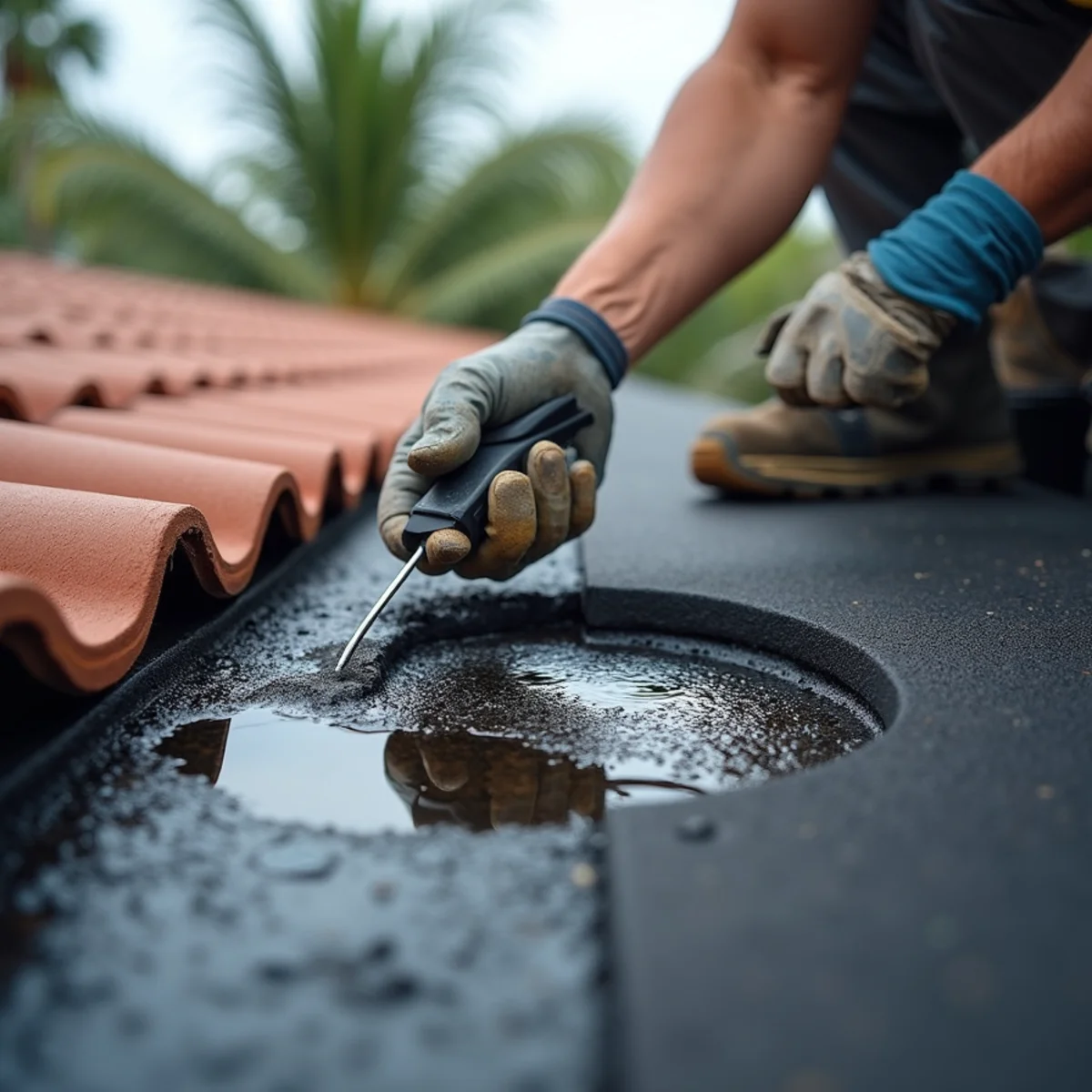
A contained blister or split seam on an otherwise sound roof is a straightforward repair. When a membrane is brittle everywhere, has wet insulation underneath or ponds across most of its surface, patches tend to fail at their edges. Coatings can extend the life of some roofs, but they won’t fix wet substrate or poor drainage. We’ll tell you which category your roof falls into and show you the photos. Recovering or replacing a section is usually permitted work, reviewed by the city’s Building Department for addresses inside Boca Raton or, for unincorporated West Boca, the county’s Planning, Zoning & Building office. The new membrane needs a Florida product approval, and the scope names who pulls the permit and books its inspections.
Flat roofs in West Boca’s older neighborhoods
Many homes in Kings Point and Villages of Oriole, along with older sections of Boca Del Mar, include flat or low-slope roofs over carports, Florida rooms and villa porches. Our article on flat roof and patio roof leaks explains why those additions leak so often, and our rainy-season maintenance guide covers keeping scuppers clear.
Why ponding water shortens a flat roof’s life
Standing water does more than sit there. It keeps the membrane beneath it hot and wet for days, holds seams under water long enough to work open, adds weight to a deck that may already sag, and leaves behind dirt and algae that trap even more moisture. During the May-to-October rainy season, a low spot can refill before it ever dries out.
Curing ponding starts with finding why the water can’t leave, so on every flat roof repair we check:
- Scuppers, drains and downspouts for debris or openings too small for summer downpours
- Deck deflection between joists, often a sign of an old leak
- Compressed or wet insulation that has left a dip in the surface
- The upslope side of AC stands and curbs, where a small cricket can steer water around
- Seam laps that run through the wettest part of the roof
How long flat roofs last here, and how to stretch it
Published estimates for modified bitumen vary widely, from the low teens to around 20 years or more, and South Florida’s UV, heat cycling and storms push real roofs toward the shorter end without upkeep. TPO and built-up roofs have their own ranges. Age alone doesn’t settle the question; drainage, the condition of the surface and how often the roof gets walked on matter more.
Most of what extends a low-slope roof’s life is simple and cheap compared with a repair:
- Check it twice a year, in spring before hurricane season and again in fall, plus after any strong storm.
- Look from a second-story window the day after heavy rain and note where puddles remain.
- Clear scuppers and drains of leaves and palm debris before June and again once the rainy season ends.
- Keep the reflective surface intact. A worn granule or coating layer leaves the membrane exposed to UV; ask when recoating makes sense for your system.
- Skip the hardware-store roof cement. Incompatible mastics can prevent a proper repair later, especially on TPO.
Flat Roof Repair near you
Based at Woodfield Plaza in Boca Raton, we provide flat roof repair across West Boca and nearby communities, including:
Flat Roof Repair FAQs
Why does water sit on my flat roof?
Flat roofs are built with a slight slope toward drains or scuppers. Over time decking can sag, insulation can compress and debris can block outlets, leaving low spots where water collects. Water that lingers after a day or two of dry weather is a sign the drainage needs attention, since standing water shortens membrane life and finds any weak seam.
Can you patch a flat roof, or does it need replacing?
Many flat roofs can be patched if the damage is localized and the rest of the membrane is still flexible and dry underneath. If moisture has spread under the membrane or the surface is cracking throughout, patching usually just delays the problem. We check for wet insulation and soft decking before recommending either option.
Is a roof coating a good idea in Boca Raton?
A reflective coating can help a sound membrane by reducing UV damage and heat absorption. It is not a fix for ponding, wet insulation or open seams, and it must be compatible with the existing membrane. We only recommend coatings after confirming the roof underneath is dry and in reasonable shape.
My patio roof leaks where it meets the house. What causes that?
That joint is where a flat membrane meets tile, shingles or a stucco wall, and it depends on flashing, counterflashing and sealant to stay watertight. Heat movement and age open gaps, and on tile roofs water can travel under the tile and drop right at the tie-in. The fix usually means rebuilding the flashing detail rather than adding more sealant.
Which is better for a Boca patio roof: modified bitumen, TPO or PVC?
Each can work. Modified bitumen, in SBS or APP form, is built up in layers and tolerates foot traffic well, which is why it is common on residential patio roofs. TPO and PVC are single-ply membranes with heat-welded seams and reflective white surfaces that stay cooler in summer sun. The right choice depends on what is already on the roof, since some materials don’t bond to each other, plus drainage, the tie-in to your main roof and any HOA rules.
Can a flat roof be repaired while it’s raining?
Not properly. Membranes and adhesives need a clean, dry surface to bond, so a permanent repair waits for dry weather. During a storm we can limit the damage with a temporary cover or an emergency patch over the entry point, then return to cut out the wet material and make the real repair once the roof has dried.
Can I use my flat patio roof as a deck or put furniture on it?
We advise against it. Residential patio membranes are designed for occasional service traffic, not daily use, and chairs, planters or grills concentrate weight and scuff through the surface. Standing water around furniture legs also speeds wear. If you want a usable rooftop space, it needs a system designed for that, which is a different conversation from a repair.