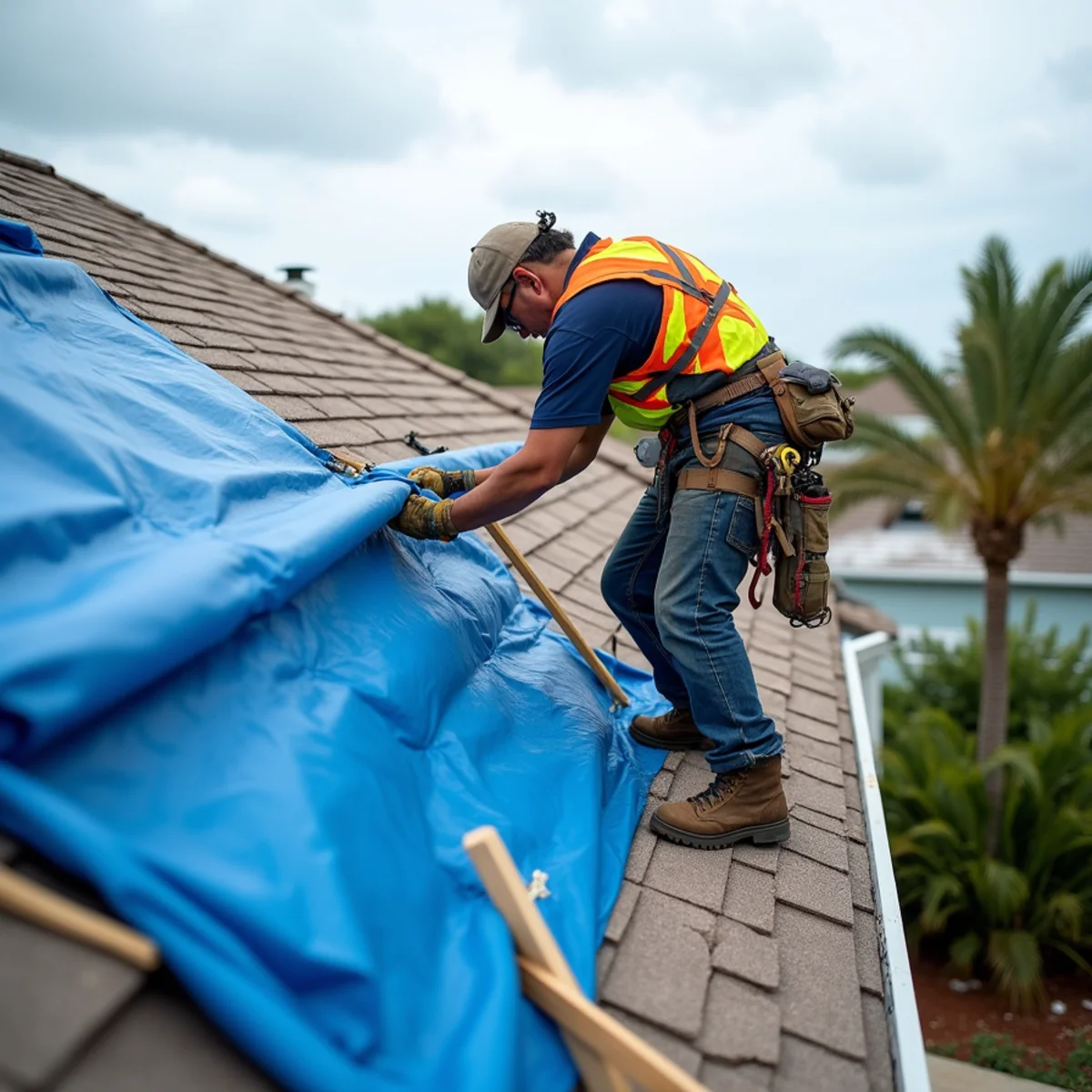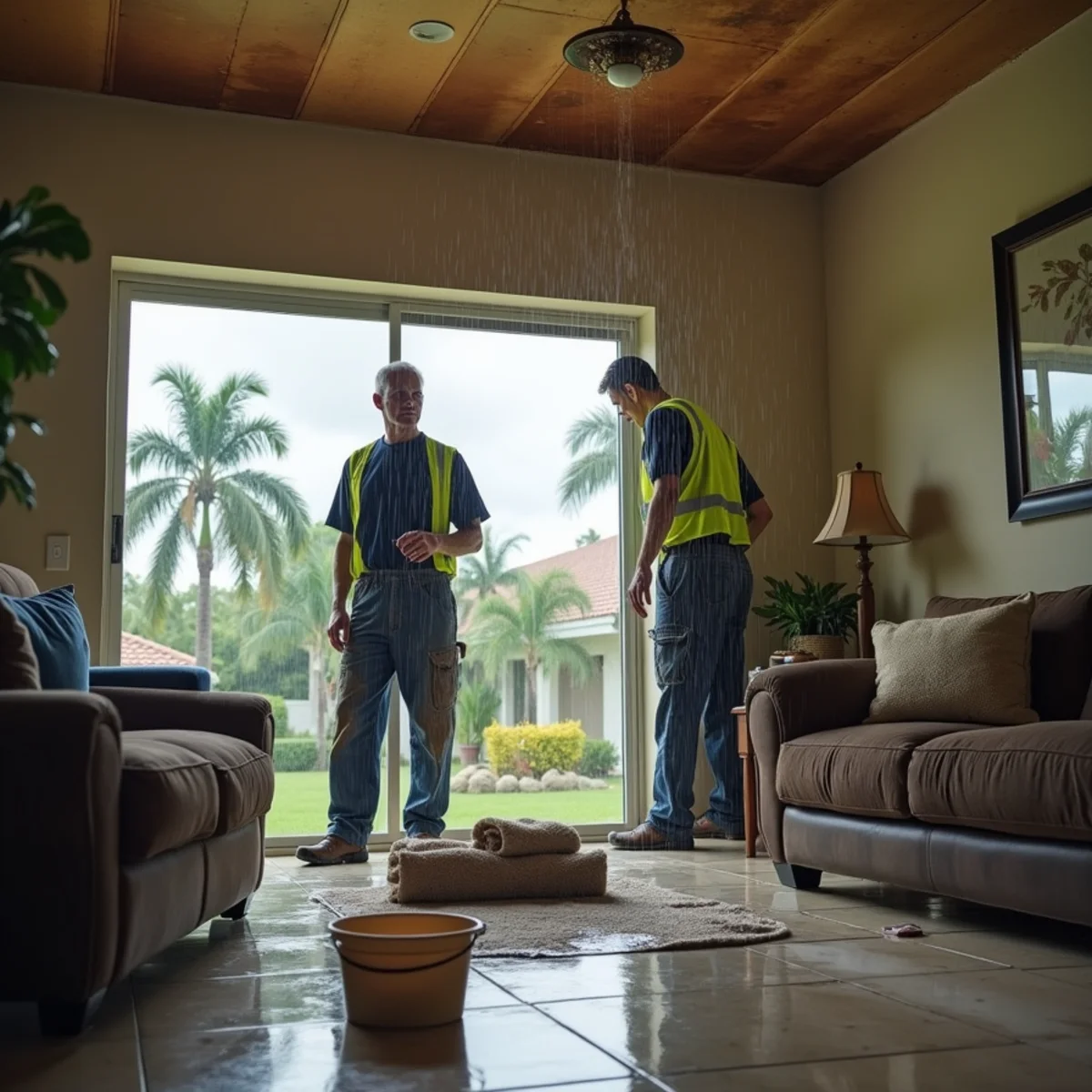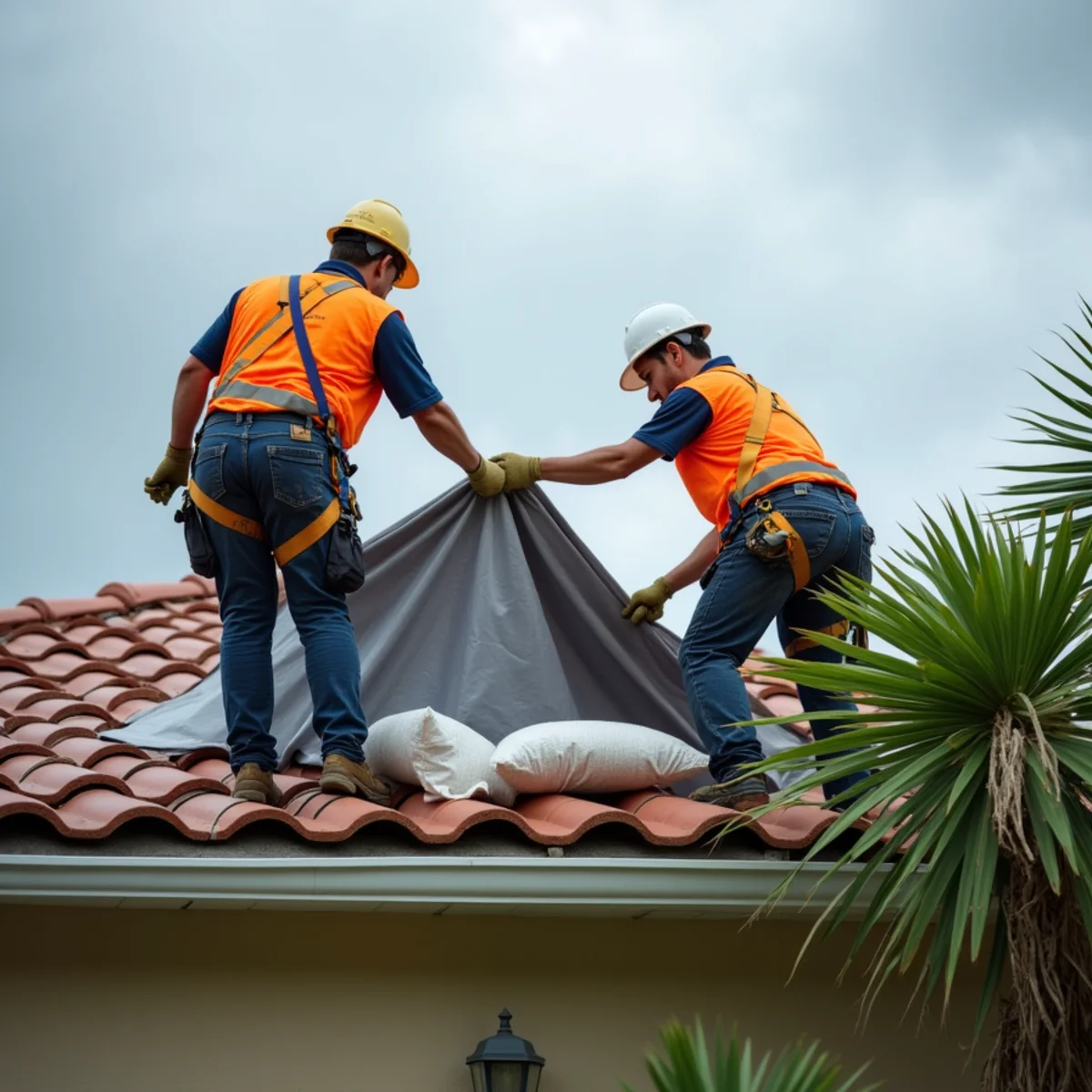
Roof tarping in Boca Raton is a temporary cover over storm-damaged tile, shingle or flat roofing that keeps rain off the deck and out of the attic until the permanent repair can be made. Rising Roof Services photographs the damage first, then installs a heavy-duty tarp held by battens and weight so it survives the next squall without adding holes to sound roofing.
A tarp is not a repair. It’s a short-term shield that keeps water out of your attic, ceilings and walls while the real fix is scoped, permitted and scheduled. Installed well, it buys you time. Installed poorly, it flaps loose in the next squall, tears, and channels water right into the spot it was meant to protect.
The difference is in the anchoring. We extend tarps well past the damaged area, run them over the ridge where the layout allows so water sheds across the top rather than under the edge, and hold them down with wood battens and sandbags instead of scattering nails through intact tile. When the damage is small, a quick emergency roof repair may be a better answer than a tarp.
Tarping nearly always follows a wind event, so it often goes hand in hand with storm damage roof repair. We photograph the damage before it’s covered, which protects the record for any claim.
Reviewed by the Rising Roof Services team · Boca Raton, FL
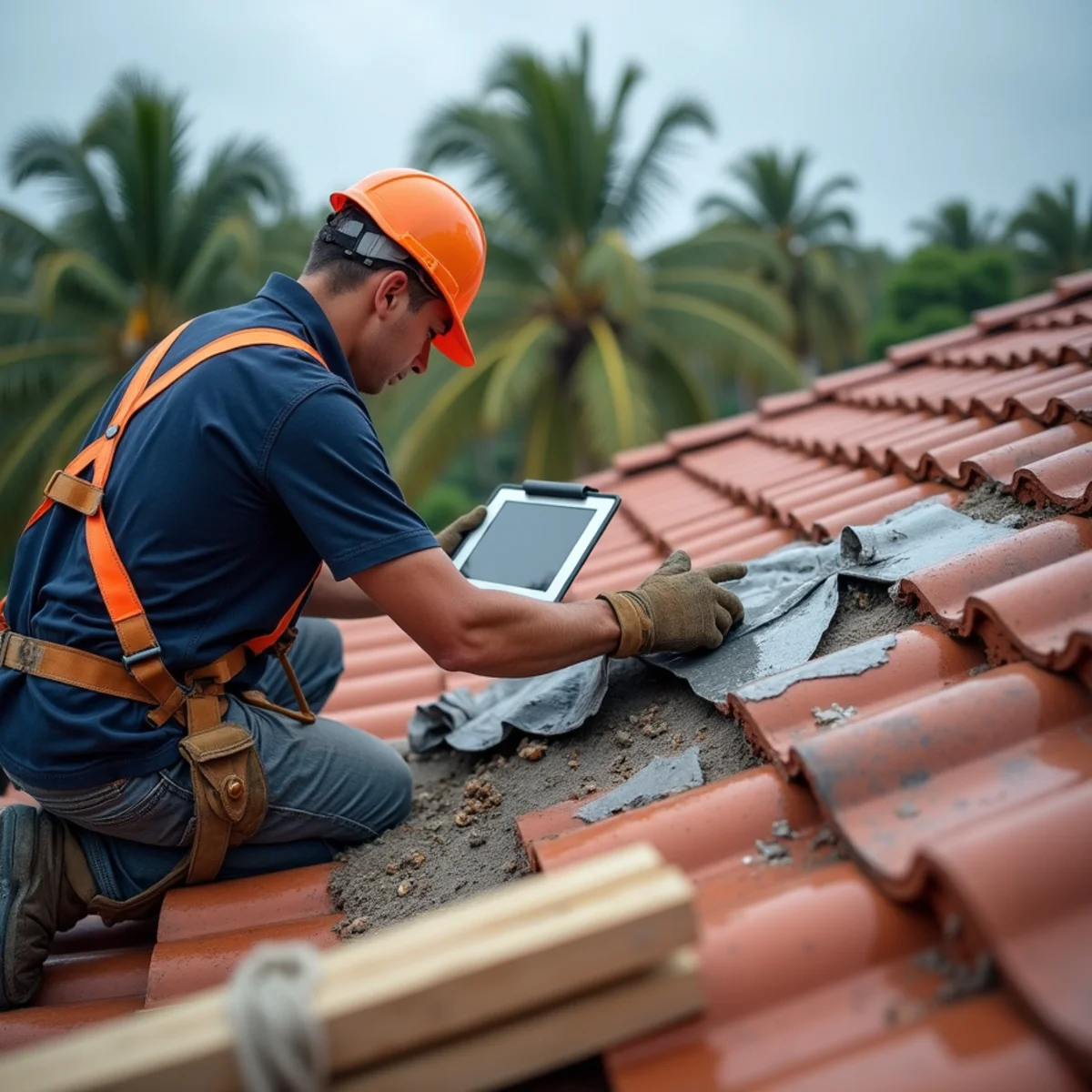
When a Roof Needs a Tarp
Tarping makes sense when water is getting in, or soon will, and a permanent repair can’t happen right away. Typical situations:
Exposed underlayment
Underlayment can shed rain for a short time, but sun and wind break it down quickly once the tile or shingles above it are gone.
A limb through the deck
A branch that punctured the sheathing opens the attic to the weather and can’t wait for a dry spell.
Water coming through a ceiling
Covering the source on the roof is the fastest way to limit further damage to drywall, insulation and flooring. The tarp stops new water, but anything already wet still needs drying within 24 to 48 hours, per EPA guidance.
Ridge or hip blown open
An open ridge lets rain run down both sides of the peak and straight into the attic.
Waiting on permits or materials
After a regional storm, tile and underlayment can take time to arrive. A tarp keeps the roof covered through the wait.
An open insurance claim
Many policies expect reasonable steps to prevent further damage while a claim is pending. Check your policy language.
What you get when we tarp your roof
A tarp visit is short, but it sets up everything that follows: the repair, the claim and the dry-out inside.
Damage photographed before it disappears
Dated wide and close shots of every opening, cracked tile run and torn edge are taken before any plastic goes down, so the covered damage is still on record.
A heavy-duty, UV-resistant tarp sized past the damage
Light hardware-store tarps shred in a South Florida summer. We use heavy reinforced material cut to reach several feet beyond the opening on every side.
Anchoring matched to the covering
Battens and weights on tile, fastened battens kept to sound areas on shingles, and weighted edges on low-slope sections, so the cover holds without creating new leak points.
Water directed off the roof, not under the cover
Where the layout allows, the top edge wraps over the ridge and the lower edge laps down-slope, so rain runs across the tarp and off the eave instead of into the gap.
A look from the attic side
When the attic is accessible, we check for daylight and fresh drips after the tarp is on, and point out wet insulation that needs pulling or drying.
Loose debris cleared and salvage set aside
Tile shards and limbs that could tear the tarp are removed from the roof, and pieces worth keeping for the claim are left for you rather than thrown out.
A dated tarp invoice and photo record
You get the tarping as its own dated line with photos of the finished install, which is what many insurers ask to see for temporary protection.
What a Proper Tarp Installation Looks Like
- 1
Photograph first
Every damaged area is photographed before it’s covered so the evidence isn’t hidden under plastic.
- 2
Clear the area
Loose tile fragments, debris and sharp edges are removed so they can’t tear the tarp or slide off later.
- 3
Size it generously
The tarp should extend several feet past the damage on every side and, where possible, wrap over the ridge so water runs over it rather than beneath it.
- 4
Anchor without new holes
On tile, we secure the tarp with wood battens and sandbags or weighted anchors instead of nailing through tile. On shingles, battens are fastened to keep new penetrations in sound areas to a minimum.
- 5
Check edges and the attic
Edges are tucked and weighted so wind can’t get underneath, and we check from the attic side when there’s access. Wind uplift, the same pull that lifts tile and shingles, goes to work on any loose tarp edge first.
What Affects the Cost of Roof Tarping
Tarping cost depends on how much roof needs covering and how hard it is to secure safely. The main factors:
- Size of the opening
- Larger damaged areas need bigger tarps, more battens and more anchor points.
- Pitch and height
- Steep slopes and two-story roofs call for additional fall protection and more time to work safely.
- Roof covering
- Securing a tarp on concrete tile without cracking it takes more care and more weight than on shingles.
- Debris removal
- Limbs or collapsed material that must be cleared first add labor before the tarp goes on.
- Weather at the time
- Tarping right after a storm, in wet and gusty conditions, involves more setup and safety measures than a calm-day install.
We provide a written, itemized scope before work starts, and we keep the tarping line separate from the permanent repair so each cost is clear.
Why choose Rising Roof Services for roof tarping
Roofers placing the tarp, not a board-up crew
Many tarping calls around Boca go to restoration companies. Our tarps are set by roofers who plan the cover around the permanent repair, so it comes off cleanly and the damage underneath is exactly where the photos say.
Fast callback when water is coming in
If water is reaching your ceiling, you hear back from us that day; the Google listing for the business shows it open 24 hours. We tarp as soon as wind and lightning allow a crew on the roof safely.
Careful footing on concrete tile
Reviewers behind our 5.0 rating on Google (31 reviews) describe crews who were careful with their property and cleaned up afterward. On a tile roof, that care is what keeps a tarp visit from cracking more tile.
Short drives from Woodfield Plaza
Our office on Woodfield Plaza Drive puts Boca Pointe, Whisper Walk and Sandalfoot Cove within easy reach, which matters when the next band of rain is already on the radar.
5.0 stars from 31 Google reviews · Open 24 hours, 7 days · (831) 666-1600
How Long a Tarp Is Meant to Last
A roof tarp is built to protect for weeks, not seasons. Under Boca Raton’s sun, woven polyethylene starts breaking down from UV exposure fairly quickly, and every afternoon storm tests the anchoring. Treat it as a bridge to the permanent repair, and have it checked after any strong wind while it’s up.
If a tarp has been on for months, the underlayment beneath it may be holding moisture against the deck. That’s worth an inspection even if the ceiling below looks dry.
Why We Discourage DIY Tarping on Tile
Climbing a wet tile roof after a storm is one of the more common ways homeowners get hurt. Tile cracks underfoot, debris hides soft spots, and sandbags are awkward to carry up a ladder. To prepare before hurricane season, our roof tarping checklist covers what to have on hand and what to leave to a crew. We tarp homes in Boca Pointe, Whisper Walk and across West Boca.
Protecting the Claim Record While the Tarp Is Up
A tarp covers the evidence along with the hole. Handled carelessly, it leaves an adjuster looking at blue plastic and a vague description. We set up the record so the temporary protection and the damage beneath it stay easy to follow, whoever does the permanent repair.
- Dated wide and close photos of every damaged area go into your file before the first batten goes down.
- A second set shows the installed tarp, its edges and its anchoring, so your insurer can see the steps taken to prevent further damage.
- Broken tile, torn shingles and bent flashing are set aside for you rather than hauled off with the debris.
- The tarping invoice lists the date and the areas covered as its own line, apart from the permanent repair.
- When the adjuster needs to see the damage, the tarp is folded back and re-secured instead of cut away.
- Each recheck after a strong storm is photographed and dated, which shows the protection was maintained.
Tarping Tile, Shingle and Flat Roofs
One tarping method doesn’t fit every Boca roof. The covering under the tarp changes how it is anchored, where crews can step and what can go wrong while it’s up.
- Concrete or clay tile: the tarp rides over the tile profile, so battens are weighted rather than nailed and edges are tucked tight to stop wind catching the gaps between barrels. Crews step only where tile is supported.
- Asphalt shingle: battens can be fastened, but only through sound shingle near the ridge or edges, and those holes are noted so they are sealed or replaced during the permanent repair.
- Flat and patio roofs: a tarp on a low slope can trap water and sag into a pond. We slope the cover toward a drain or scupper, or use a temporary membrane instead, and check that the added weight isn’t overloading an older patio deck. Our flat roof repair page covers the permanent fix.
Living Under a Tarp: A Weekly Check From the Ground
You don’t need to climb up to keep an eye on a tarp. A few minutes in the yard and the attic once a week, and after every strong storm, catches most problems before they turn into a new leak.
- Look for edges that flap or lift in a breeze. A snapping edge is the first sign anchoring has loosened.
- Check for water pooling in a sag on the tarp. Standing water adds weight and finds any seam.
- Count the sandbags or weights you can see from the street against what was there on install day.
- Watch ceilings below the tarped area for new rings, and sniff the attic for a musty smell.
- Call for a recheck rather than adjusting it yourself. Our emergency tarping hurricane checklist explains other temporary cover options if the wait for repair stretches out.
Emergency Roof Tarping near you
Based at Woodfield Plaza in Boca Raton, we provide emergency roof tarping across West Boca and nearby communities, including:
Emergency Roof Tarping FAQs
How long can I leave a tarp on my roof?
Treat it as short-term protection while the permanent repair is arranged. Sun and wind degrade tarp material, and anchoring can loosen with each storm. Some insurance policies also expect permanent repairs to follow within a reasonable time. If your repair is delayed by permitting or material shortages, have the tarp checked and re-secured rather than assuming it will hold indefinitely.
Will tarping damage my tile roof?
It shouldn’t if it is done correctly. Damage usually comes from nails driven through tile, which crack it and create new leak paths, or from careless foot traffic. We anchor with battens and weights on tile, step only on supported areas, and remove the tarp carefully when the permanent repair begins.
Does insurance pay for emergency roof tarping?
Many homeowners policies cover reasonable temporary repairs made to prevent further damage, but coverage depends on your policy and your insurer’s decision. Keep the invoice and the before-and-after photos we provide. We can’t promise reimbursement, so confirm with your agent or insurer what documentation they want to see.
Can a tarp go up while the storm is still going?
Not safely while high winds or lightning are active. A crew needs conditions where it can work on a roof without being blown off it or struck. In the meantime, move valuables away from the leak, catch dripping water, and keep people out from under any ceiling that is sagging with water. We tarp as soon as conditions allow.
Should my roof be tarped before the adjuster inspects it?
Usually, yes. Most policies expect reasonable steps to prevent further damage, and leaving an opening uncovered while you wait for an adjuster can add interior loss. The key is photographing everything first. We record the damage before covering it, bill the tarp as a separate line, and can fold it back for the adjuster’s visit. If you’re unsure what your policy requires, ask your insurer before the tarp goes on.
Can you tarp a flat or patio roof?
Yes, but it is handled differently from a sloped roof. A tarp laid flat on a low-slope roof can collect rainwater, sag and leak at its seams, so it has to be pitched toward a drain or scupper, or replaced with a temporary membrane. We also check whether the patio framing can carry the extra weight of water and sandbags before loading it.
Who removes the tarp when the permanent repair starts?
When we do the permanent repair, our crew takes the tarp down as the first step, photographs the uncovered area again and hauls the tarp and battens away. If another contractor is doing the repair, they normally remove it. Either way, keep your photos of the tarp installation, since insurers sometimes ask to see the temporary protection alongside the final repair.