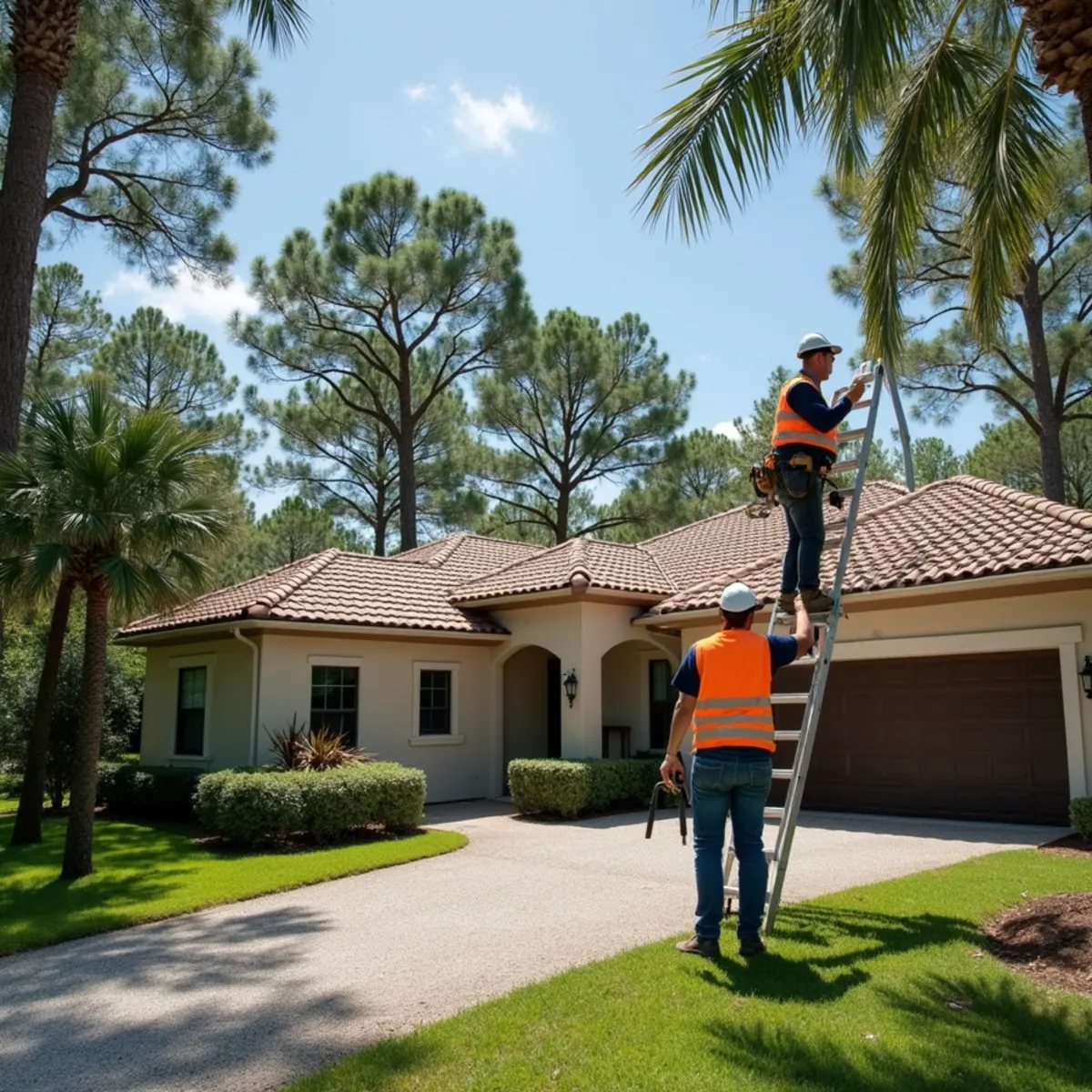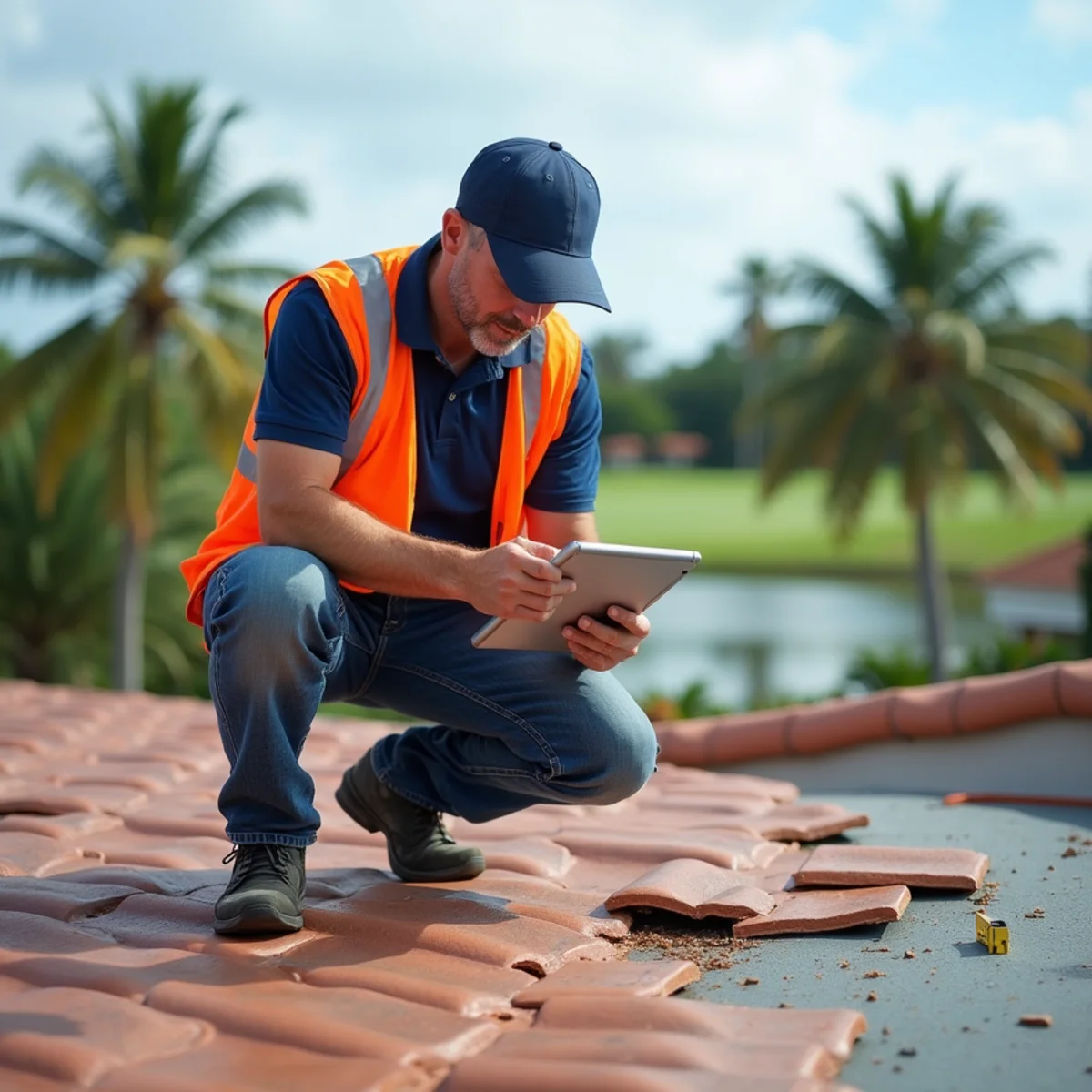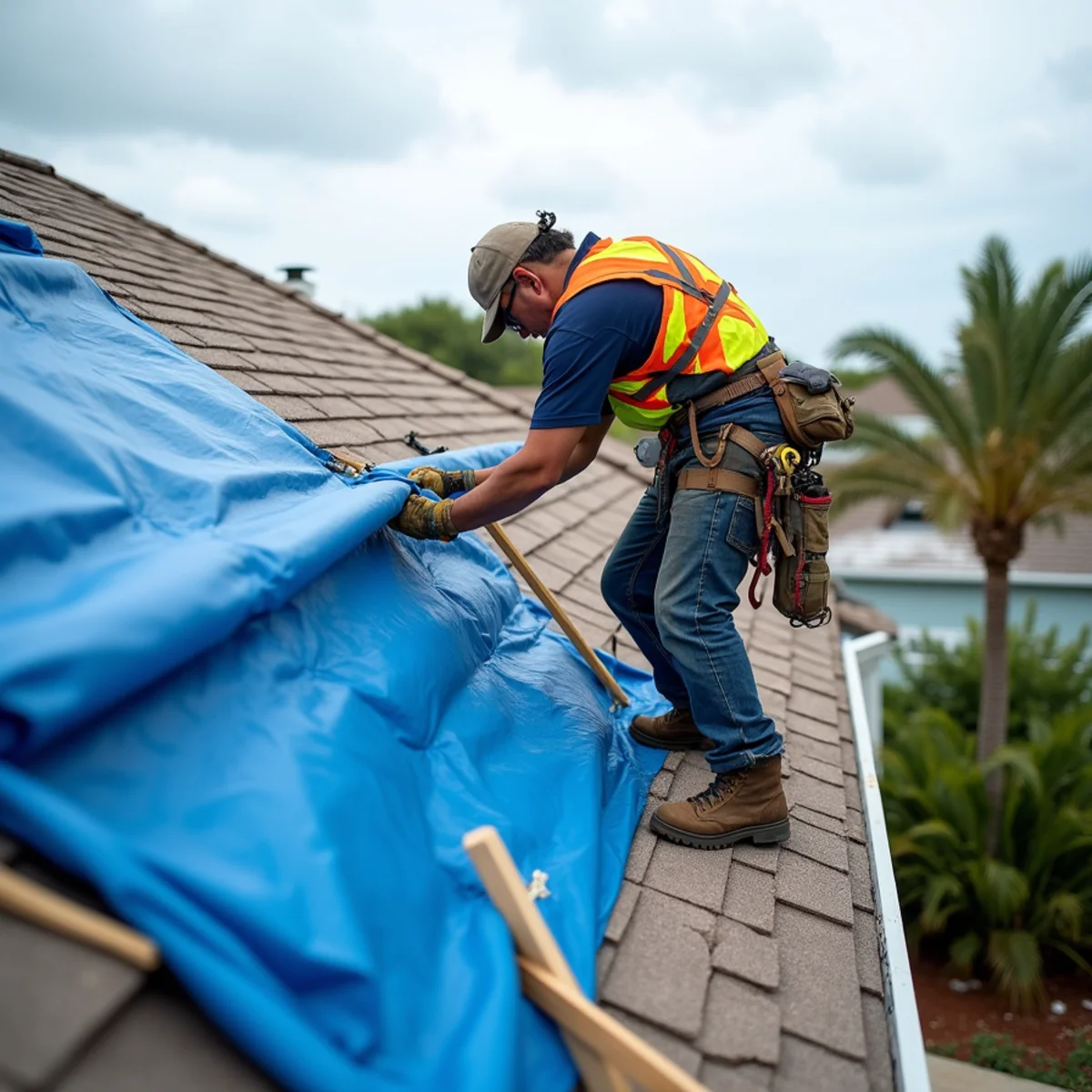
Emergency roof tarping in Palm Beach County should start as soon as winds drop and the roof is safe to walk. Photograph the damage first, cover the opening with a heavy tarp that runs over the ridge and is anchored with battens or a tile-safe method, then keep every invoice and photo for your insurer.
A properly installed tarp is the difference between a damaged roof and a damaged house. After a hurricane, the goal is to close any opening before the next band of rain arrives, without causing new damage in the process and without losing the evidence your claim depends on. Use the checklists below in order.
Checklist 1: Is it safe to go up yet?
Do not let urgency override this step. Many post-storm injuries happen during cleanup, not during the storm itself.
- The storm has fully passed and Palm Beach County emergency management has lifted local warnings.
- Sustained winds have dropped well below tropical storm strength. A tarp is a sail in gusty air.
- No power lines are down on or near the roof, gutters, or pool enclosure. Report downed lines to FPL and stay clear.
- No large limbs are hung up on the roof waiting to shift.
- The roof deck does not visibly sag, and no ceilings inside are bowing badly. Structural damage needs a professional assessment before anyone walks on it.
If any item fails, keep working inside: contain water, move belongings, and wait.
Checklist 2: Photograph before anything gets covered
Once a tarp is on, the damage underneath is hidden. Capture it first.
- Walk the full perimeter and photograph each side of the house from the ground.
- Zoom in on missing shingles, broken tiles, torn ridge caps, and exposed deck.
- Photograph debris where it landed, including tile fragments and shingle pieces in the yard.
- Photograph interior ceiling stains, wet insulation, and damaged contents.
- Ask whoever installs the tarp to photograph the damage from the roof before covering it, and to send you those images.
Checklist 3: What a correct tarp installation looks like
A tarp that fails in the next squall can pull more roofing off with it. Here is what a sound installation includes.
- Right size. The tarp should extend beyond the damaged area by a few feet on every side and, wherever possible, run up and over the ridge so water sheds off rather than running underneath the top edge.
- Heavy material. A reinforced, UV-resistant tarp holds up far longer than a thin hardware-store sheet.
- Battens, not just nails. Edges are typically rolled around wood strips, such as 1x4 or 2x4 lumber, and fastened through to solid decking or framing. Nailing through a bare tarp lets wind tear it at every fastener.
- No loose edges. Every edge should be secured flat. Flapping edges catch wind and work loose within hours.
- Minimal new holes. Each fastener is a new penetration, so fewer, well-placed fasteners are better, and they should be sealed.
Tile roofs need a different approach
You cannot drive battens through concrete tile without cracking it, and walking on tile breaks more of it. On a tile roof, crews usually remove the broken tiles over the damaged area, lay the tarp over the exposed underlayment or deck, and secure it within that opening or with weighted systems, while keeping foot traffic to a minimum. Save the removed tiles that are still intact; they may be reusable, and matching an older profile is not always easy.
Checklist 4: Paperwork to keep in one folder
- The tarping invoice showing date, address, the area covered, and the materials used
- Photos taken before and after the tarp went on
- Receipts for any materials you bought yourself, such as tarps, lumber, or screws
- A note of the date and time you first noticed damage
- Any communication with your insurer, including claim number and adjuster contact
Most homeowners policies expect you to take reasonable steps to protect the property after a loss, and emergency protection costs are often considered as part of a claim. How they are handled depends on your policy, so share the invoice and photos with your insurer.
Expect to pay the tarping company yourself and submit the invoice for reimbursement. Florida no longer allows homeowners to sign over their policy benefits to a contractor on most residential policies issued since 2023, so be wary of anyone who asks you to sign an assignment form on the driveway. Your agent can confirm how your own policy handles it.
How long a tarp can stay on
A tarp is temporary by design. South Florida sun breaks down tarp material quickly, and daily summer thunderstorms test every fastener. After a major storm, permanent repairs can also be slowed by permit volume and material backlogs, especially for specific tile profiles.
Plan on checking the tarp after every heavy rain and after any strong wind. If an edge lifts or water pools on top, have it re-secured right away instead of waiting for the permanent repair date.
Tarp, shrink-wrap, or temporary dry-in: which cover fits the wait?
A blue tarp is not the only temporary option. The right cover depends on how long the permanent repair is likely to take, and after a busy storm that wait can stretch well past what a tarp is built for.
Battened poly tarp
- What it is: a reinforced polyethylene sheet run over the ridge, edges rolled around lumber and fastened to framing.
- Best when: the opening is on a shingle roof and the permanent repair is weeks away, not months.
- Watch for: sagging bellies that hold water, sun-brittle edges, and fasteners that loosen after each squall.
Heat-shrink roof film
- What it is: a heavy plastic film stretched over the damaged section and shrunk tight with a heat gun, so it has no loose surface for wind to grab.
- Best when: a large area or an awkward roof shape needs cover for an extended claim or permit wait.
- Watch for: it takes trained installers and more time on the roof, so it is rarely the first thing up after a storm.
Temporary dry-in with self-adhered underlayment
- What it is: damaged roofing and wet material are removed and peel-and-stick underlayment is applied directly to sound decking.
- Best when: the deck is intact, the missing area is well defined, and replacement tile or shingles are backordered.
- Watch for: it is closer to a first step of the real repair than a cover, and it should be documented with photos before it goes down, because it hides the deck condition afterward.
Western county homes face extra wind load
Out west in Wellington, large tile-roof homes often sit on wide, open lots with few trees or neighboring buildings to break the wind. Tarps on those roofs take a beating from gusts that come across open ground, so fastening and batten spacing matter even more. The same applies to other open parcels across Palm Beach County, where the county sits in the wind-borne debris region with high design wind speeds.
After some major federally declared disasters, the U.S. Army Corps of Engineers runs Operation Blue Roof, which provides temporary roof coverings for eligible homes. It is not activated for every storm, so check with county emergency management for current availability.
Should you tarp it yourself?
For a small opening on a low, single-story shingle roof, some handy homeowners do. For anything on a second story, on tile, or larger than a few square feet, a roofing crew with fall protection is the safer choice. A crew can also document the damage from the roof and plan the permanent repair at the same visit.
Field notes: why tarps fail in the weeks after a storm
Most tarp failures we are called back to have nothing to do with the tarp material. They come from how it was laid out. The most common is a top edge that stops a foot or two below the ridge. Rain running down the upper slope slides straight under that edge, and the tarp then channels it onto the exact spot it was meant to protect.
The second is a belly. When battens are spaced too far apart, the tarp sags between them, collects rainwater, and grows heavier with every storm until a fastener tears through. A tight, flat surface that sheds water is worth more than an oversized sheet.
On tile roofs, the trouble is usually foot traffic and weight. Sandbags laid across concrete tile shift in wind and crack the pieces beneath them, and every extra trip across the slope breaks more tile that was fine before the storm. Our crews keep to a planned path, stack the salvageable tiles they remove at a marked spot, and photograph where each opening sits so the permanent repair starts from a clear record.
If a tarp was installed by someone else, have it checked before you rely on it through a rainy week. We look at where the top edge ends, how the battens are fastened, whether water is ponding on top, and whether wet decking was simply covered without drying. Covering soaked plywood traps moisture against the deck, which is worth knowing before the claim scope is written.
Get the roof covered, then get it repaired
Tarping buys time; it does not end the job. Once the roof is dried in, the next step is a full assessment and a written scope for hurricane roof damage repair, along with organized photos you can hand to your insurer. If you need help assembling that record, our roof insurance claim documentation keeps it clear. We document; we do not adjust claims or promise outcomes.
If your roof was opened up by a storm, call Rising Roof Services at (831) 666-1600 to request emergency roof tarping and an inspection once conditions are safe.
Frequently asked questions
Does a roof tarp damage the roof underneath?
A properly installed tarp adds a small number of fasteners, which are typically placed where they can be sealed or replaced during the permanent repair. The bigger risk is a poorly fastened tarp that flaps in the wind and pulls shingles or tiles loose. Battened edges and correct placement over the ridge keep that risk low.
Will my insurance company pay for emergency roof tarping?
Many policies treat reasonable emergency measures to prevent further damage as part of a covered loss, but the details depend on your policy and the cause of damage. Keep the invoice, the materials receipts, and before-and-after photos, and submit them with your claim. Your insurer makes the final coverage decision.
Can a tarp be installed on a concrete tile roof?
Yes, but the method differs from a shingle roof. Crews usually remove broken tiles in the damaged area, lay the tarp over the exposed underlayment or deck, and secure it without drilling through intact tile. Keeping foot traffic to a minimum matters, because walking on concrete tile can crack pieces that were undamaged.
How long can an emergency roof tarp stay on in Florida?
Plan on weeks, not seasons. Strong sun degrades tarp material and repeated summer storms loosen fasteners, so a tarp left on for months often starts letting water through. If your permanent repair or claim will take longer, ask about heat-shrink film or a temporary dry-in with self-adhered underlayment, and have any tarp checked after each heavy rain.
Do I need a permit to tarp my roof in Palm Beach County?
Emergency measures to stop water from entering usually do not require a permit, but the permanent repair or re-roof that follows generally does. Rules differ between the City of Boca Raton, other municipalities, and unincorporated Palm Beach County, so confirm with the building department that covers your address before the permanent work starts.