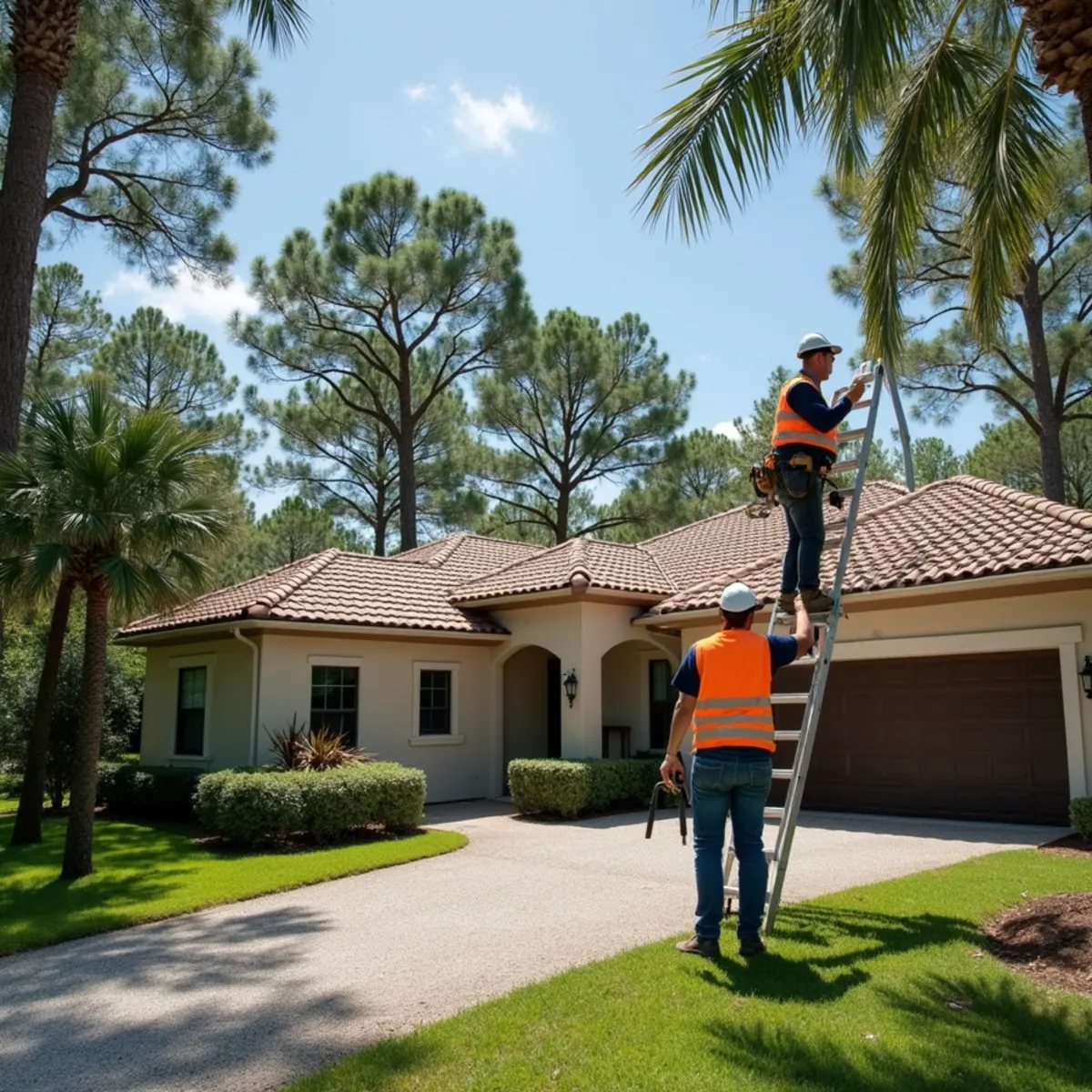
For a roof insurance claim in Palm Beach County, start by reading your deductibles and roof settlement terms, report the loss promptly, tarp and dry the house while keeping receipts, photograph everything, and get a roof-level inspection with measurements and a written scope. Then compare the insurer's estimate against that scope line by line.
A strong roof insurance claim is prepared before the first phone call to the insurer. Know what your policy says, report promptly, protect the house from further damage, and back the claim with organized photos and a clear roofing scope. The steps below walk through that process for Palm Beach County homeowners, along with what a roofing contractor can and cannot do to help.
Step 1: Read the parts of your policy that matter for a roof
Pull out your declarations page and policy, or download them from your insurer's portal, and find these items:
- Deductibles. Most Florida policies have a separate hurricane deductible, often a percentage of your dwelling coverage, plus an all-other-perils deductible for non-hurricane events. Know which one likely applies.
- Roof settlement terms. Some policies pay roof claims at replacement cost; others use actual cash value or a roof payment schedule based on age.
- Ordinance or law coverage. This can help pay for code-required upgrades during a covered repair.
- Your duties after a loss. Policies typically require prompt notice, reasonable steps to protect the property, and records of what you spent.
Step 2: Report promptly
Florida has shortened the time allowed to report property claims in recent years, and your policy will state its own requirements. Do not wait to see if a stain gets worse. Report the loss, write down your claim number, and note the name of everyone you speak with.
Keep a simple claim log from the first day: the date and time of each call or email, who you spoke with, what they asked for, and when you sent it. A single page like that settles most later questions about what was requested and when.
Florida's 2023 reforms tightened these limits further. As generally described, notice of an initial claim, or of reopening one, is due within a year of the storm or other loss, while a supplemental request for more money gets up to 18 months. Your policy and the date it was issued control the exact limits, so confirm them with your agent rather than counting on a figure from a website, this one included.
Step 3: Protect the property
Covering an opening with a tarp, drying the interior, and moving belongings are all part of preventing further damage. Keep every receipt and invoice. If a contractor performs emergency work, make sure the invoice describes the work, the date, and the area covered.
Step 4: Build your own record
Photograph every side of the house, the damaged areas, the interior, and any debris before cleanup. Write down the date of loss and when you first noticed damage. Gather anything that shows the roof's condition before the storm, such as a prior inspection or wind mitigation report.
Step 5: Get the roof documented at roof level
This is where a roofer adds value. A roof-level inspection should produce:
- Photos of each damaged area tied to its location on the roof
- Measurements and quantities, such as squares of shingles or number of tiles
- Notes on underlying components: underlayment, decking, flashing, valley metal, and hip and ridge
- A written repair or replacement scope describing what it would take to restore the roof
Our roof insurance claim documentation is built around that package. If the roof needs work right away, storm damage roof repair can be scoped at the same visit.
We document damage and write repair scopes. We are not public adjusters, we do not negotiate your claim, and we cannot promise approval. Waiving or rebating a deductible is illegal in Florida, and we will not offer it.
Step 6: Be ready for the adjuster visit
The insurer will usually send an adjuster to inspect. A few things help that visit go well:
- Be home, or have someone there who knows the house.
- Have your photos, dates, and receipts ready to share.
- Walk the adjuster through the interior damage you documented.
- If you want your roofer present, ask ahead of time. Roofers commonly attend to point out roof-level conditions, but the adjuster makes the evaluation.
- Ask when to expect the estimate and how to send additional documentation.
Step 7: Compare the estimate with the roofing scope
When the insurer's estimate arrives, compare it line by line with your roofer's scope. Differences often come down to quantities, missing components such as underlayment or drip edge, or whether code-required items were included. If something is missing, send the insurer the supporting photos and scope and ask how to have it considered.
If you still disagree, your policy may describe an appraisal process, and the Florida Department of Financial Services offers a mediation program for many residential property claims. A licensed public adjuster or an attorney is another option some homeowners choose. Those decisions are yours, and they are outside a roofer's role.
Denied or short-paid: what to look at first
A denial letter or a low estimate is not the end of the file, but it does tell you where the disagreement sits. Read it for three things before you respond.
- The reason given. Letters usually cite a policy provision, such as an exclusion for wear and tear, deterioration, or long-term leakage. That provision is what any response has to address.
- What the adjuster actually saw. Ask for a copy of the adjuster's report, photos, and estimate. Compare the photographed areas with your own. Slopes that were never walked or an attic that was never opened are common gaps.
- Whether the dispute is about coverage or amount. "This is not covered" and "this costs less than you say" are different problems. Appraisal clauses generally handle disputes over amount, not coverage.
For a wear-and-tear denial, the most useful evidence is anything showing the roof's condition before the storm, plus photos that show damage consistent with a sudden event, such as fresh tile breaks or creasing concentrated on the windward slopes. A roofer can describe those conditions in writing. Deciding how to challenge the denial is your call, with a public adjuster or attorney if you choose.
Watch for red flags
- Anyone offering to cover or waive your deductible
- Pressure to sign a contract on the doorstep the day after a storm
- A contractor who wants you to hand over control of the claim
- No license you can verify at myfloridalicense.com
Florida also restricted assignment of benefits agreements for policies issued on or after January 1, 2023, so be wary of paperwork that tries to transfer your claim rights to a contractor.
A note for Royal Palm Beach homeowners
In Royal Palm Beach, many 1970s to 1990s homes are on their second shingle roof, and a lot of those are due again. On an aging roof, the adjuster will look closely at what is storm damage and what is wear. That makes pre-storm records and a careful roof-level inspection, one that distinguishes fresh creasing or missing tabs from long-term granule loss, especially important. A general roof inspection before hurricane season gives you that baseline.
On the job: where claims and roof work collide
Some of the hardest claim questions only show up once the roof is opened. The most common is hidden deck damage. On a tile or shingle re-roof, rotted plywood or old 1x6 boards are usually invisible until the old roofing comes off. When we find it, we photograph it with a tape measure in the frame before anything new covers it, count the sheets or linear feet, and tell you before proceeding, so the finding can be sent to your insurer as a supplement if it relates to the loss.
Code items are another gap. On a full re-roof, the Florida Building Code can require work such as secondary water resistance, deck re-nailing to current schedules, and new drip edge. An estimate written as a like-for-like swap sometimes leaves those out. Our scope lists code-required items separately, which makes it easier to see what might fall under ordinance or law coverage.
Partial tile repairs raise matching questions. If the tile profile on your roof is discontinued, a repaired section may not match the rest, and how the insurer handles that depends on your policy. We note the profile, manufacturer markings when visible, and what matching tile is available, so that question is on the table early.
Timing matters as well. Apart from emergency protection, we generally advise against starting permanent repairs before the adjuster has seen the roof, unless the insurer agrees in writing. After a major storm, permit volume and tile lead times can stretch schedules, so an organized file helps keep your place in line.
Prepare the claim before you need it
The homeowners who have the easiest time with a roof claim usually did three things: they knew their policy, they documented quickly, and they had the roof itself documented by someone who works on roofs every day. Rising Roof Services can provide the roofing side of that record. Call (831) 666-1600 or request an inspection.
Frequently asked questions
Should I call a roofer or my insurance company first after storm damage?
Report the loss to your insurer promptly, and call a roofer for emergency protection if the roof is open. The two can happen the same day. A roofer can tarp the roof, photograph the damage at roof level, and prepare a written scope, which you can then share with the insurer and the adjuster.
Can a roofing contractor negotiate my claim with the insurance company?
No. In Florida, negotiating a claim on a homeowner's behalf is the role of a licensed public adjuster or an attorney. A roofing contractor can document damage, provide photos and measurements, write a repair scope, and explain roof conditions to an adjuster, but the claim decision and any negotiation happen outside the contractor's role.
What is a hurricane deductible in Florida?
It is a separate deductible that applies to losses from a hurricane, often set as a percentage of your dwelling coverage rather than a flat dollar amount. That can make it much larger than your all-other-perils deductible. Check your declarations page for the exact figure, and ask your agent how it applies if more than one storm hits in a season.
Can I start permanent roof repairs before the adjuster inspects?
Emergency steps such as tarping and drying are expected and should not wait. Permanent repairs are different, because they remove the evidence the adjuster needs to see. If the adjuster cannot come for some time and waiting risks more damage, ask the insurer in writing whether you may proceed, and photograph every stage of the work before it is covered.
What is a supplemental roof claim?
It is a request for additional payment on a claim that is already open or settled, usually because damage surfaced that nobody could see at the first inspection. Rotted decking found at tear-off is a typical example. The insurer will want photos, measurements, and an explanation of how the new damage relates to the original loss, submitted within the deadline your policy sets.