
A roof inspection in Boca Raton tells you what condition your roof is in, roughly how many years it has left and which problems should be fixed before the next storm. Rising Roof Services walks every accessible slope, checks the attic where it can be reached, and hands you a labeled photo report that ends in a clear repair-or-replace recommendation.
A roof inspection should answer three questions: what shape the roof is in, how long it is likely to last, and what, if anything, should be fixed first. Our inspections are built around those answers, with photos of every issue so you are not taking anyone’s word for it.
Homeowners call us before hurricane season, after a storm, when an insurer asks about roof age, or while buying a home. Sellers who want a report for their agent should look at our pre-listing roof inspection service. If we do find damage, the report becomes the starting point for roof repair or an insurance conversation.
Reviewed by the Rising Roof Services team · Boca Raton, FL
Good reasons to schedule an inspection
You don’t need a leak to justify an inspection. These are the situations where one pays off most.
Your insurer is asking about roof age
Carriers can require an inspection on older roofs, and documented remaining life can matter at renewal.
A storm just passed
Wind can lift shingles or crack tile without any sign inside the house for weeks.
You’re buying a home
A general home inspection often views the roof from a ladder; a roofer walks every accessible slope.
The roof is past midlife
A baseline report on a 15-year-old roof catches small problems before they spread.
Other trades have been up there
Solar, satellite and AC work frequently leaves cracked tiles or unsealed penetrations behind.
Hurricane season is coming
A spring inspection finds loose hip tiles and lifted shingles while there’s still time to fix them.
What’s included in every roof inspection
The same checklist runs on every visit, adjusted for your roof type, so nothing depends on what the inspector happens to notice.
Every walkable slope, photographed by plane
Each roof plane is walked where it is safe and photographed wide and close, so the report maps cleanly onto your house.
Material-specific surface checks
Shingles are checked for granule loss, broken seals and nail pops; tile for cracks, slips and loose hip and ridge; flat sections for blisters, open seams and ponding stains.
Flashing and metal at every transition
Wall flashing, stucco stop, counterflashing, valley metal, drip edge and pipe boots are examined for rust, gaps and failed sealant.
The drainage path, top to bottom
Gutters, downspouts, scuppers and crickets are traced to see where water actually goes in a downpour and where it backs up.
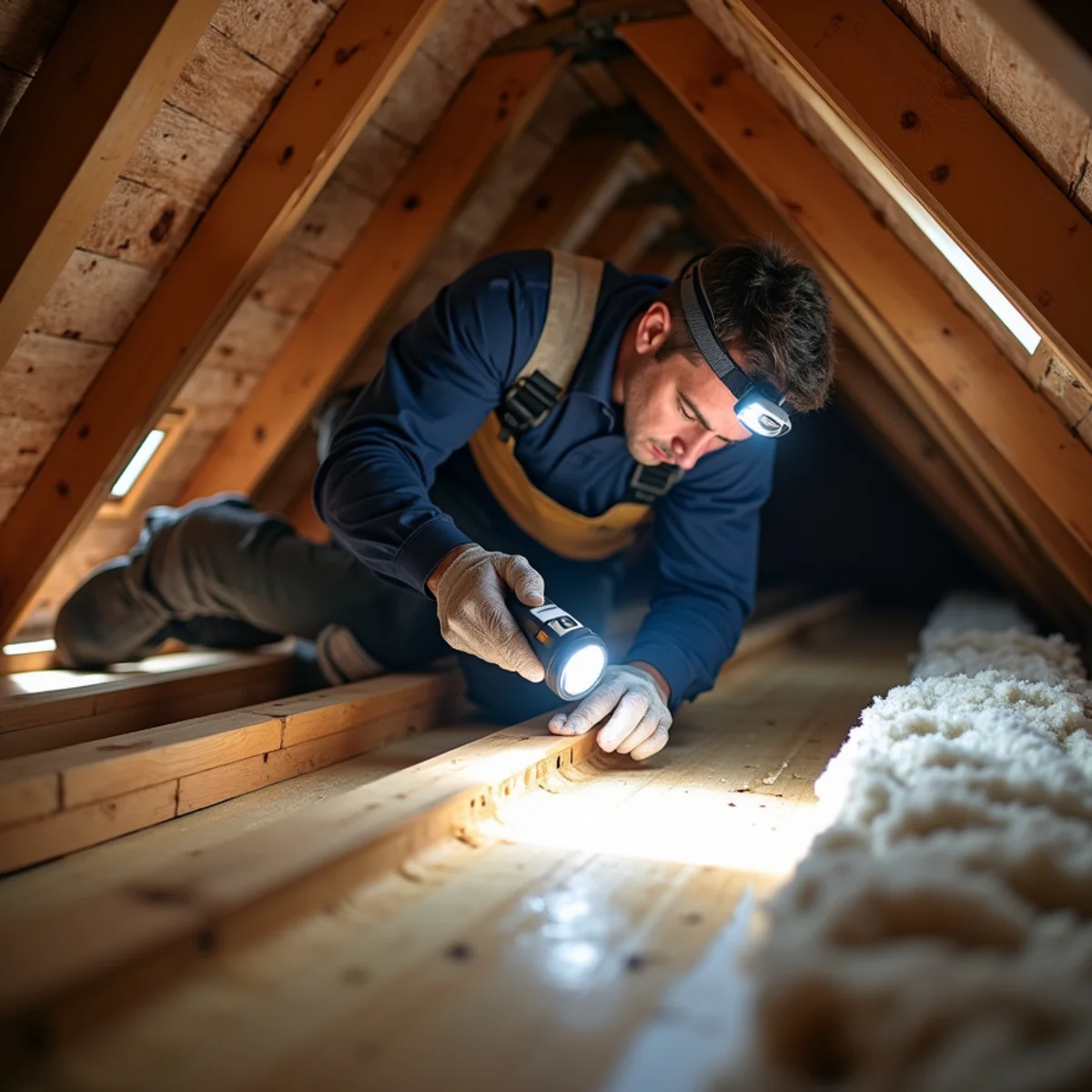
Attic and deck underside
Where there is access, we look for daylight, stains, delaminating plywood, rusted nail tips and whether soffit intake and roof exhaust vents are balanced.
Old patches and other trades’ work
Earlier repairs, roof-cement smears, mismatched tile, solar mounts, satellite brackets and AC stands are noted, since they often mark where the roof has leaked before.
What happens during your inspection
- 1
Scheduling
We confirm roof type, age if known, and why you want the inspection, so we focus on what matters to you.
- 2
Roof surface and edges
We walk each accessible slope and check covering, fasteners, hips and ridges, valleys, flashings, penetrations, gutters and drip edge.
- 3
Attic check
Where there’s access, we look for daylight, stains, deck delamination, ventilation problems and signs of past leaks.
- 4
Photo report
You receive labeled photos, a plain-language condition summary, an estimated remaining-life range and a prioritized list of any repairs. Each finding carries an urgency rating, and the summary closes with a repair-or-replace recommendation.
- 5
Review
We walk you through the findings, answer questions and, if repairs are warranted, prepare a written scope.
What shapes the cost of an inspection
Inspection pricing depends on how much roof there is to cover and what the report needs to show.
- Roof size and height
- Larger and two-story homes take longer to walk and document safely.
- Roof type
- Tile calls for slower movement and sometimes lifting pieces to check the underlayment.
- Purpose of the report
- A report for a purchase or an insurer may need more documentation than a routine checkup.
- Attic access
- Tight or blocked attics add time, and no access at all limits what can be verified.
We provide a written, itemized scope before work starts on any repair we recommend, and you’re under no obligation to hire us for it.
Why choose Rising Roof Services for a roof inspection
We don’t present guesses as facts
Anything a visual check can’t prove is labeled that way in the report. That keeps any later repair quote honest and gives an insurer or buyer findings they can rely on.
Reports people can forward
Reviews mention a pre-listing inspection that caught soft spots before buyers noticed, and a report simple enough to send straight to the realtor. Plain language and labeled photos do that work.
Thorough before anything else
Customers remark on how extensively we inspect before recommending anything. In practice that means every safe slope, the attic, and lifted tiles wherever the underlayment is in question.
No strings attached to the findings
The inspection stands on its own. If repairs are warranted you receive a written, itemized scope, and you are free to take it to any roofer you like.
Quick to reach after a storm
From Woodfield Plaza we cover Boca Raton, the beaches and West Boca, and calls after a storm get a same-day callback so a post-storm inspection isn’t left waiting behind a long queue.
5.0 stars from 31 Google reviews · Open 24 hours, 7 days · (831) 666-1600

What our inspection is and isn’t
This is a roofer’s condition assessment. It isn’t automatically a substitute for the four-point or wind mitigation (OIR-B1-1802) forms insurers request, which have their own rules about who may sign them. Our photos do help you understand what those inspectors will see. Our post on what a roof inspection report covers goes deeper, and roof age and insurance in Florida explains why remaining life matters at renewal.
Coastal vs. inland Boca roofs
Location changes what we look for. On homes east of I-95 and along the Intracoastal, including Highland Beach and Hillsboro Beach, salt air corrodes fasteners, valley metal and flashings faster, so metal gets extra attention. Farther west in communities like Whisper Walk, the bigger concerns tend to be aging underlayment on original tile roofs and UV wear on shingles.
What your written condition report includes
The report is built so you can act on it without calling us to translate. Photos are labeled by roof plane, so “rear slope, left of the pool cage” means something to you, your agent or another roofer.
It also says what a visual inspection can’t prove. Wet decking under intact tile, or rot under shingles that still lie flat, may only be confirmed once material is opened, and we flag those items instead of guessing. Because every finding is written down, each roofer you invite to bid starts from the same facts, which makes estimates far easier to compare line by line.
- Urgency rating for each item: fix now, fix before hurricane season, or monitor
- Confirmed, suspected or needs opening, so you know how firm each finding is
- Remaining-life range for the covering and, where visible, the underlayment
- Repair-or-replace recommendation with the reasons behind it
- Access limits, such as a blocked attic hatch or a slope too wet to walk safely
Roofer’s inspection, four-point or wind mitigation: which do you need?
Florida homeowners hear about three different roof-related inspections, and they answer different questions. Knowing which one you need saves a second appointment.
If a storm or an insurer’s letter prompted the call, ask your agent which form they want before we schedule, and see our roof insurance claim help if damage is involved.
- Four-point inspection: an insurer’s form covering the roof, electrical, plumbing and HVAC on older homes. For the roof it records material, age, visible damage and remaining life.
- Wind mitigation (OIR-B1-1802): records how well the house resists wind: how the deck is nailed, how the roof connects to the walls, whether there is secondary water resistance and what shape the roof is. Those answers can qualify for premium credits. The form limits who may sign it. The state’s My Safe Florida Home program has offered these inspections to eligible homeowners, so check current funding and eligibility.
- Roofer’s condition inspection: what we provide. It judges how the roof is performing, what needs repair and how long it is likely to last, and it produces a repair scope when needed.
Walking the roof versus drone-only inspections
Drone photos have a place, especially on steep or fragile roofs, and they can show a cracked tile or a rusted valley clearly. What a camera overhead can’t do is lift a tile to see the underlayment, feel a deck flex underfoot, press a hip tile to find out whether it rocks, or compare a ceiling stain to the deck above it from the attic.
That is why our inspection walks every slope that is safe to walk and pairs the roof with the attic. When a slope can’t be walked safely, because it is wet, too steep or too fragile, the report says so rather than filling the gap with assumptions.
Roof Inspection near you
Based at Woodfield Plaza in Boca Raton, we provide roof inspection across West Boca and nearby communities, including:
Roof Inspection FAQs
How long does a roof inspection take?
Most single-family inspections take a couple of hours on site, depending on roof size, height and whether the attic is accessible. Tile roofs take longer because we move carefully and may lift tiles to look at the underlayment. The photo report follows once we’ve reviewed and labeled everything.
Do I need to be home during the inspection?
It helps, but it isn’t always required. We need access to the attic hatch for the interior portion, so someone should be home for that or arrange access with us ahead of time. Being there also lets you point out stains or past leaks and ask questions while we’re on site.
Will the report say how many years my roof has left?
It gives an estimated remaining-life range based on the covering, the underlayment where visible, age and any damage we find. It is a professional judgment, not a guarantee. Insurers and buyers tend to find it useful because it is backed by photos rather than a single number with no context.
Can I share the report with my realtor or insurance agent?
Yes, the report is yours. Many homeowners send it to their agent, realtor or family. It is written in plain language with labeled photos, so someone who has never been on a roof can follow it. We are also glad to answer your agent’s questions directly.
How often should I have my roof inspected in Boca Raton?
For most homes, a professional look each spring, before hurricane season opens on June 1, is a sensible rhythm, along with a check after any storm that brings strong wind. Roofs past midlife, tile roofs still on their original underlayment and homes near the Intracoastal or the ocean benefit most from regular visits. Between inspections, keep gutters and drains clear from the ground and watch your ceilings after heavy rain.
What should I do before the inspector arrives?
Clear a path to the attic hatch, move vehicles if the ladder needs driveway space, and note any ceiling stains or rooms where you have seen drips. If you know the roof’s age or have old permit papers, keep them handy; permit history is often searchable online through the City of Boca Raton or Palm Beach County by address. Secure pets that might slip out while we come and go.
Do you inspect flat and patio roofs as well?
Yes. Low-slope sections over patios, Florida rooms and additions get the same attention as the main roof. We check the membrane for blisters, cracks and open seams, look for ponding stains that show where water sits after rain, and trace scuppers and drains. These sections often leak where they tie into the sloped roof or the wall.