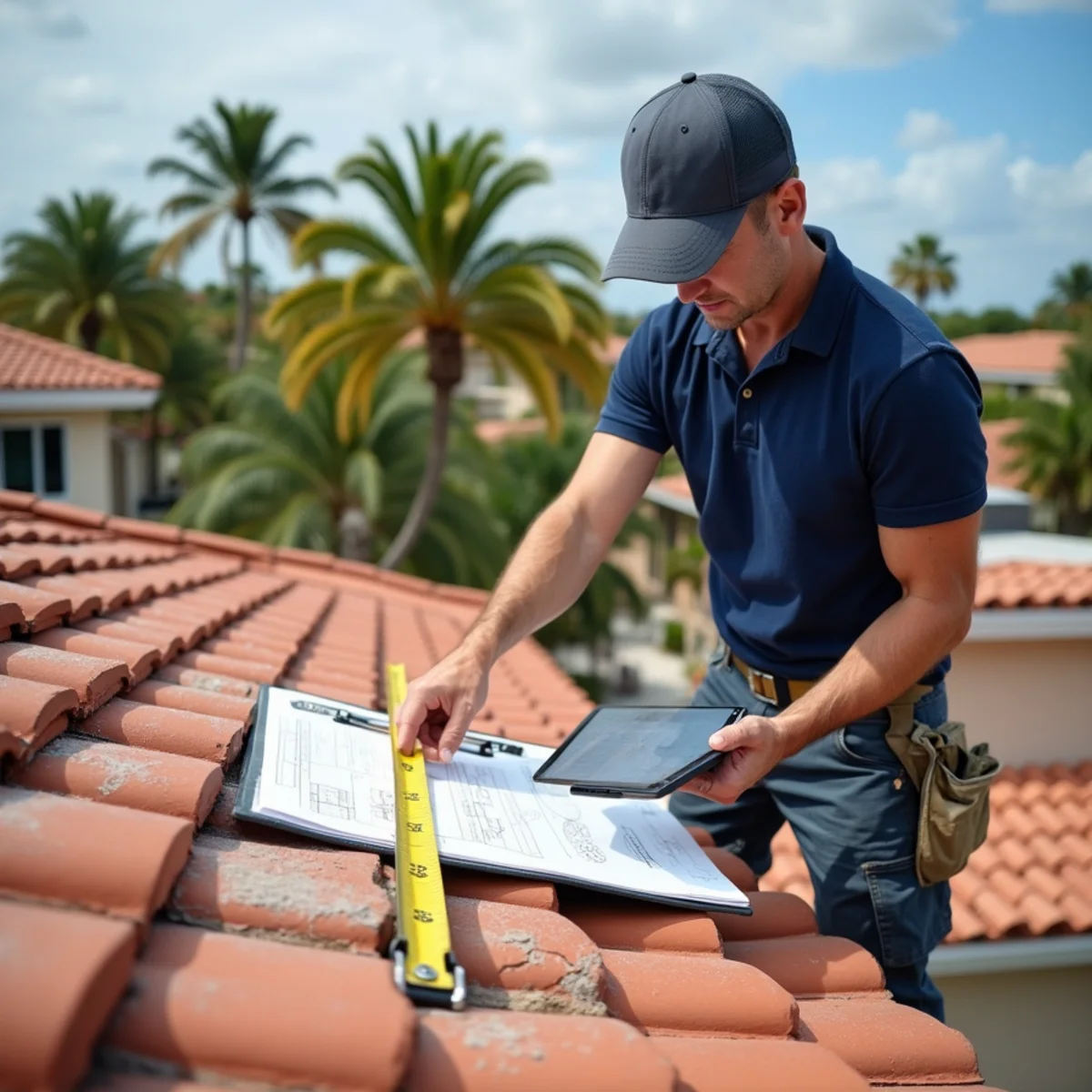
For a roof insurance claim in Boca Raton, our job is the evidence: dated photos of every slope, measurements, notes on how each piece failed, and an itemized repair scope your adjuster can check line by line. We document the damage and do the repair work; your insurer decides coverage, and we never promise approval or touch your deductible.
When a roof claim goes sideways, it’s often because the insurer and the homeowner are looking at different pictures. The adjuster sees a handful of photos and a roof age from the policy file. You see a stain in the bedroom and tile on the lawn. A contractor’s job is to close that gap with an accurate record of what’s on the roof, what’s damaged and what it takes to fix it.
That’s the part we handle. We inspect, photograph, measure and write an itemized repair scope based on the Florida Building Code and local permit rules. It’s the same documentation we use on our own storm damage roof repair jobs, organized so an adjuster can follow it without guesswork.
Equally important is what we don’t do. We are not public adjusters and don’t negotiate your settlement. We can’t promise a claim will be approved. And we will not waive, absorb or rebate your deductible, which is illegal for contractors in Florida. A roofer who offers to cover it is asking you to take part in something that can put your claim at risk.
Reviewed by the Rising Roof Services team · Boca Raton, FL
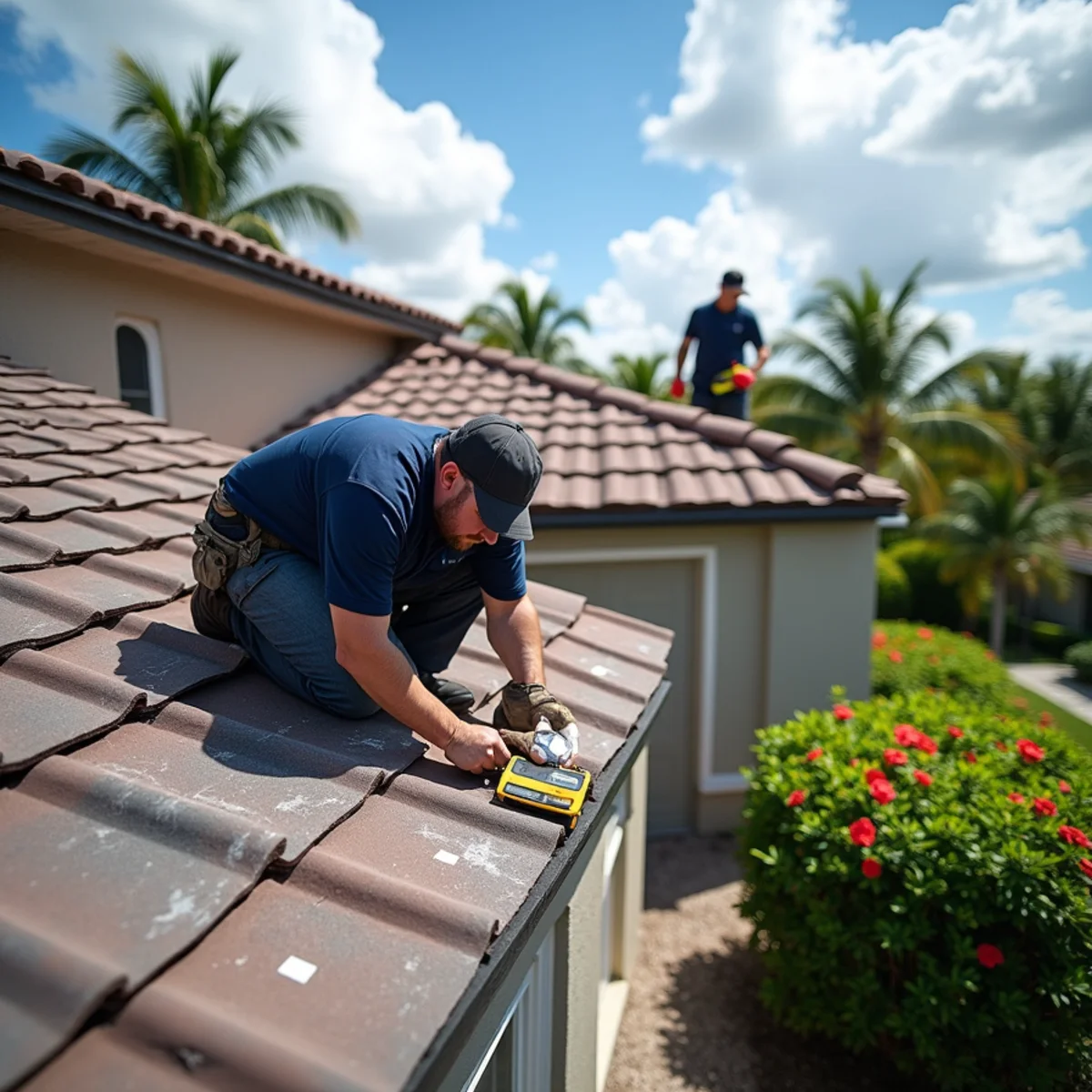
When Our Documentation Helps
Homeowners usually call us for insurance support in one of these situations:
Before deciding whether to file
You want to know whether the damage is real and significant before reporting it, since claims can affect your policy history.
Right after a storm
Wind or impact damage is visible, and you want it recorded before tarping or repairs change what an adjuster will see.
An adjuster scope that looks thin
The insurer’s estimate leaves out items such as underlayment, drip edge or code-required work. A detailed contractor scope helps you ask informed questions.
A carrier request for roof condition
Some insurers ask for documentation on older roofs at renewal. Requirements keep changing, so confirm what yours needs with your agent.
Wind versus wear
When the insurer attributes damage to age, clear photos and notes on how the roofing failed help separate the two honestly.
Hidden damage mid-repair
Rotted decking found after tear-off has to be documented and reported before it’s covered back up.
What goes into our roof claim documentation package
Every package is built so someone who has never seen your roof can follow what happened to it.
Photos that show where, not just what
Each close-up is paired with a wider context shot, so a cracked tile is tied to a specific slope and spot on the house rather than floating on its own in a file.
A marked-up roof diagram with measurements
Slopes, hips, valleys, flat sections and damaged areas are drawn and measured, with tile or shingle counts where the damage is piece by piece.
Construction details the adjuster will ask about
Covering type, underlayment (felt, synthetic or self-adhered), deck material, visible fastening and an estimated roof age, noted plainly rather than guessed.
Cause notes for every finding
Each item is marked as likely wind, impact or water entry, or as wear and maintenance that predates the storm, and as confirmed or suspected.
An itemized scope with code items flagged
The repair is broken into line items, and anything the Florida Building Code or the permit office would require, such as underlayment or edge metal to current standards, is marked separately.
Interior and attic tracing
Where water reached the house, we follow it from the ceiling stain through the attic to the roof entry point and photograph the path.
A hidden-damage procedure during the repair
If we do the work and find rotted deck or other concealed damage, we stop, photograph it and give you the record to send to your insurer before it is covered back up.
How Our Claim Documentation Works
- 1
Inspection and photo record
We photograph every slope, take close-ups of each damaged area and add context shots showing where on the house each photo was taken.
- 2
Measurements and material notes
We measure roof areas, count damaged tiles or shingle squares, and record underlayment type, deck material and approximate roof age.
- 3
Written repair scope
You receive an itemized scope listing each task, the materials involved and any code-required items tied to permitting.
- 4
Adjuster meeting on request
If you’d like, we meet the adjuster on the roof to point out what we found. Coverage discussions stay between you and your insurer.
- 5
Repair and close-out photos
If you hire us for the work, we document it from tear-off to completion, including anything uncovered along the way.
What Affects the Cost of Claim Documentation
The effort behind a documentation package scales with the roof and the damage. Factors include:
- Roof size and complexity
- Multiple hips, valleys, flat sections and additions mean more areas to photograph and measure.
- How widely damage is spread
- Scattered damage on every slope takes longer to record than a single damaged area.
- Interior tracing
- Following water from a ceiling stain back through the attic adds time but often clarifies the cause.
- Adjuster re-inspection
- Attending a scheduled meeting with the adjuster adds time on site.
- Whether we do the repair
- Documentation done as part of a repair project is handled differently from a standalone report.
We provide a written, itemized scope before work starts. Our pricing is the same whether or not insurance is involved, and your deductible remains yours to pay.
Why choose Rising Roof Services for roof insurance claim documentation
Clear lines we don’t cross
We aren’t public adjusters, we don’t negotiate settlements and we won’t touch your deductible. You get a roofer’s evidence and a roofer’s scope, and the claim stays yours.
One price, claim or no claim
The scope you see is the scope you’d get paying out of pocket. Reviewers mention jobs delivered on time and within the quoted amount, which is how a claim-funded repair should run too.
Reports people find easy to pass along
Our reports are written in plain language, and a reviewer noted our roof report was easy to share with their realtor. The same clarity helps when an adjuster, agent or HOA manager is reading it.
A thorough look before any number
Reviewers describe extensive inspections before work started. On a claim, that care is what separates storm damage from wear and keeps the file credible. All 31 of our Google reviews together average 5.0.
5.0 stars from 31 Google reviews · Open 24 hours, 7 days · (831) 666-1600
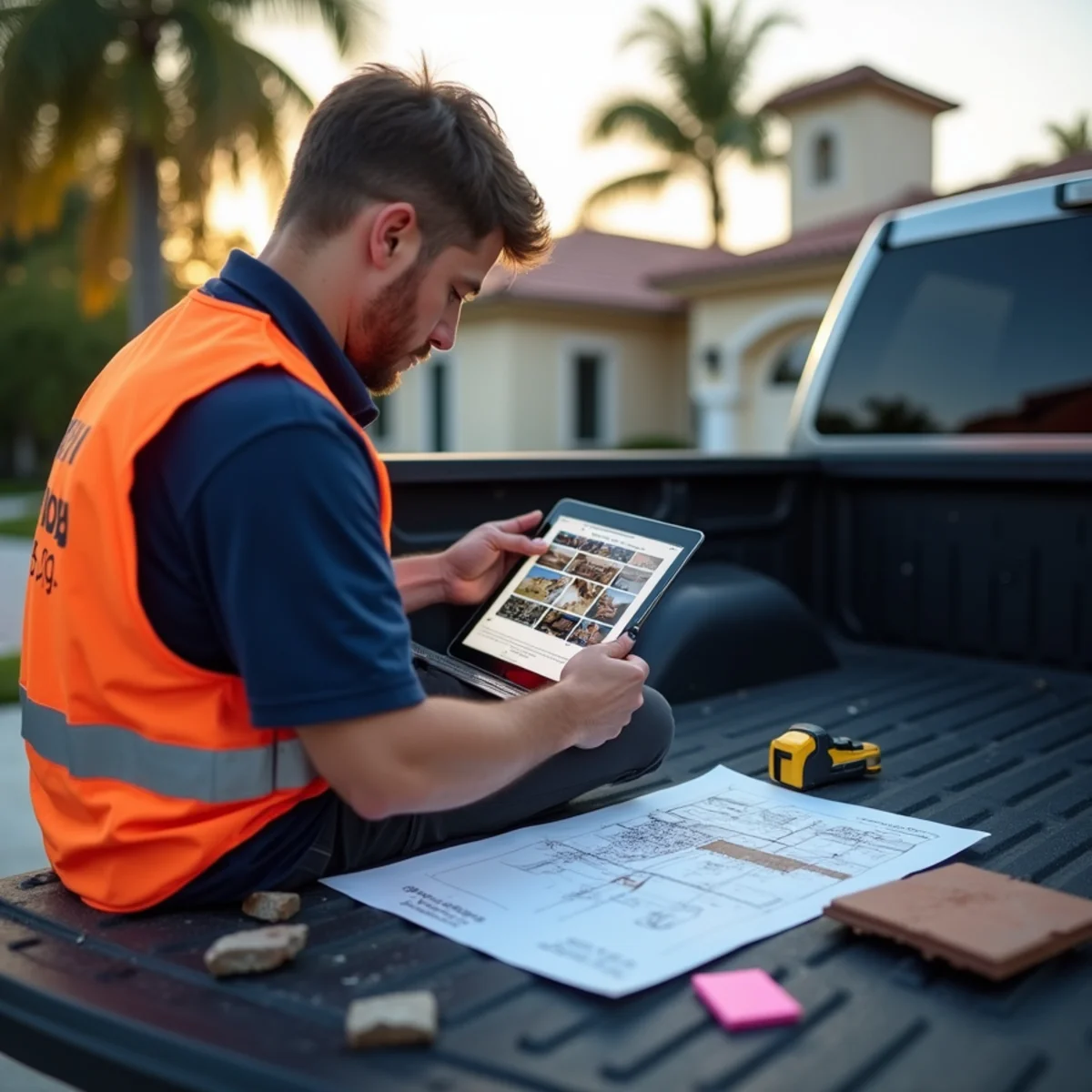
Roof Age and Your Policy
Since 2022, Florida has barred insurers from dropping or declining a homeowner just for having a roof under 15 years old. Past that age, the carrier may ask for an inspection, and a roof documented with five or more years of service left generally can’t be refused on age alone. These rules keep evolving, so confirm the details with your agent.
A condition report can help, but only if it’s honest. Our post on roof age and insurance in Florida explains what insurers typically look at.
Claims on Shared and Single-Family Roofs
In 55+ communities such as Kings Point and Villages of Oriole, roofs are often shared and may fall under an association’s master policy, which can change who files and who pays. On a detached home in Delray Beach or Boca, your own homeowners policy usually applies. For the filing side, see how to prepare a roof insurance claim in Palm Beach County.
Building Your Claim File, Step by Step
Our documentation works best inside a well-kept claim file. This is the order we suggest.
- Preserve the evidence. Keep dated photos and video of the roof, the yard and every interior stain, plus any fallen tile or shingle pieces.
- Report the loss as your policy requires. Ask the insurer what emergency mitigation it expects and which documents it wants from you.
- Get a written inspection. Our report labels each photo, rates each finding for urgency, and separates storm-related damage from wear or maintenance items that were there before.
- Leave the evidence for the adjuster. Temporary protection such as emergency roof tarping is fine. Permanent repairs and cleanup of damaged areas should wait until the insurer has inspected.
- Keep copies of everything. Estimates, invoices, emails and the claim number belong in one folder.
Before You Authorize Work on an Approved Claim
An approval letter isn’t the end of the paperwork. Read the insurer’s scope beside the contractor’s before anything is signed, while questions are still easy to raise. For pricing context outside a claim, see our Boca Raton roof cost guide.
- Deductible: confirm which one applies. A hurricane deductible often works differently from the all-other-perils amount.
- Depreciation: some policies pay a depreciated amount first and release the rest after the work is finished. Ask what paperwork triggers that second payment.
- Exclusions and code work: wear and prior damage are commonly excluded, and code-required upgrades may be covered only under ordinance-or-law coverage, if your policy has it.
- Change orders: agree in writing how hidden damage found during tear-off will be documented and reported to the insurer.
Is the Damage Worth a Claim? Weighing Scope Against Deductible
Not every storm repair belongs on a claim. If the repair is modest and your deductible is large, especially a percentage-based hurricane deductible, a claim can add to your loss history without paying out much. Getting our scope first gives you a real repair figure to set beside the deductible before you decide.
We don’t tell you whether to file. That call depends on your policy, your claims history and advice from your agent. What the written scope does is replace a guess with an itemized number, so you can have that conversation with the facts in hand.
When the Insurer’s Estimate and Ours Don’t Match
Differences between an adjuster’s estimate and a contractor’s scope are common, and most come down to a handful of line items. Laying the two side by side usually shows exactly where they part ways.
- Quantity: a different count of damaged tiles or squares, often because one estimate covered only the slope with visible damage.
- Underlayment and edge metal: replacing tile without the torn underlayment beneath it, or leaving out drip edge and flashing the repair disturbs.
- Code-required work: items the permit office will require that the estimate prices as optional or omits.
- Matching: whether a discontinued tile can be matched at all, which affects how much of a slope has to be redone.
What we can and can’t do when estimates differ
We can walk through the comparison with you, attend a re-inspection and explain our photos and line items to the adjuster. We can’t argue coverage or negotiate your settlement. If you still disagree after that, your policy and Florida’s consumer resources set out formal options, which our guide to preparing a Palm Beach County roof claim walks through.
Roof Insurance Claim Help near you
Based at Woodfield Plaza in Boca Raton, we provide roof insurance claim help across West Boca and nearby communities, including:
Roof Insurance Claim Help FAQs
Can you guarantee my roof claim will be approved?
No, and be wary of anyone who does. Coverage decisions belong to your insurer and depend on your policy, your deductible, the cause of the damage and the adjuster’s findings. What we can do is make sure the damage is recorded accurately and completely, so the decision rests on good information rather than a few quick photos.
Will you cover or waive my deductible?
No. In Florida it is illegal for a contractor to waive, rebate or absorb an insured’s deductible, and offering to do so can put your claim at risk. Your deductible is your share of the loss under the policy. We will give you an honest scope and price, and the deductible stays your responsibility.
Are you a public adjuster?
No. Public adjusters are separately licensed in Florida and are hired to represent you in negotiating a claim settlement, usually for a percentage of it. We are a roofing contractor. We document damage, write repair scopes and do the repair work. If you want someone to negotiate on your behalf, that is a separate professional you would hire.
Should I call my insurer or a roofer first?
If you plan to file, report the loss promptly, since most policies require timely notice. Having a roofer look early helps too, because photos taken before tarping or cleanup give the clearest record. Many homeowners call both the same day. What matters most is that nothing is permanently repaired before the insurer has had a chance to inspect it.
Does homeowners insurance cover wind damage to a roof in Florida?
Often, but not always. Coverage depends on your policy. Some Florida policies exclude windstorm and rely on a separate wind policy, many apply a hurricane deductible to named storms, and most exclude wear, deterioration and poor maintenance. The insurer decides after reviewing the claim and its own inspection. An accurate report showing what the wind did, and what it didn’t do, gives that review better information to work with.
How long do I have to file a roof insurance claim in Florida?
Under changes Florida made in 2023, the deadlines most often cited are one year from the date of loss for a new or reopened claim and 18 months for a supplemental claim, but your policy and its issue date control the exact terms. Separately, most policies require prompt notice. Check both with your agent, and don’t wait on documentation, since photos lose value as the roof changes.
Can you help if damage turns up after my claim was already paid?
Yes, on the documentation side. If we open a roof and find concealed damage, such as wet deck under tile the adjuster couldn’t see, we photograph it in place, measure it and write it up as a separate line before anything is covered back up. Whether your insurer accepts it as a supplemental claim is its decision under your policy, so report it promptly.