Florida's 25 percent roof rule now depends on your roof's permit. If your current roof was permitted under the 2007 edition of the Florida Building Code or a newer one, a repair covering 25% or more only requires the repaired part to meet today's standards. Older roofs can still trigger a full-section upgrade. Confirm the edition with your building department.
For years, a Florida roof that needed more than 25% of its area repaired or replaced in a 12-month period generally had to be brought entirely up to current code, which in practice often meant a full re-roof. A 2022 law narrowed that rule. If your roof was built, replaced, or recovered under the 2007 Florida Building Code or later, only the portion being repaired has to meet current code. Older roofs can still fall under the original rule.
What the rule said before 2022
The provision lived in the Existing Building volume of the Florida Building Code. In plain terms, it said that no more than 25% of the total roof area, or of a roof section, could be repaired, replaced, or recovered within any 12-month period unless the entire roofing system or roof section was brought into compliance with the current code.
For homeowners, that had real consequences. A storm that tore off a third of one slope could turn into a full re-roof, because patching that much roof under the older standard was not allowed. Insurers, contractors, and homeowners all dealt with that math after major storms.
What the 2022 law changed
In a May 2022 special session, the Florida Legislature passed SB 4-D. Among other things, it added a provision to state law that limits the 25% rule for newer roofs.
Under the change, if an existing roofing system or roof section was built, replaced, or recovered in compliance with the 2007 Florida Building Code or later, and 25% or more of it is being repaired, replaced, or recovered, only the portion being worked on has to meet the current code. The rest of the roof does not have to be torn off and brought up to date just because of that repair.
The logic is that roofs built under the 2007 code and later already meet modern wind and attachment standards closely enough that a full tear-off should not be forced by a partial repair.
Which roofs does it apply to?
This is where homeowners get tripped up. The change hinges on the code edition the roof was permitted under, not simply the year you remember the crew being there. The 2007 edition did not take effect statewide on January 1, 2007, and code adoption dates can differ from installation dates, so the permit record is what matters.
- Roof permitted under the 2007 FBC or a later edition: the narrowed rule generally applies. Repair the damaged portion to current code.
- Roof permitted under an earlier edition: the traditional 25% rule can still apply, and a large enough repair may require bringing the whole roof or roof section up to current code.
- Unsure: look up the permit history before you assume either way.
The 2007 edition is commonly cited as taking effect statewide on March 1, 2009. A roof permitted in 2008, or even early 2009, was likely reviewed under an earlier edition, which is why the permit application date deserves a close look. The building department can confirm which edition it applied.
How is the 25% actually measured?
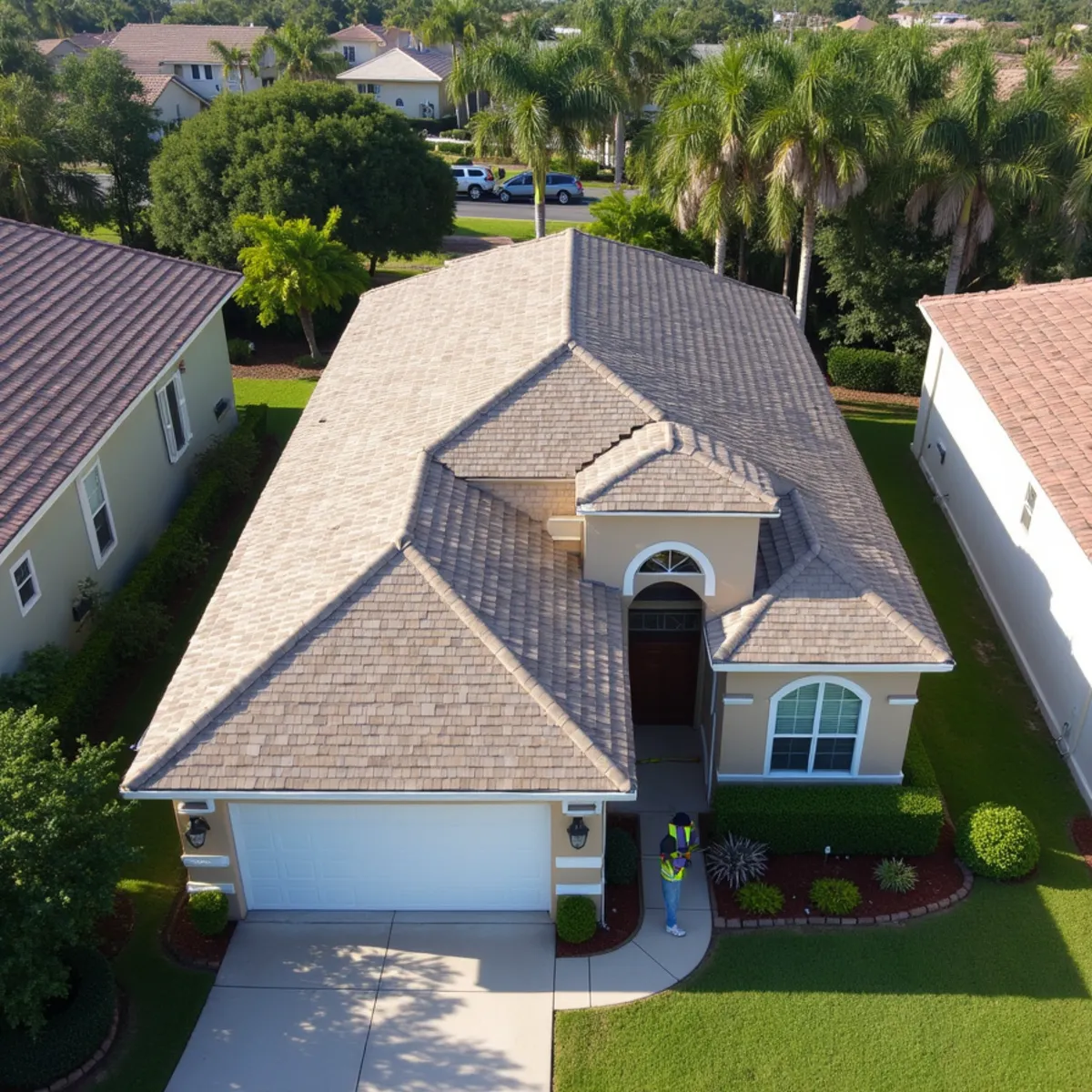
The percentage is not taken from the whole house by default. It is the area being repaired, replaced, or recovered divided by the area of the roof, or of the specific roof section, involved. On a simple hip roof that may be the entire roof. On a home with a main tile roof, a lower porch roof, and a flat roof over an addition, each of those can be a separate section with its own math.
The code treats a roof section as a part of the roof separated from the rest by features such as expansion joints, parapet walls, flashing other than valley flashing, or a change in elevation. Hips and ridges do not split a roof into sections. As a simple illustration, a 1,600-square-foot section with 450 square feet of damage is about 28%, over the threshold, while the same damage measured against a 2,400-square-foot roof would be under it.
The clock matters too. The rule looks at a 12-month period, so several smaller repairs on the same section within a year can add up. A patch in March and a larger repair in October may be counted together. The building official makes the final call on how sections are drawn and what counts.
The code edition on your roof permit, not the age of the house, decides which version of the 25% rule you are dealing with. Confirm it with the building department.
How to find your roof's permit history
Search the permit records for your address. Inside Boca Raton city limits, that is the City of Boca Raton Building Department. In unincorporated areas of Palm Beach County, including most of West Boca, it is Palm Beach County Planning, Zoning and Building. Broward cities each keep their own records. Look for the most recent re-roof permit and its issue and final inspection dates, then confirm with the department which code edition applied.
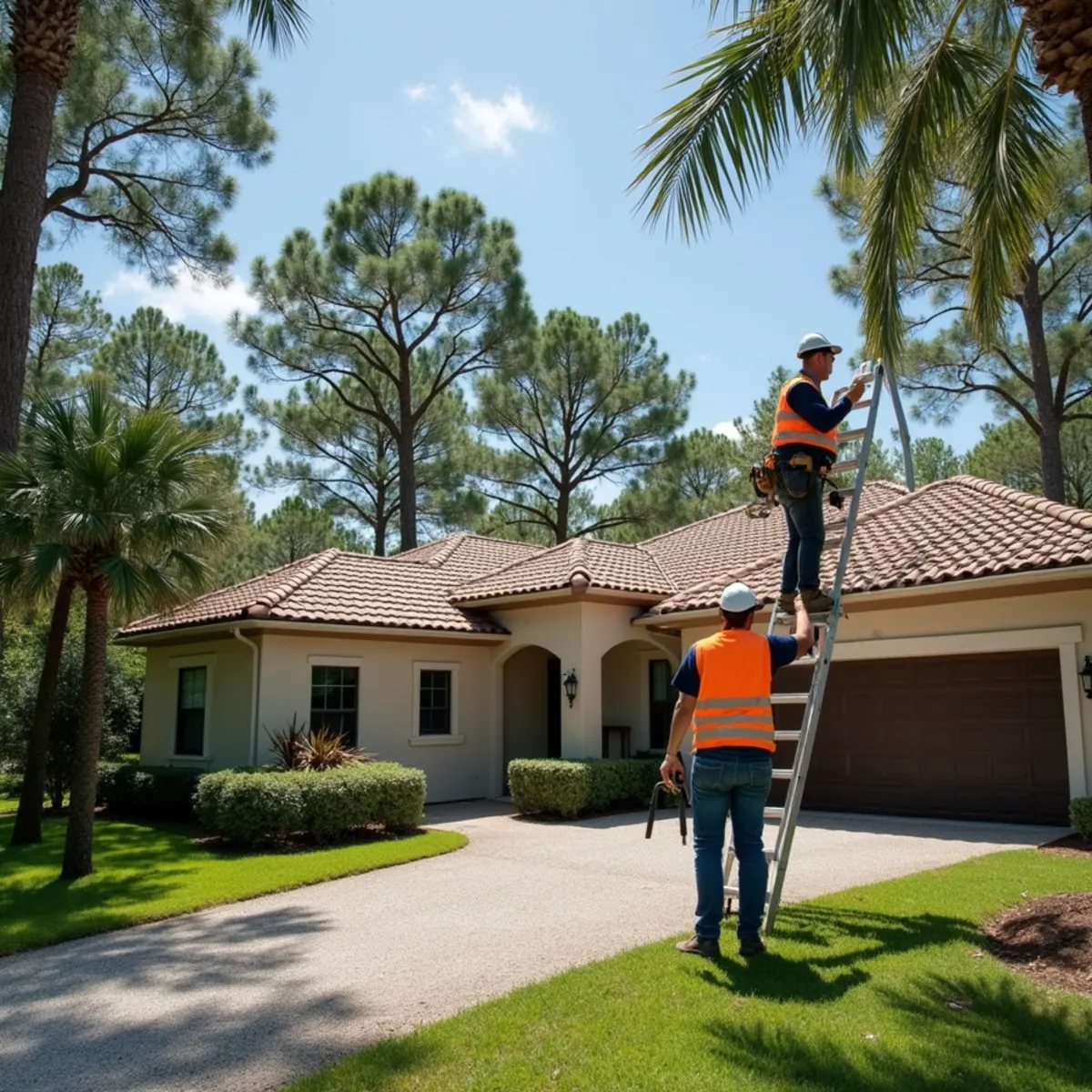
A roofer can help with this lookup as part of an inspection, but the building department has the final word on how the rule applies to your roof.
Why it matters for insurance claims
Many homeowners policies include ordinance or law coverage, which can pay for code-required upgrades during a covered repair. Under the old rule, a large partial loss on a roof often triggered a code requirement to replace the whole roof.
For roofs under the 2007 code or later, the code no longer forces that result. An insurer can evaluate a partial loss as a partial repair. That does not mean a claim will or will not include full replacement; that still depends on the damage, your policy language, and the insurer's decision. It does mean you should not assume that losing a quarter of your roof automatically results in a new roof.
What the law did not change
- Permits. Re-roofs and many larger repairs still require permits and inspections.
- Re-roof upgrades. When you do replace a whole roof on a site-built single-family home, the code requires certain mitigation work, such as secondary water resistance and roof-deck re-nailing to current schedules. Details depend on the home.
- Product approvals. Broward and Miami-Dade remain in the High-Velocity Hurricane Zone, with its own product approval requirements. Palm Beach County is outside the HVHZ but in the wind-borne debris region.
- Matching. Whether repaired sections must match the rest of the roof is a separate insurance and policy question.
Two hypothetical scenarios
These are simplified examples, not real jobs.
A shingle roof permitted in 2016 in unincorporated West Boca loses about 35% of one slope in a storm. Under the narrowed rule, the damaged portion is repaired to current code, and the rest of the roof can stay.
A tile roof permitted in 2004 takes similar damage. Because it predates the 2007 code, the traditional 25% rule may still apply, and the building department may require the roof or roof section to be brought up to current code. That can mean full shingle roof replacement or tile replacement rather than a patch.
Questions to ask before any large repair
- When was the current roof permitted, and under which code edition?
- What percentage of the roof or roof section is actually damaged?
- Does the proposed scope require a permit?
- If it is a repair, can the new portion be tied in properly to the existing roof?
From the roof: where the 25% question gets complicated
The law reads cleanly. Real roofs are messier, and a few issues come up often when we inspect a roof where the rule is in play.
Permits that were never closed. Some older re-roof permits were issued but never received a final inspection. An open or expired permit makes it harder to prove which code the roof was built under, and it may need to be resolved with the building department before new work is permitted. Check for the final inspection date, not only the issue date.
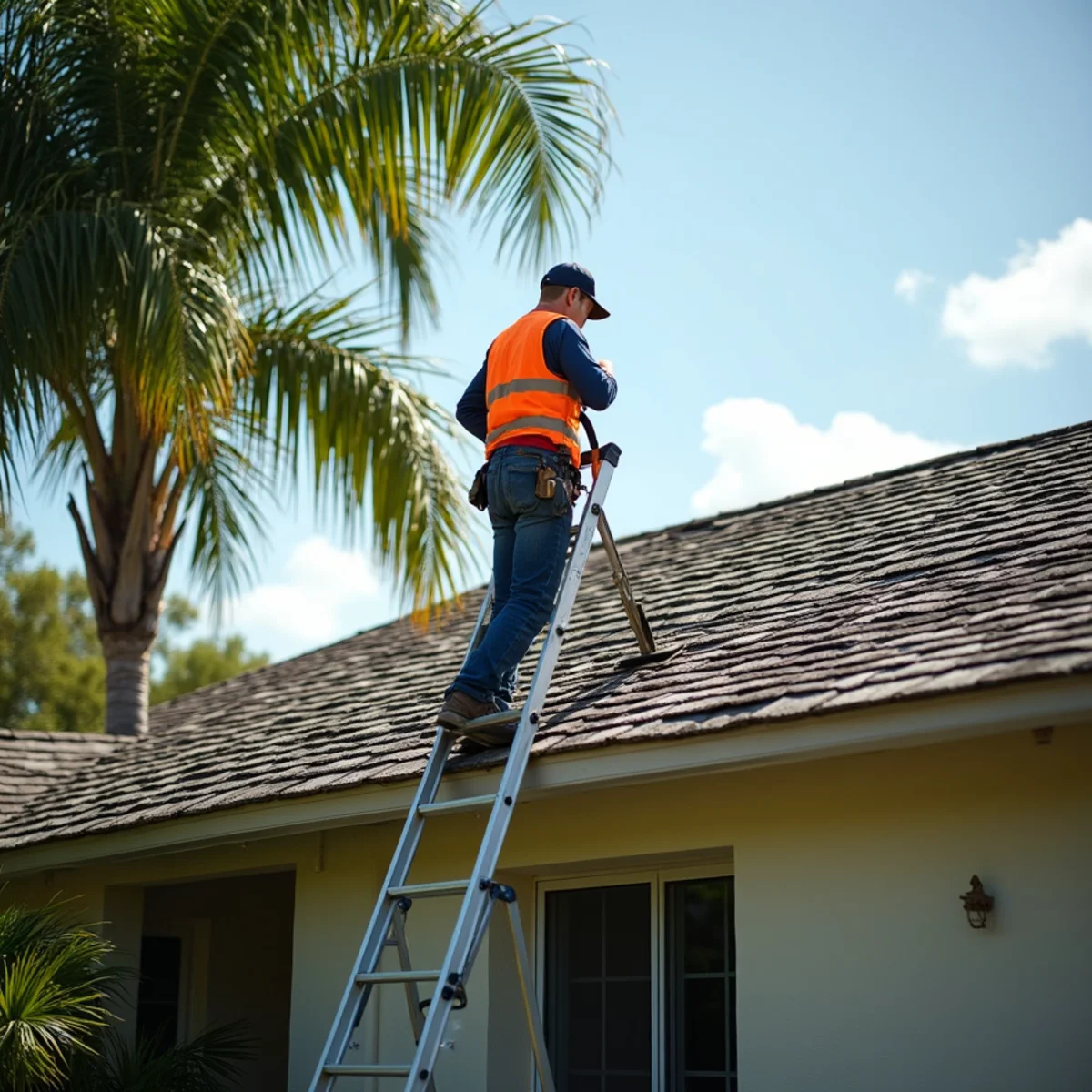
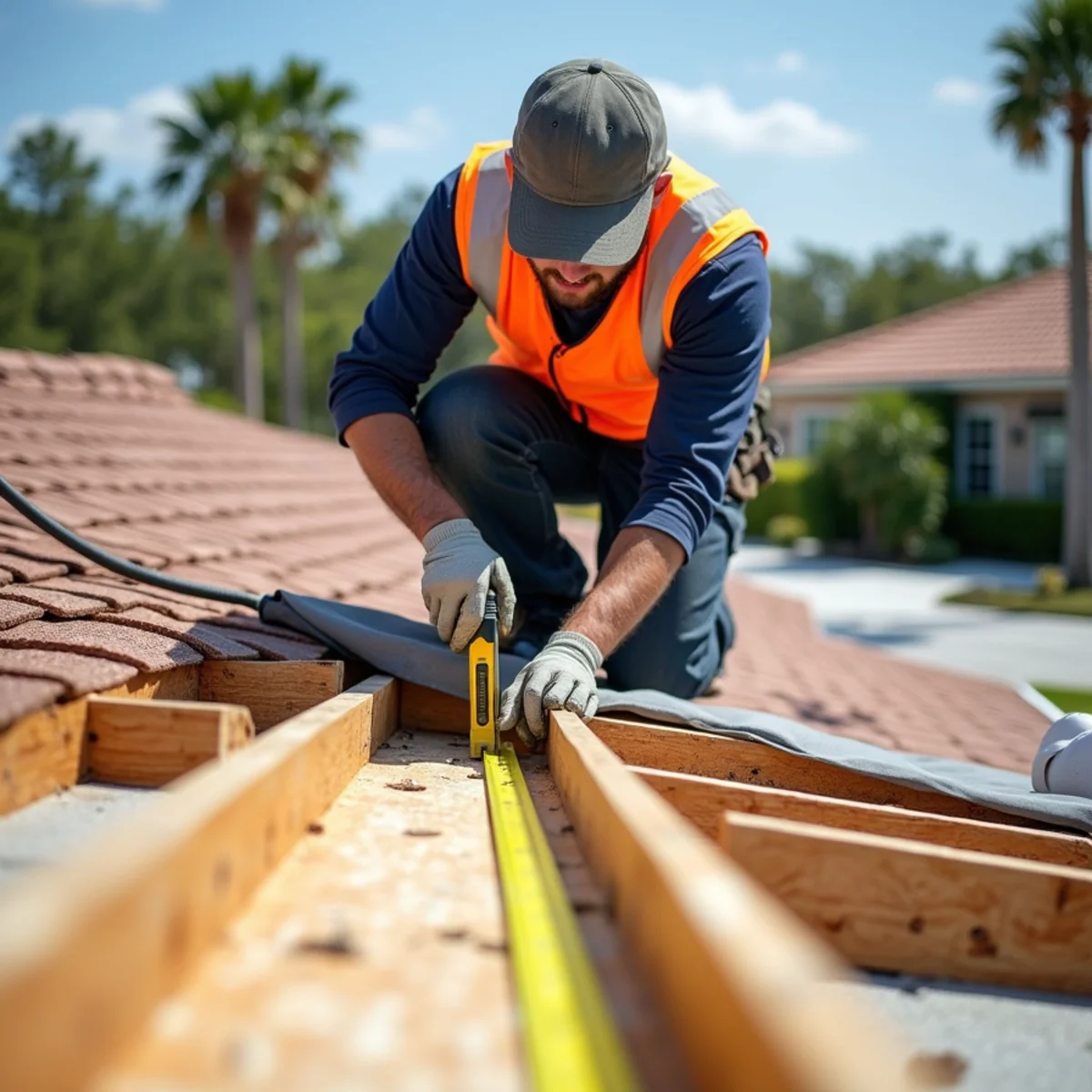
Sections nobody measured. A damage estimate that lumps every plane of the roof together can land on the wrong side of the threshold. During a roof inspection, we measure the damaged area slope by slope, sketch the roof sections, and photograph each one, so the building department and the insurer are looking at the same numbers.
Legal is not the same as sensible. On a roof permitted after the 2007 code, a partial repair may be allowed and still be a poor use of money. If the remaining shingles are near the end of their life, or a discontinued tile cannot be matched, paying to tie new work into an old roof can cost more over a few years than replacing it. We will tell you when we think that is the case, and why.
Tie-ins deserve attention. Where new roofing meets old, the new underlayment has to lap correctly under and over the existing layers, and flashing has to carry across the joint. A careless tie-in is where partial repairs tend to leak first.
Get a clear answer for your roof
The 25% rule is easier to apply once you know your permit history and the true extent of the damage. Rising Roof Services can inspect your roof, measure the damaged area, and explain whether a targeted roof repair or a replacement makes more sense. Call (831) 666-1600 or request an inspection.
Frequently asked questions
Does the 25% roof rule still exist in Florida?
Yes, but it is narrower than before. Since the 2022 law change, roofs built, replaced, or recovered under the 2007 Florida Building Code or later only need the repaired portion brought to current code, even when 25% or more is involved. Roofs permitted under earlier code editions can still be subject to the traditional rule.
Can my insurer use the 25% rule to justify a full roof replacement?
For older roofs, the traditional rule can still create a code requirement to replace the whole roof or roof section after a large partial loss, and ordinance or law coverage may come into play. For roofs under the 2007 code or later, that requirement no longer applies. Your policy language and the insurer's evaluation decide what is covered.
How do I know which building code my roof was installed under?
Look up the re-roof permit for your address with the local building department. Inside Boca Raton city limits that is the City of Boca Raton, and in unincorporated West Boca it is Palm Beach County. The permit dates tell you which code edition applied, and the department can confirm it.
Do several small roof repairs in one year count toward the 25%?
They can. The rule looks at work done on a roof or roof section within a 12-month period, so a small patch followed by a larger repair a few months later may be added together. That matters most for roofs permitted before the 2007 code took effect. Keep your repair invoices and ask the building department how it will count prior work.
Is a flat roof over my patio a separate roof section?
Often it is, because it usually sits at a different elevation from the main roof and is divided from it by flashing at the wall. That means damage there may be measured against the flat roof's own area, not the whole house. The building official decides how sections are defined for your home, so confirm before relying on it for a repair plan.